

What a Cobot Is
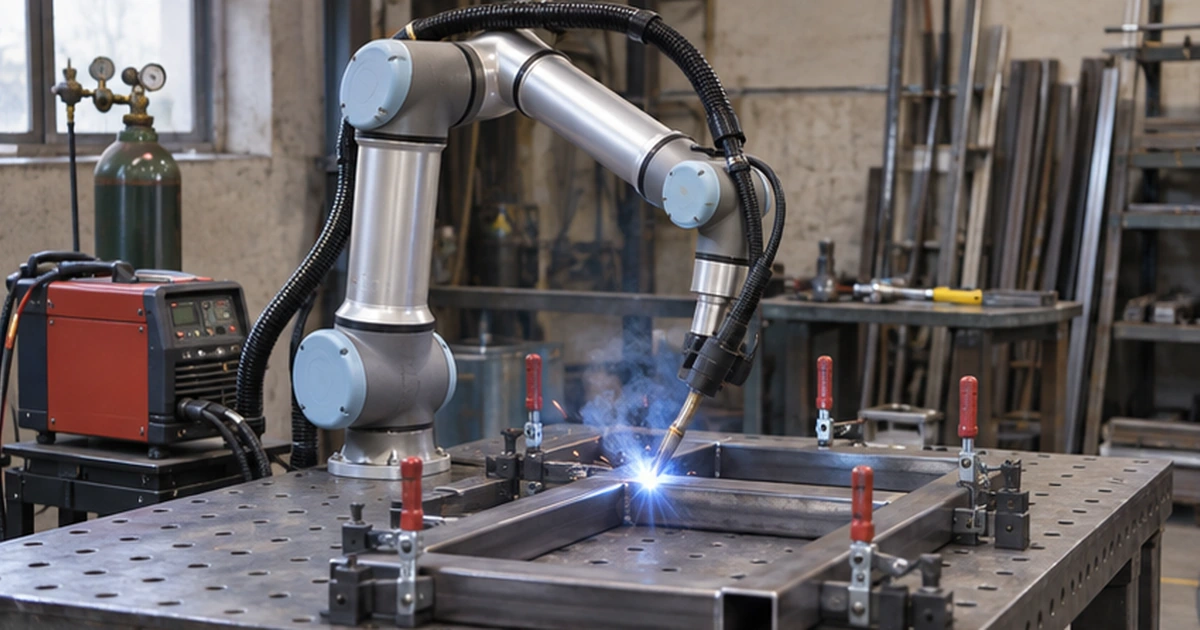
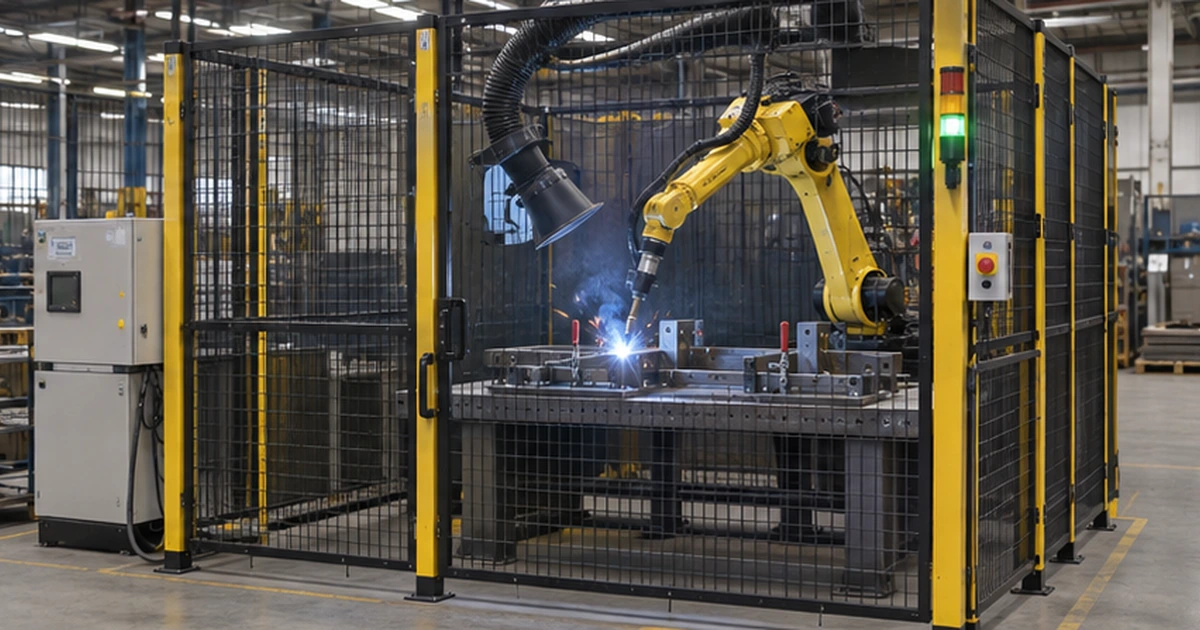
A collaborative robot, or cobot, is a lightweight robot arm designed to work near people. It uses force and torque sensing to stop when it touches something, so many applications can run without the fences and safety cells used around traditional industrial robots, subject to a risk assessment. In cobot welding, the arm holds a MIG/MAG or TIG torch, while the welder sets up parts and programs the path.
Why Fabricators Are Turning to Cobots
The main driver is the shortage of skilled welders across Europe and beyond. Many workshops cannot hire enough people for repetitive production welding. Cobots let one welder run repeat work while doing setup, fitting or more demanding welding nearby. They are cheaper than full robot cells, take less floor space, and can be moved between jobs.
How Cobot Welding Works
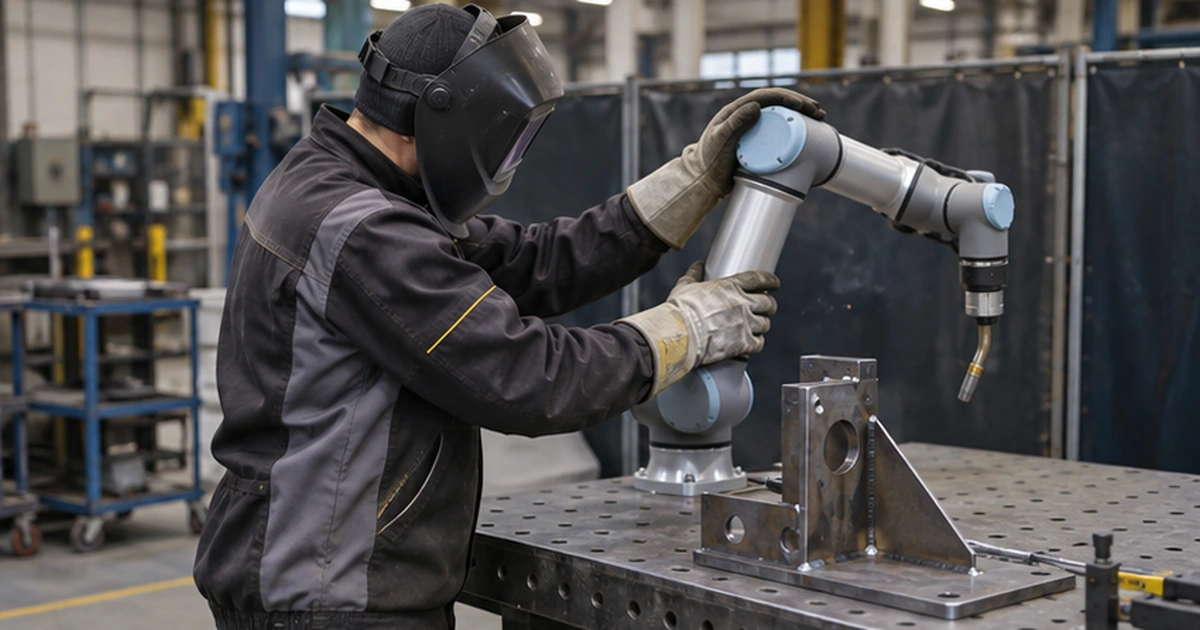
- Teaching: the welder moves the arm by hand to each point and records it, often with a tablet or buttons on the torch
- Parameters: the welding settings are chosen as with manual welding, often from saved programs
- Fixturing: parts must be positioned consistently, usually on a modular welding table with clamps
- Running: the cobot repeats the welds while the welder prepares the next batch
Programming a simple part can take minutes, which makes cobots practical for small batches that would never justify a traditional robot.
Limits of Cobot Welding
Cobots need consistent parts and fit-up. Gaps and positions that a human welder adjusts for automatically can cause defects in robotic welds. They work best on medium-sized parts at a bench, not on ship blocks, fixed pipe on site or confined spaces. Payload and reach are limited, and arc welding still produces fume, spatter and arc light, so extraction and screening are needed. Collaborative does not mean the welding process itself is harmless.
The Welder’s Role Changes, Not Disappears
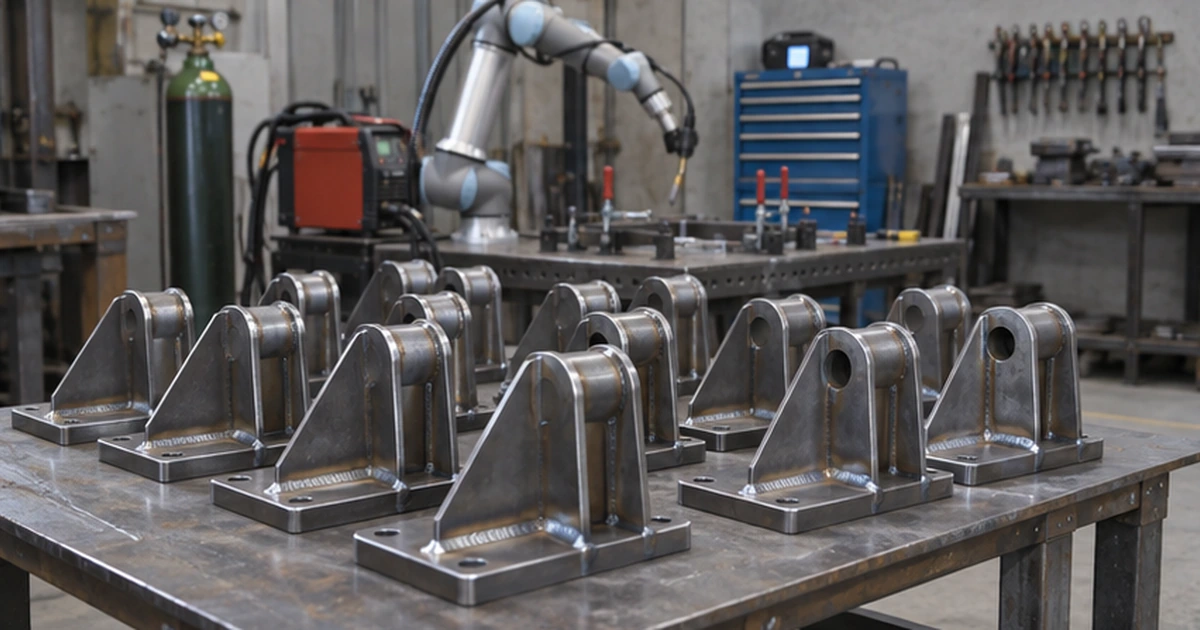
A cobot does not know what a good weld looks like. Someone has to choose parameters, design fixtures, sequence the welds to control distortion and inspect the results. Those are welding skills. Cobots take over repetitive seams; skilled welders move to setup, programming, quality control and the difficult work that automation cannot reach.
From My Experience
Most of my work is on site: ships, plants and pipelines, where every joint is different. That is exactly where automation struggles. In workshops, though, cobots make sense for repeat parts, and welders who understand both the process and the machine will be in demand.
Conclusion
Cobot welding brings automation within reach of small workshops, but it depends on skilled welders for setup and quality. For the process cobots use most, see MIG/MAG welding.
If you found this article useful, feel free to share it with colleagues who work with fabrication shops. — Zisis