

What Preheat Does
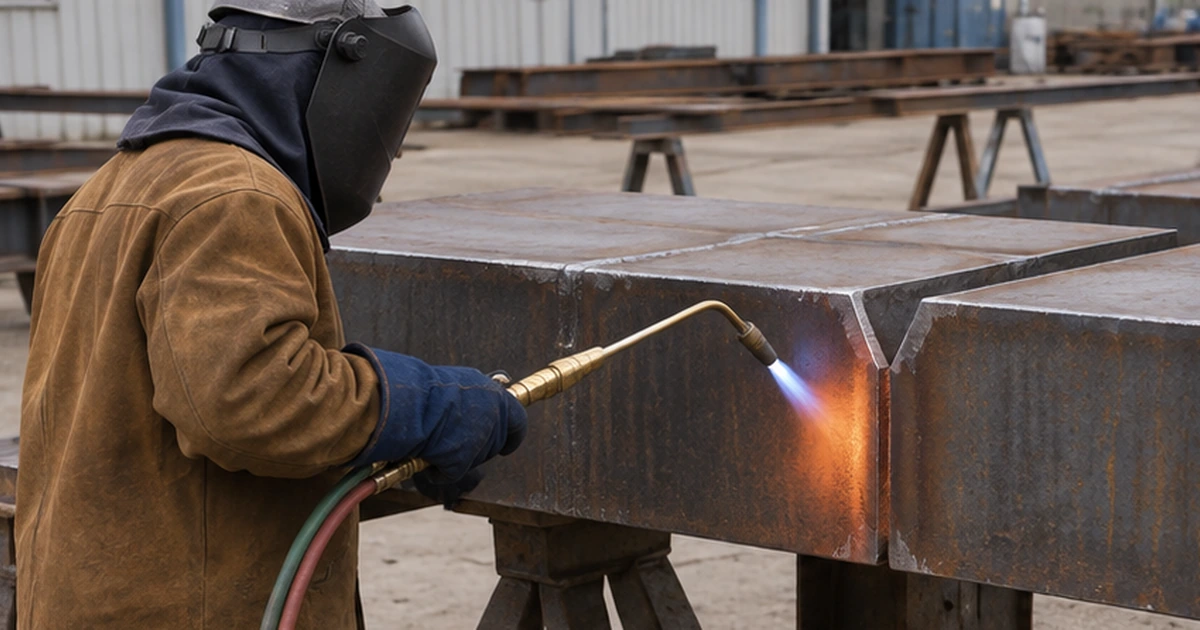
Preheat means heating the joint area before welding and keeping it at or above a minimum temperature during welding. It slows the cooling rate of the weld and heat-affected zone, which reduces hardness and gives hydrogen time to escape from the steel. It also drives off moisture from the surface. The main purpose is to prevent hydrogen cracking, which can appear hours after welding.
When Preheat Is Needed
The need for preheat depends on four factors: the hardenability of the steel, expressed as carbon equivalent (CE or CEV); the combined thickness of the joint; the hydrogen level of the welding process and consumables; and the heat input. Higher carbon equivalent, thicker sections, more hydrogen and lower heat input all increase the required preheat.
- Mild steel in thin sections: usually no preheat beyond removing moisture
- Higher-strength and thick structural steels: often 50 to 150 °C
- Chrome-moly steels: typically 150 to 250 °C or more
- Cast iron and high-carbon steels: high preheat or special methods
How Preheat Is Calculated
Standards such as EN 1011-2 provide methods to determine preheat from carbon equivalent, thickness, hydrogen scale and heat input. Codes such as ASME B31.3 and AWS D1.1 give minimum values for material groups. The WPS states the required minimum preheat, and the welder must follow it.
Interpass Temperature
Interpass temperature is the temperature of the weld area just before the next pass starts. Codes usually specify a minimum, often the same as the preheat, and sometimes a maximum. For stainless, duplex and nickel alloys and for steels with impact toughness requirements, the maximum is critical: too much heat reduces toughness and corrosion resistance. Welders then pause between passes to let the joint cool.
Applying and Measuring Temperature
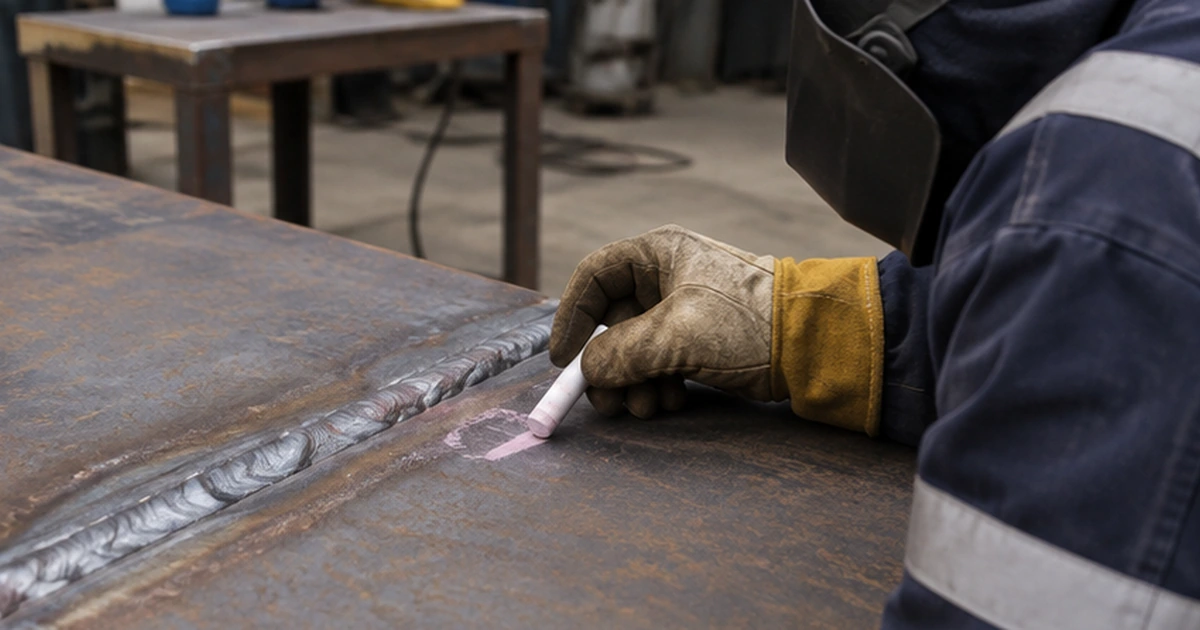
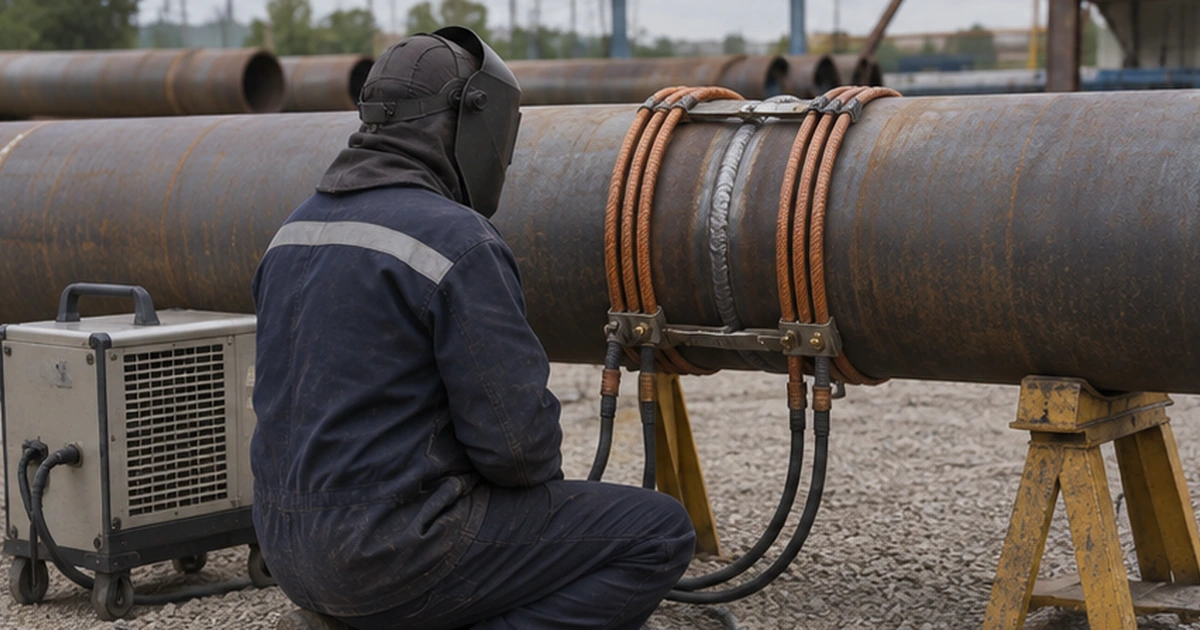
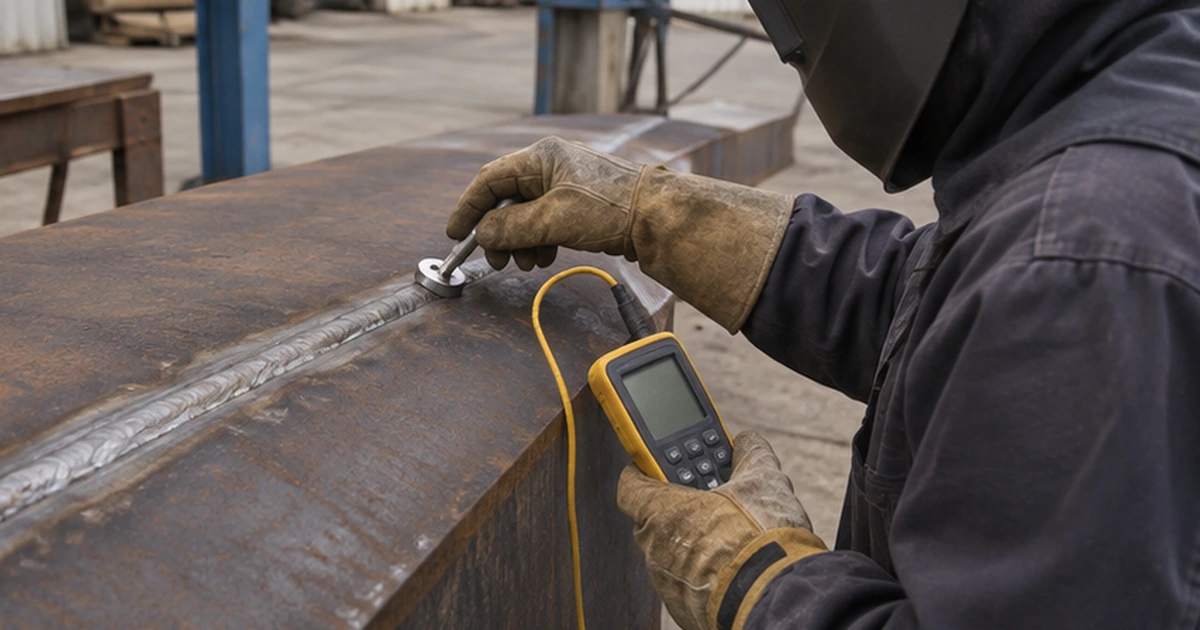
Preheat is applied with gas torches, electric resistance pads or induction coils. Heat must soak through the full thickness and extend at least 75 mm, or four times the thickness, on each side of the joint. Temperature is measured with contact thermometers, thermocouples or temperature indicating crayons, typically on the face opposite the heat source, not in the flame.
From My Experience
On thick and alloy steel work, I check the temperature before every pass, not just at the start. In wind or on large structures, a joint that was hot enough ten minutes ago may not be any more. A crack found the next morning costs far more than the time spent measuring.
Conclusion
Preheat and interpass control are simple measures that prevent hydrogen cracking and protect weld properties. Follow the WPS and measure properly. See also hydrogen cracking in welds and post-weld heat treatment.
If you found this article useful, feel free to share it with colleagues who work with welders and engineers. — Zisis
Need Help on a Project?
For welding supervision and quality control on marine and industrial work, see Welding Supervision or request a quote.