

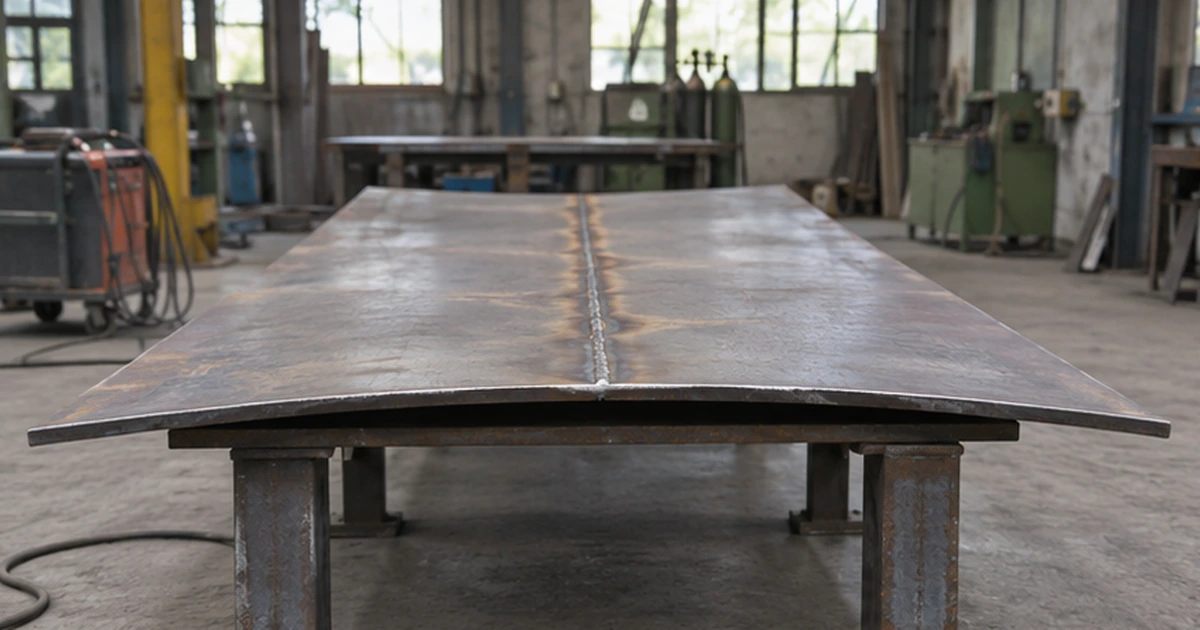
Why Weld Distortion Happens
When weld metal solidifies and cools, it shrinks. The surrounding steel resists, and the result is a combination of residual stress and movement. That movement is weld distortion. It can pull plates out of flat, bend beams, close up gaps and throw flanges out of alignment, sometimes enough to make a part unusable.
Types of Distortion
- Transverse shrinkage: the joint shortens across the weld
- Longitudinal shrinkage: the joint shortens along the weld
- Angular distortion: the plates rotate around the weld, typical in single-sided butt and fillet welds
- Bowing and bending: long members curve because welds are off their neutral axis
- Buckling: thin plates wrinkle under compressive stress
Control Starts with Design
The amount of distortion grows with the amount of weld metal and heat. Designers can help by avoiding oversized welds, using double-sided joints where possible, placing welds close to the neutral axis and balancing them around it, and choosing joint preparations that need less filler, such as narrower bevels or J-preparations on thick plate.
Fit-Up and Presetting
Parts can be preset out of position so that shrinkage pulls them into place. For example, plates for a single-V butt weld can be set at a small angle that the weld then closes. Accurate fit-up with consistent root gaps avoids unnecessary weld metal. Tack welds must be strong enough and well spaced to hold alignment.
Welding Sequence and Technique
- Balance welding on both sides of the neutral axis, alternating sides on double-V joints
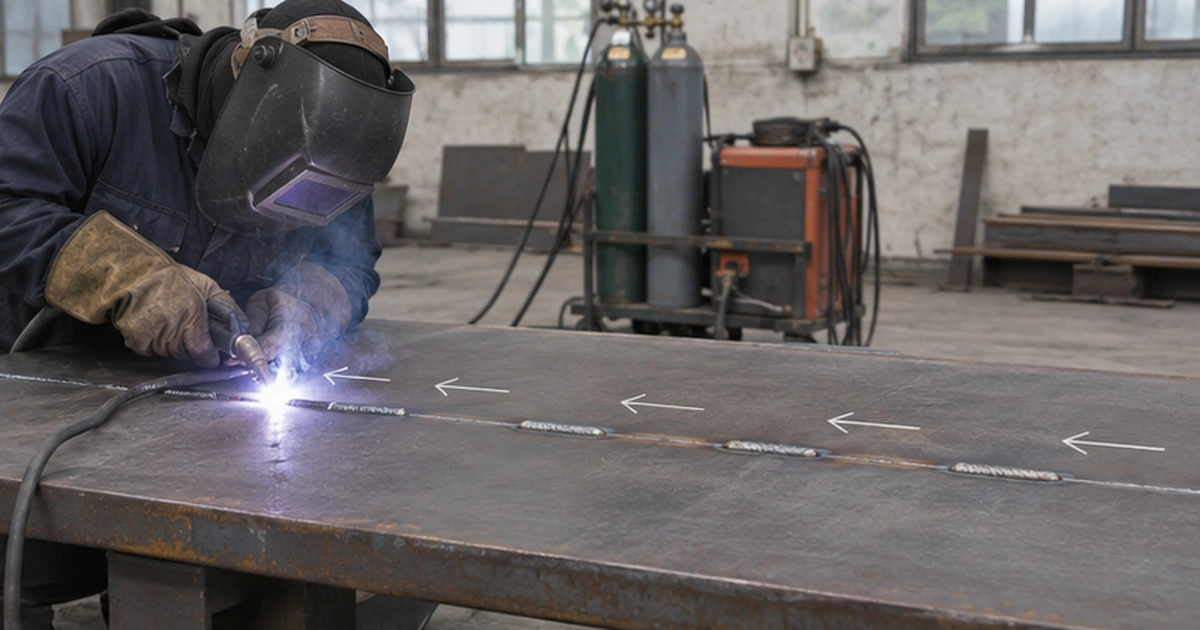
- Use backstep or skip welding on long seams to spread heat
- Weld from the centre outwards on large assemblies
- Keep heat input low and use fewer, larger passes where the procedure allows
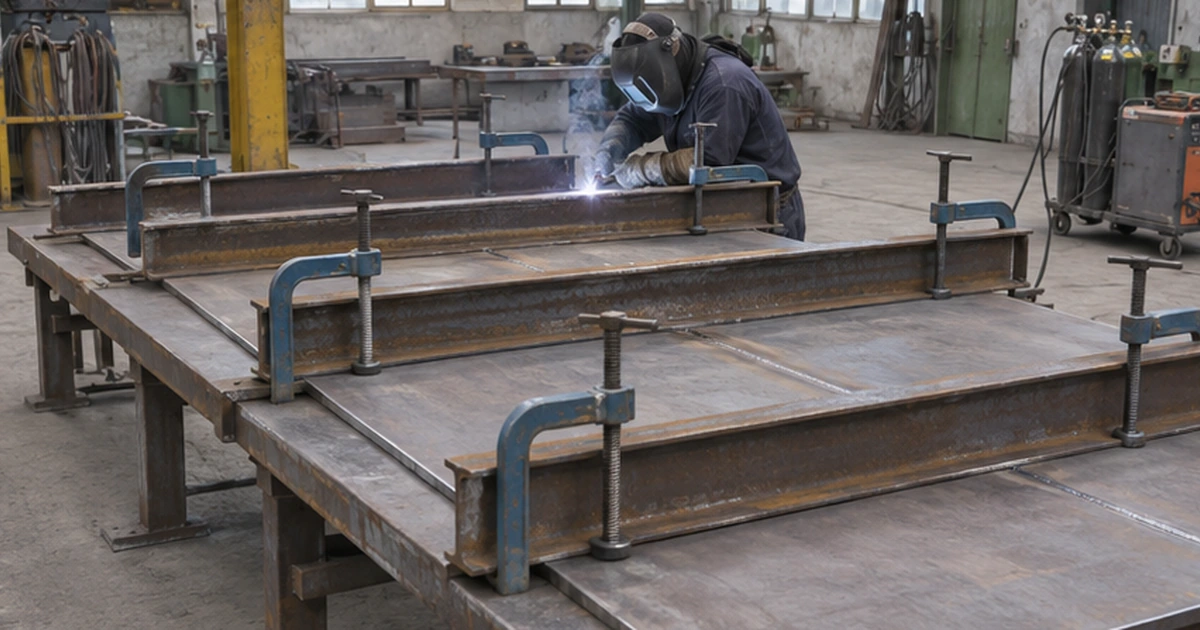
- Use restraint: clamps, jigs and strongbacks hold parts until they cool
Correction
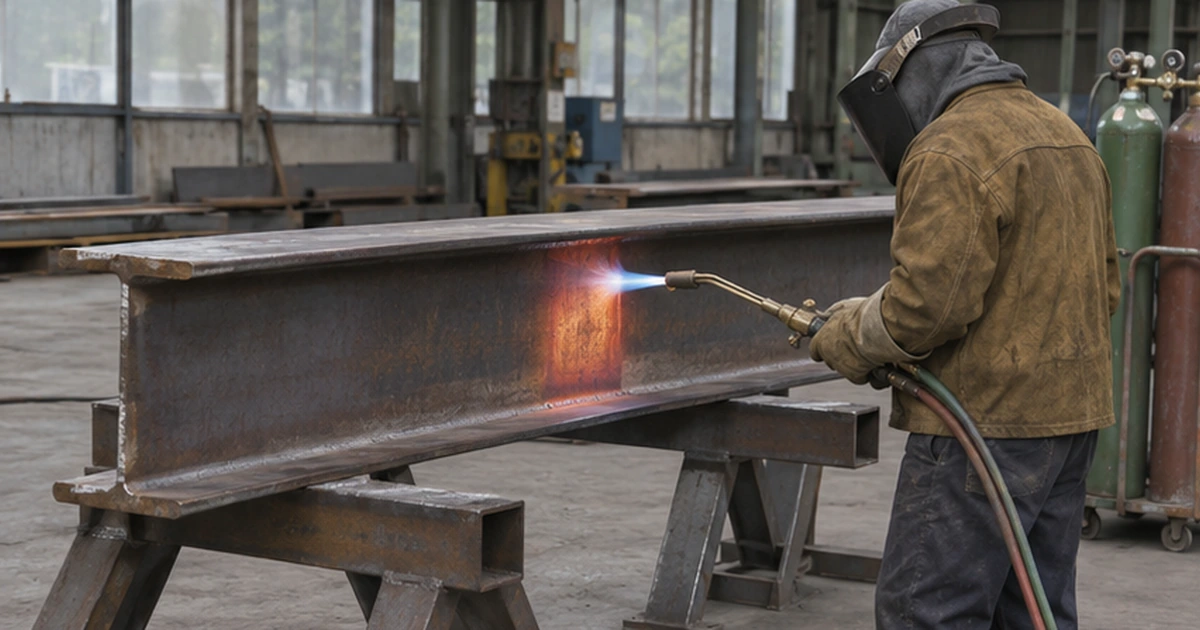
When distortion still occurs, it can often be corrected by mechanical straightening with presses or jacks, or by flame straightening, where local heating and cooling shrink the steel back into shape. Flame straightening needs skill and temperature limits, especially on quenched and tempered or high-strength steels.
From My Experience
On ship repairs, a new insert plate that is welded all around in one go will almost always pull. I tack it carefully, weld in short balanced sections and let it cool between them. It takes longer, but the plate stays flat and nothing has to be heated or cut out afterwards.
Conclusion
Weld distortion cannot be avoided completely, but it can be controlled with good design, fit-up, sequence and restraint. See also weld joint preparation and fillet welds vs butt welds.
If you found this article useful, feel free to share it with colleagues who work with fabricators. — Zisis
Need Help on a Project?
For welding supervision and quality control on marine and industrial work, see Welding Supervision or request a quote.