

What Makes Shipbuilding Steel Different
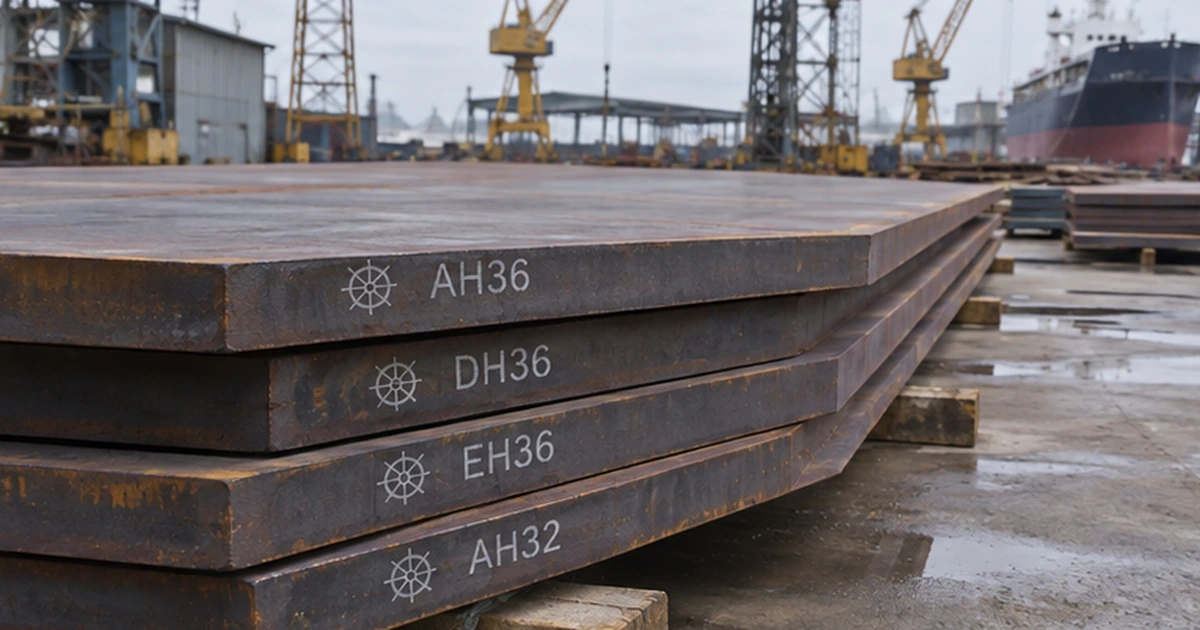
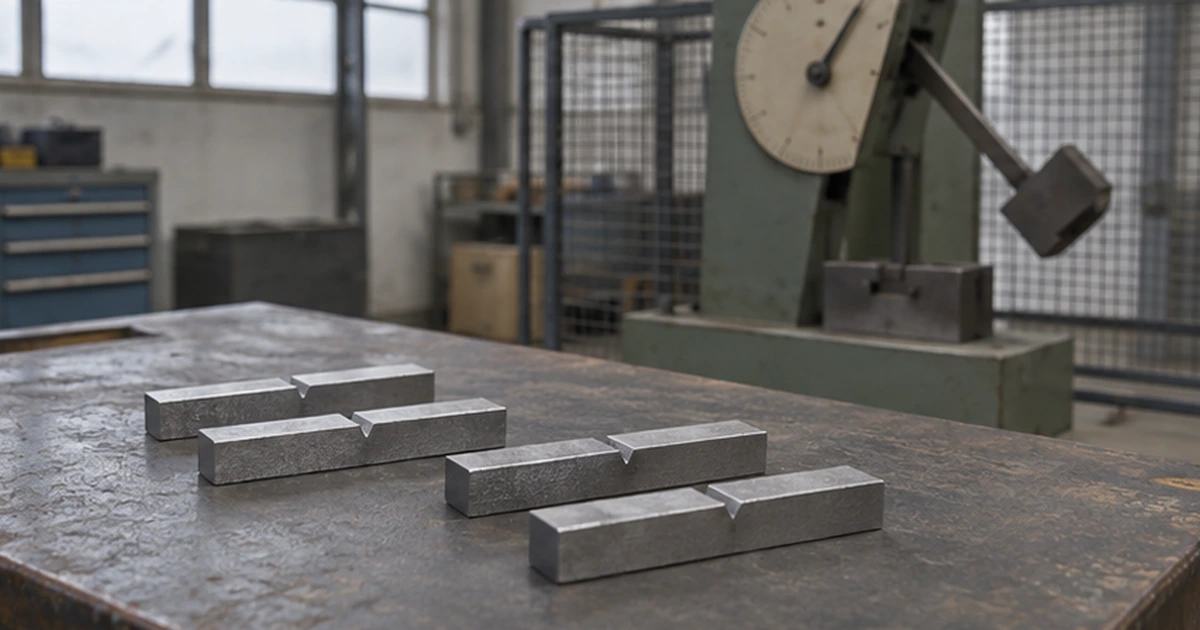
Shipbuilding steel is structural steel produced and tested under the rules of classification societies. The grades are harmonised across IACS members, so an AH36 plate certified by one society is accepted by the others. What sets them apart from ordinary structural steel is guaranteed toughness at low temperature, controlled chemistry for weldability, and certification and traceability for every plate.
Normal Strength Grades
Normal strength grades have a minimum yield strength of 235 MPa. They are labelled A, B, D and E. The letter shows the toughness requirement: grade A has no impact test requirement at the plate level in many thicknesses, B is tested at 0 °C, D at −20 °C and E at −40 °C. Grade A is the most common for general hull structure.
Higher Strength Grades
- AH32, DH32, EH32, FH32: minimum yield 315 MPa
- AH36, DH36, EH36, FH36: minimum yield 355 MPa, the most widely used higher-strength grade
- AH40 to FH40: minimum yield 390 MPa
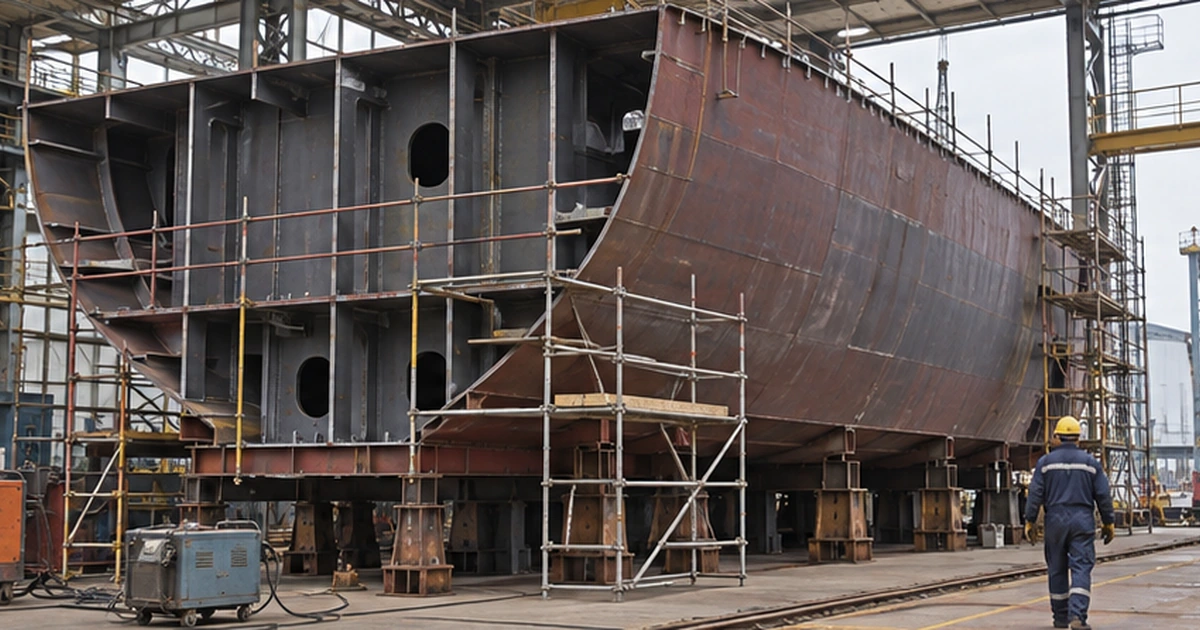
Again, the letter shows the impact test temperature, from A at 0 °C to F at −60 °C. Higher grades are used in highly stressed areas such as the deck and bottom of large ships, sheer strakes and ice-strengthened structures.
Welding Shipbuilding Steel
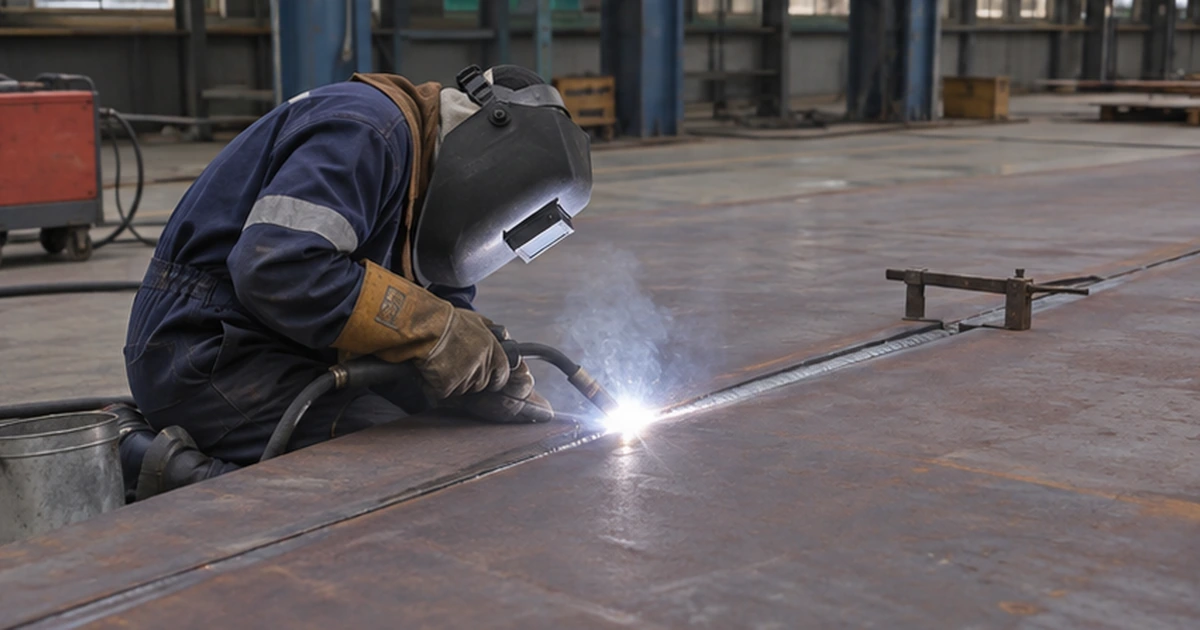
Shipbuilding steels are designed to be readily weldable. Welding consumables are also class-approved, graded to match the steel strength and toughness: for example, grade 3Y consumables for AH36 to DH36. Welding procedures and welders must be qualified to class rules. Thicker and higher-strength plates may need preheat, especially in cold weather or under high restraint, and low-hydrogen consumables are standard for structural work.
Steel for Repairs
In repairs, renewed steel must be of the same or a higher grade than the original, and come with class certificates. The plate marking shows the grade, heat number and certifying society. Using uncertified or lower-grade steel, even if it looks the same, will not be accepted by the surveyor and can weaken the structure.
From My Experience
Before any insert or renewal on a ship, I check the drawings for the original grade and make sure the new plate’s certificate matches. On AH36 and higher grades in cold conditions, I follow the preheat in the procedure strictly, because a hard heat-affected zone in hull steel is not something to discover after the ship has sailed.
Conclusion
Shipbuilding steel grades combine strength levels with guaranteed toughness and certification. Welding them is straightforward with approved consumables and procedures. See also class approval for ship weld repairs.
If you found this article useful, feel free to share it with colleagues who work with shipyards and ship repair crews. — Zisis
Need Help on a Project?
For marine repair welding on marine and industrial work, see Marine Repairs or request a quote.