

What Flux-Cored Welding Is
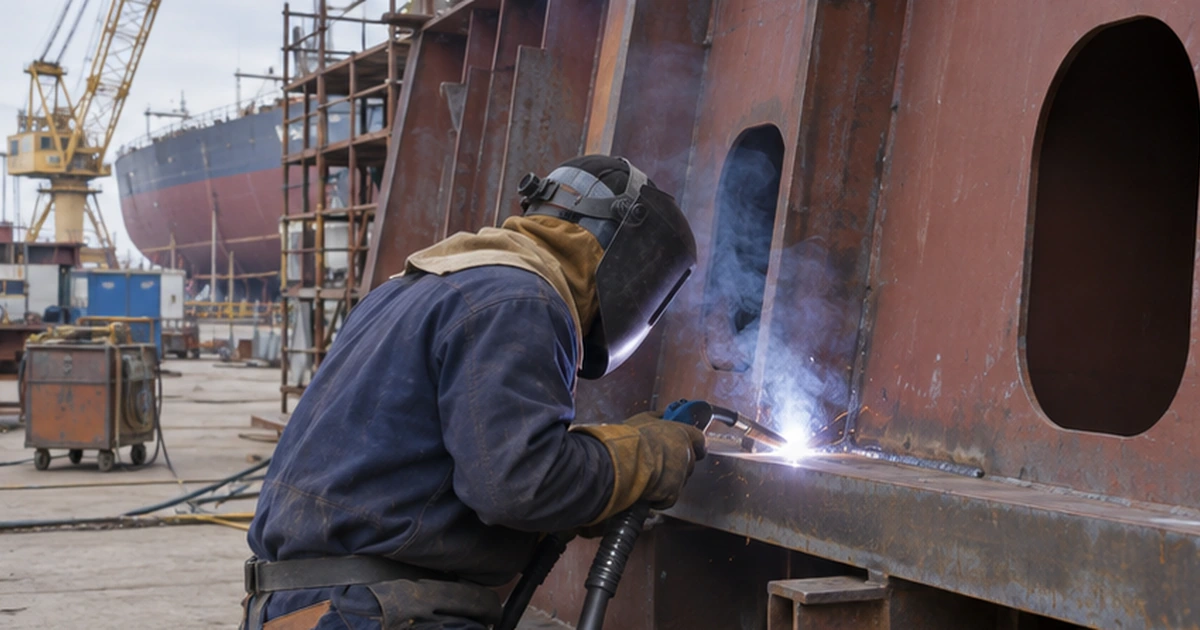
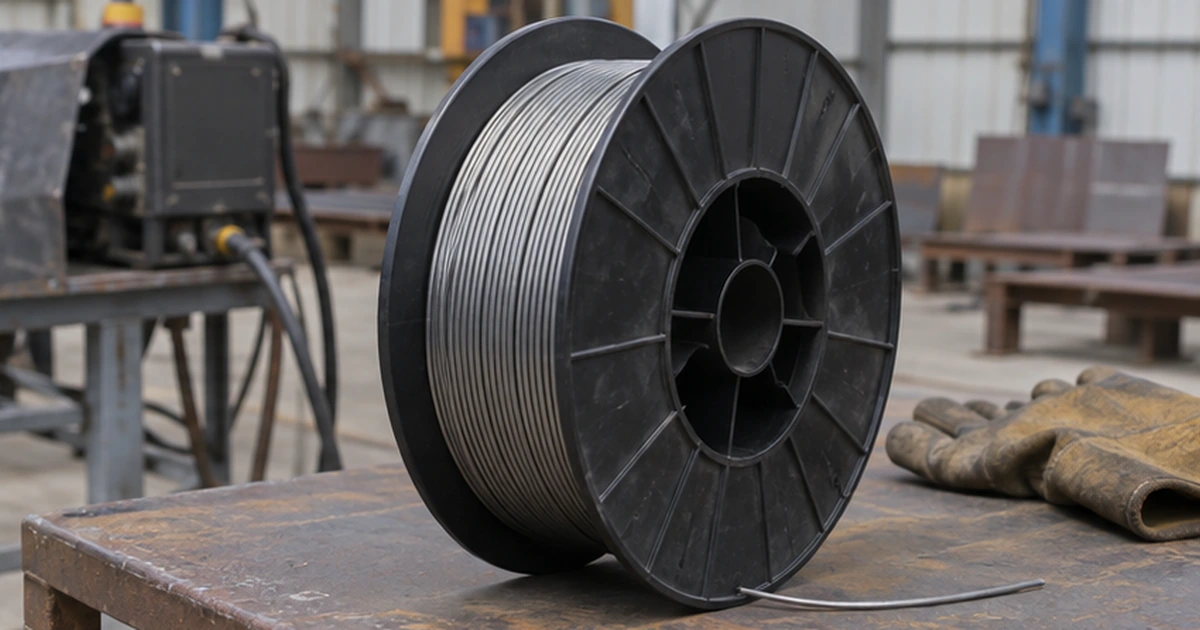
Flux-cored arc welding (FCAW) is a wire-fed process similar to MIG/MAG, but the wire is tubular and filled with flux and alloying powders. As the wire melts, the flux forms a slag that protects and shapes the weld, while some ingredients deoxidise the weld metal and stabilise the arc. It combines the speed of a continuous wire with some of the benefits of a coated electrode.
Gas-Shielded and Self-Shielded
- Gas-shielded (FCAW-G): used with CO2 or argon-CO2 shielding gas; the most common type in shipyards and fabrication shops, with excellent all-position performance and smooth weld appearance
- Self-shielded (FCAW-S): the flux produces its own protective gas, so no gas bottle is needed; used outdoors in wind, on structural steel erection and some pipelines
Advantages Over Solid Wire and Stick
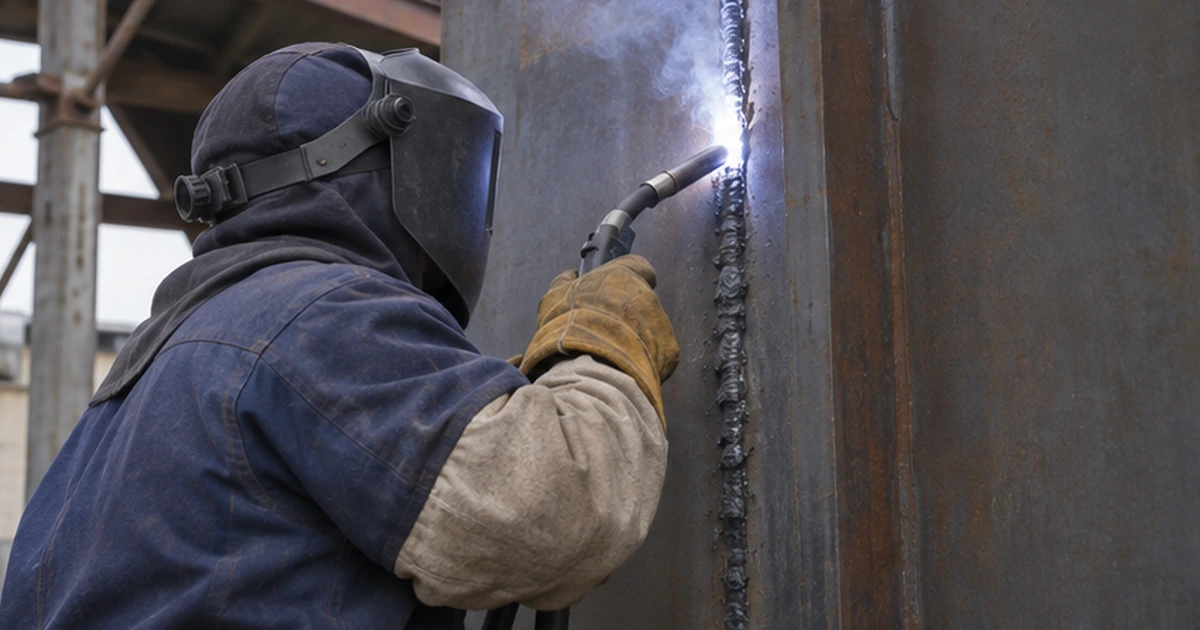
Rutile gas-shielded flux-cored wires have a fast-freezing slag that holds the pool in vertical and overhead positions, so welders can use higher currents out of position than with solid wire. Deposition rates are high, fusion is good, and the process tolerates mill scale and minor surface contamination better than solid wire MIG. Compared with MMA, there are no electrode changes, so arc time and productivity are much higher.
Where It Is Used
FCAW is the workhorse of shipbuilding, used for butt and fillet welds on hull blocks in all positions, often with ceramic backing on one-sided butt welds. It is also widely used for heavy fabrication, structural steel, offshore structures, pressure vessels and hardfacing. Metal-cored wires, a related type with metallic powders and little slag, are popular for high-speed fillet welding.
Limits and Care
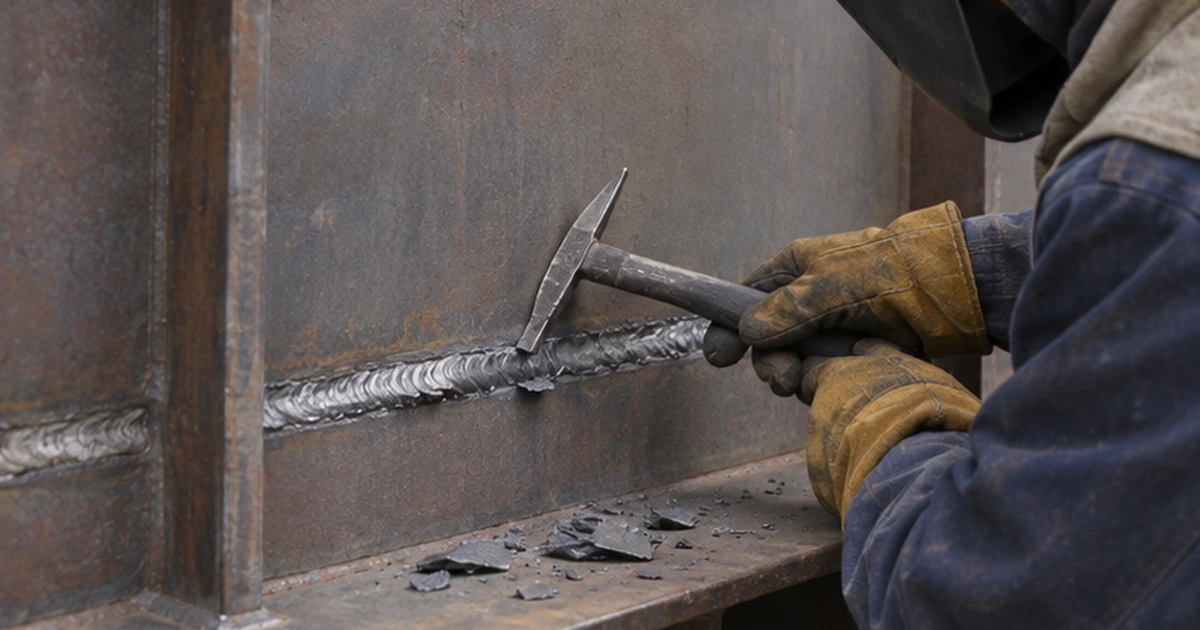
Flux-cored welding produces slag that must be removed between passes, and more fume than solid wire, so extraction is important. Wire must be kept dry, as moisture in the flux raises hydrogen. Self-shielded wires need the correct polarity and stick-out to avoid porosity and poor toughness. Like any process, FCAW requires qualified procedures and welders for structural and pressure work.
From My Experience
On ship repairs, gas-shielded flux-cored wire is often the fastest way to complete vertical and overhead seams with good quality. I keep the wire spool covered on site, clean the slag fully between passes and use extraction in enclosed spaces, because flux-cored fume builds up quickly.
Conclusion
Flux-cored welding offers high productivity and excellent positional welding, especially in shipyards and heavy fabrication. See also MIG/MAG welding and welding fume and ventilation.
If you found this article useful, feel free to share it with colleagues who work with shipyard and fabrication welders. — Zisis