

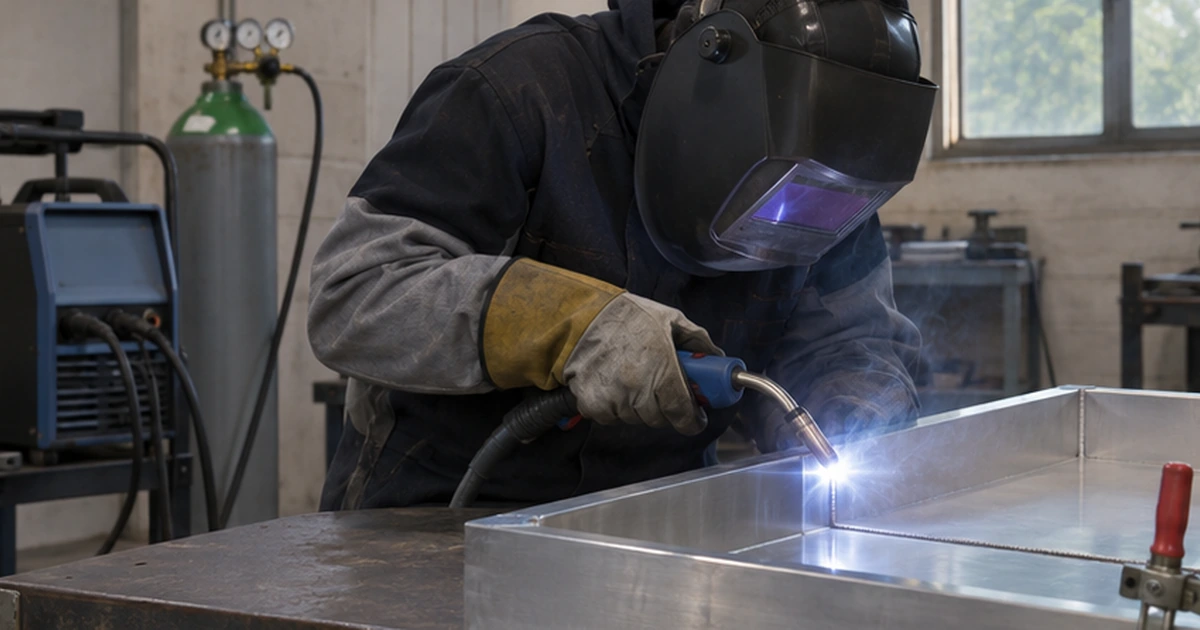
Shielding Gases for MIG and TIG on Non-Ferrous Metals
Aluminium, copper and titanium are welded with inert gases only. Active gases such as CO2 or oxygen, which are normal in MAG welding of steel, would oxidise these metals. The choice of shielding gases for MIG and TIG on these metals therefore comes down to argon, helium and mixtures of the two.
MIG is used where output matters; TIG where precision matters. The difference between MIG and MAG is the gas: MIG uses inert gas, MAG uses active gas.
Pure Argon
Argon is the standard gas for MIG and TIG welding of aluminium, especially on thin and medium sections. It gives a stable arc and good cleaning action on the oxide layer.
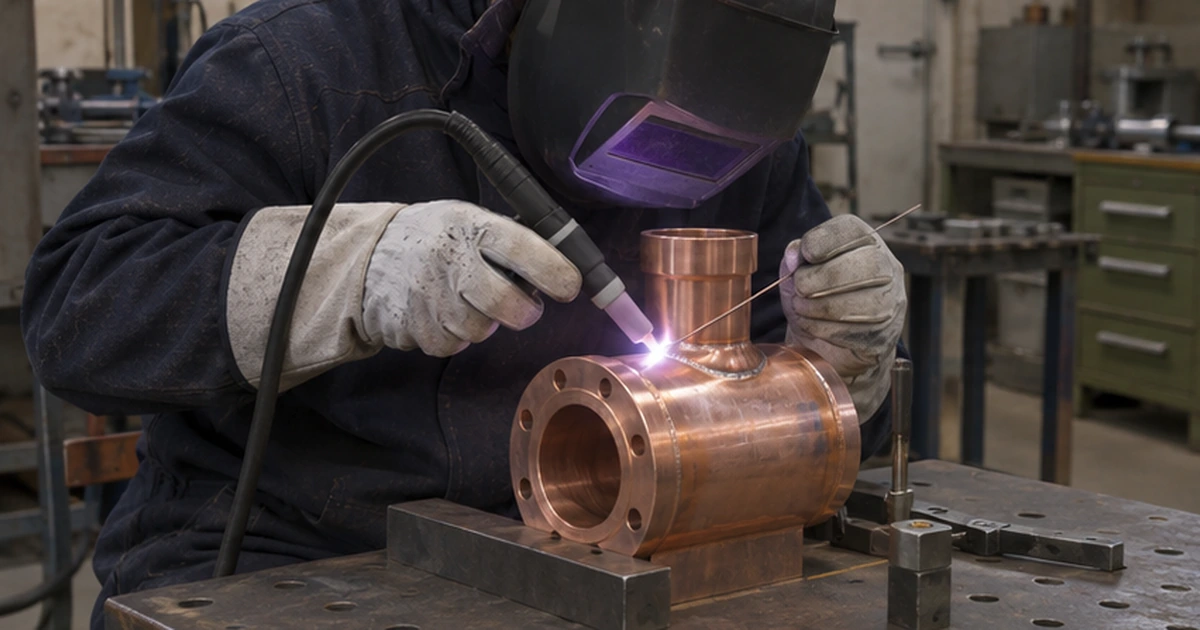
On thick aluminium and on copper, argon has limits. The weld pool is less fluid, so the bead can sit high, and lack of fusion and porosity become more likely as thickness increases. Copper also needs preheat with argon, and the preheat rises with thickness.
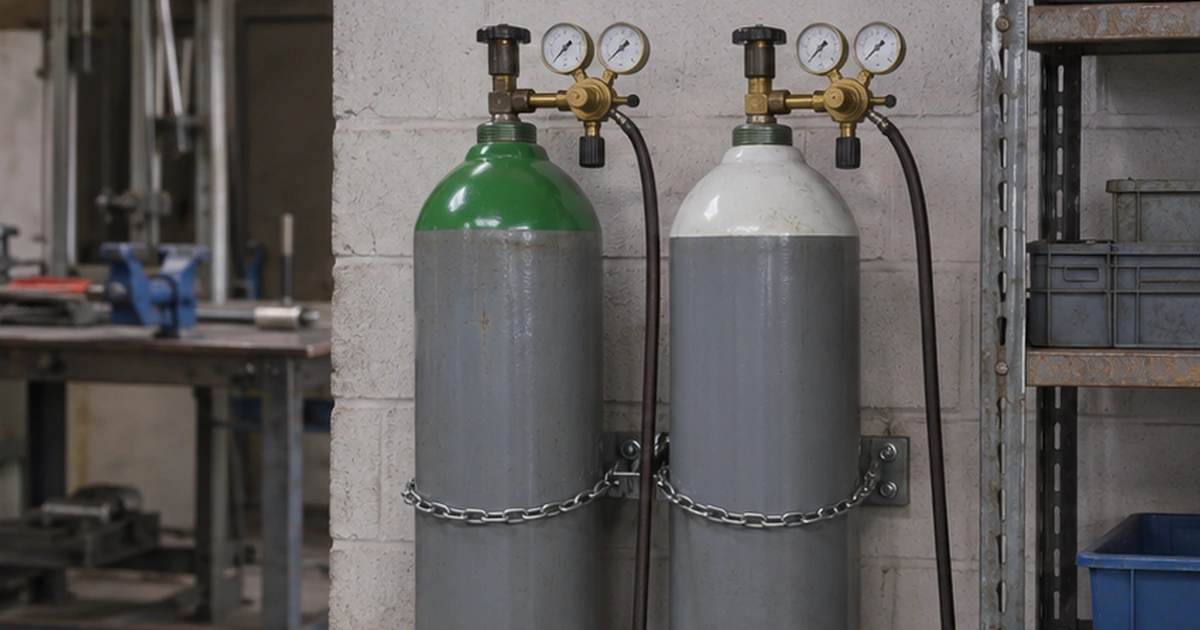
Argon-Helium Mixtures
Adding helium makes the arc hotter and the weld pool more fluid. The result is deeper, wider penetration, a flatter bead, higher travel speed and less porosity. Commercial mixes are sold under trade names, but the helium content is what matters.
- Ar + 30% He: thin to medium sections, manual or mechanised. Better gap bridging than argon and less preheat on copper.
- Ar + 50% He: thicker plate. Clearly better fusion, flatter bead and higher speed. Little or no preheat on thick aluminium or thinner copper.
- Ar + 70% He: mostly mechanised MIG and TIG on very thick aluminium and copper. Highest speed and allows smaller joint preparations.
Titanium
Titanium is very sensitive to oxygen and nitrogen, even at low levels. High-purity argon is normal, with trailing and back shielding until the weld has cooled. Helium or argon-helium mixes can be used to increase penetration.
Very Small Additions
Very small additions of an oxidising gas, typically below 0.05%, have been shown to help arc stability with argon-helium mixes on aluminium. These are special cases and should be qualified in the welding procedure before production use.
Gas Flow and Safety
Shielding gas is typically supplied at a flow rate of around 15 litres per minute. Too little gives porosity; too much creates turbulence that pulls air into the shield. The main hazard is asphyxiation: argon and helium displace oxygen, and argon, being heavier than air, collects in tanks, pits and double bottoms.
A Note on History
MIG welding was first patented in the USA in 1949 for welding aluminium, using helium as the shielding gas, which was readily available there at the time. From about 1952 the process became popular in the UK for aluminium using argon. Both gases are still the basis of non-ferrous welding today.
Choosing in Practice
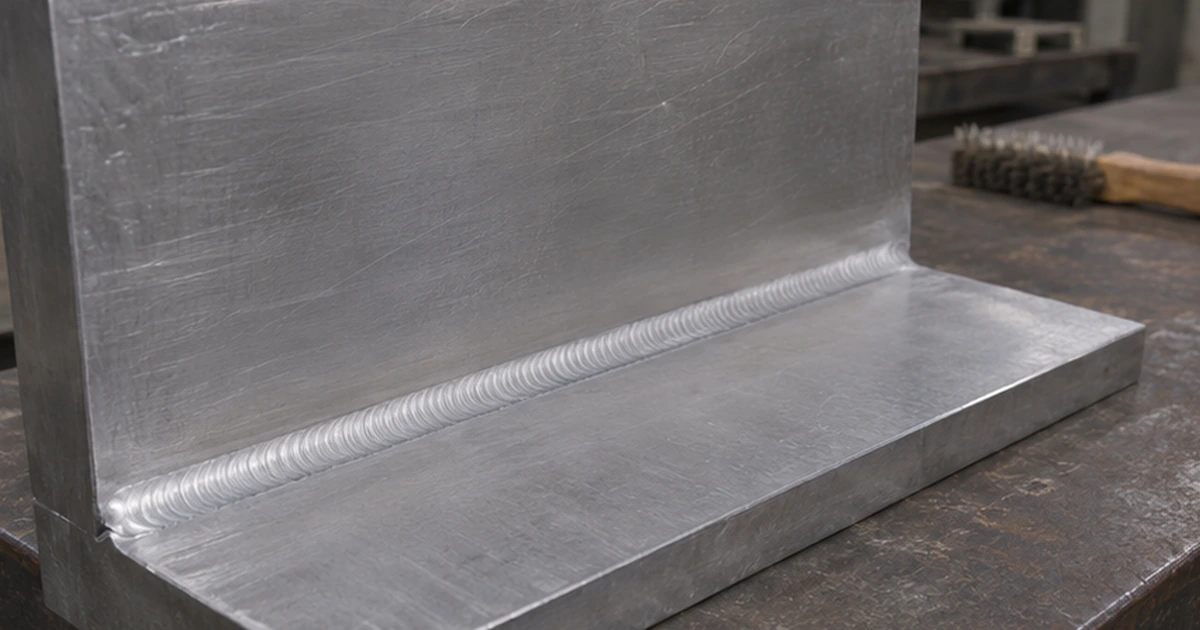
- Aluminium up to medium thickness: pure argon
- Thick aluminium or long mechanised seams: argon with 30–70% helium
- Copper: argon-helium to reduce preheat
- Titanium: high-purity argon with trailing and back shielding
Cylinder or Bulk Supply
Small jobs run from single cylinders; workshops with several stations often use cylinder packs or a bulk tank with a pipeline to each booth. Whatever the supply, leak-tight hoses and correct regulators are part of weld quality, because a leak pulls air into the gas and shows up as porosity.
Conclusion
Pure argon covers most aluminium work. As thickness rises, or on copper, helium additions improve fusion and speed and reduce preheat. For steel, active gas mixtures are used instead, as in my MIG/MAG welding work.