

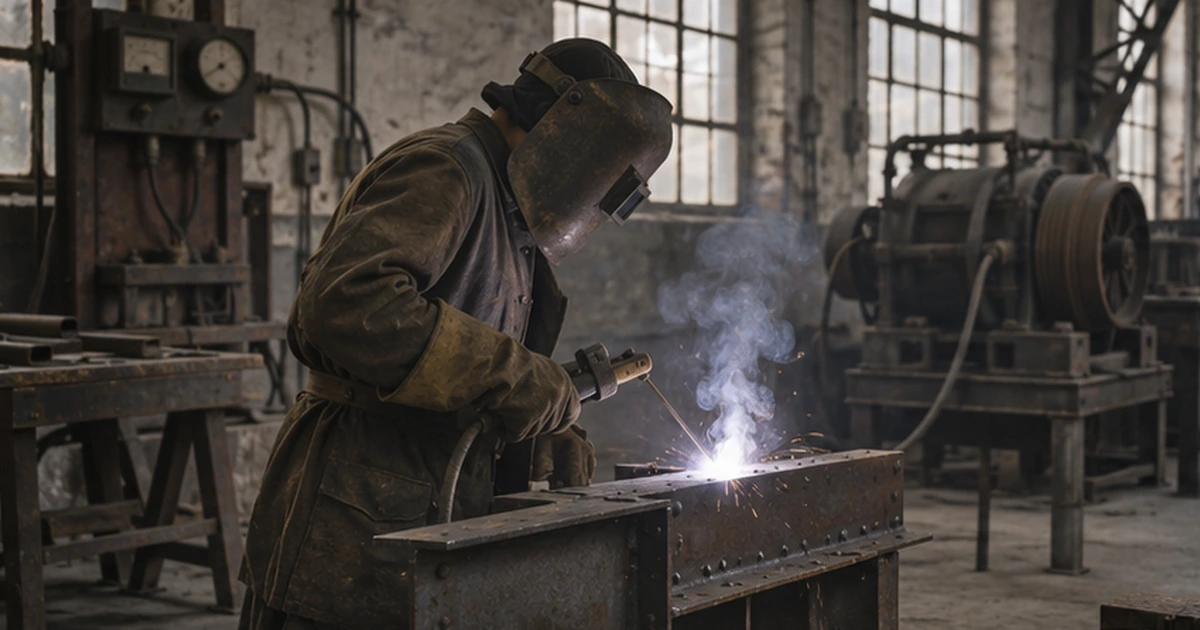
The Early History of Arc Welding
The history of arc welding starts in the early 1800s, when scientists first produced a stable electric arc. In 1803 the Russian scientist Vasily Petrov described an arc discharge and suggested it could be used to melt metals. The TWI history of welding gives a full timeline.
The first practical process came in 1881, when Nikolay Bernados introduced carbon arc welding. Metal electrodes followed: Nikolay Slavianoff in Russia in 1888 and Charles Coffin in the United States, who patented a metal electrode process in 1890.
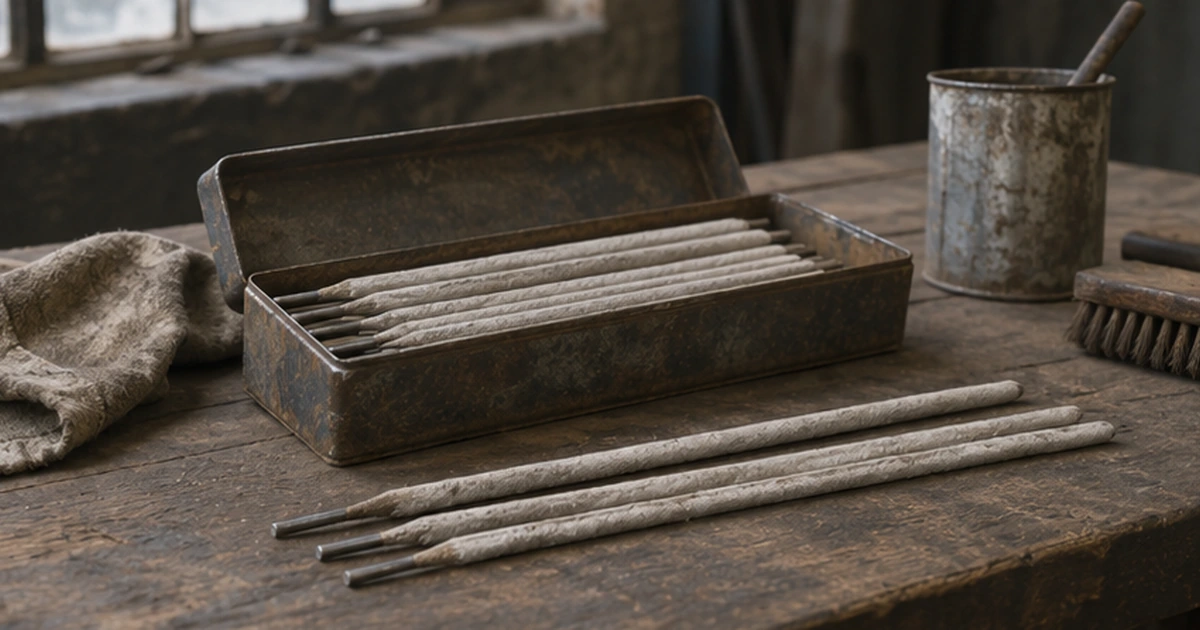
Coated Electrodes
Around 1900 the first coated electrode appeared in Britain, credited to A. P. Strohmenger. The coating stabilised the arc. Later coatings also protected the weld from the air and reduced defects, which is still their job in every MMA electrode today.
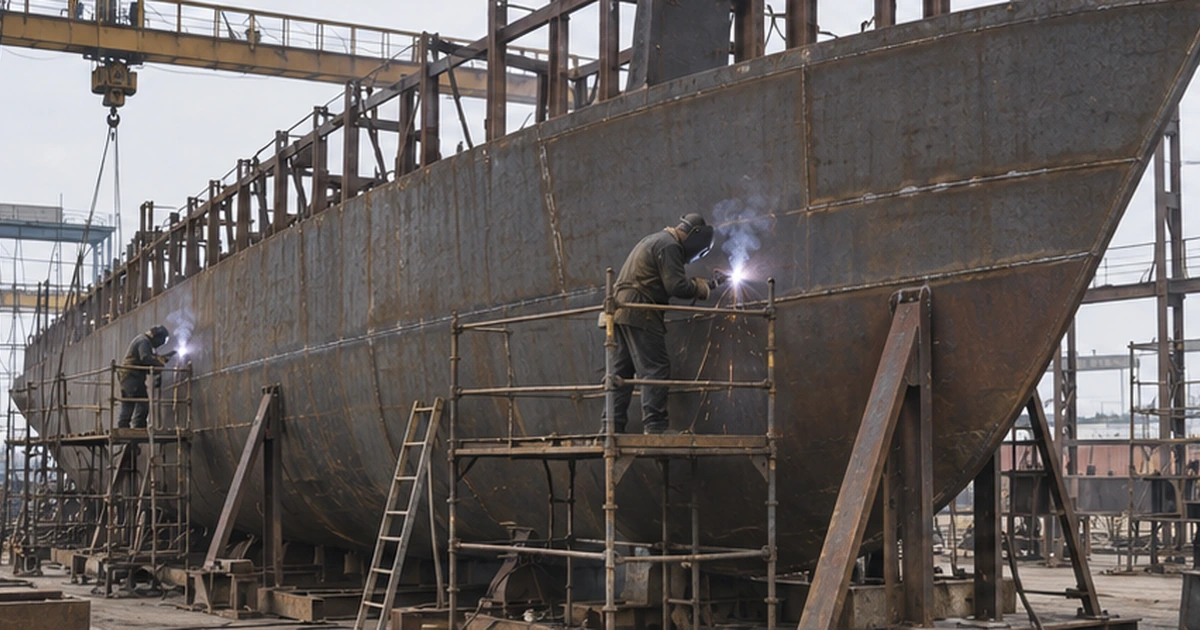
Shipbuilding and the First All-Welded Hull
Arc welding spread quickly during the First World War, mainly for repairs. In 1920 the British coaster Fullagar became the first ship with a fully welded hull. In the decades that followed, welding replaced riveting across the shipbuilding industry.
Automatic Feed and Shielding Gases
In 1920 P. O. Nobel developed a process with a bare wire, direct current and wire feed controlled by arc voltage. Shielding gases came later in the 1920s, as engineers looked for ways to keep oxygen and nitrogen out of the weld. Argon, helium and hydrogen were the main gases studied.
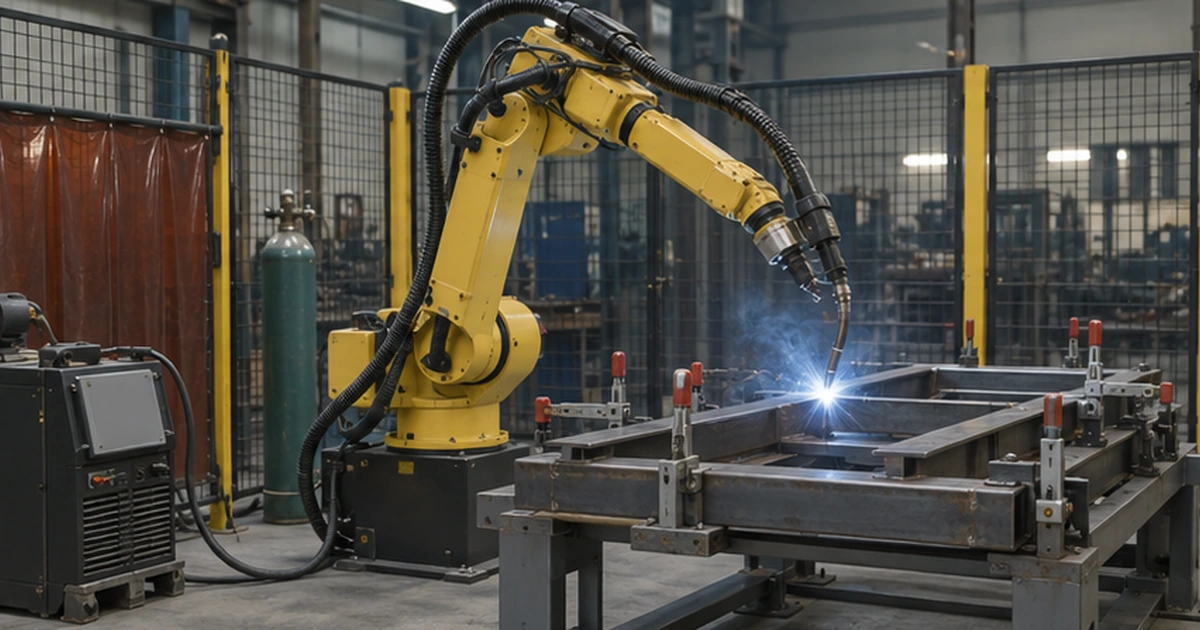
MIG and MAG Welding
Gas metal arc welding was developed in the late 1940s and patented in the United States in 1949 for aluminium, using a bare wire under inert gas. Its main advantage was a high deposition rate, but the cost of inert gas limited it to non-ferrous metals.
In the early 1950s, CO2 shielding made the process viable for carbon steel. Today MIG/MAG is the most widely used arc process, in shipyards, steel construction and the automotive industry, and it is the process used in most robotic welding cells.
Before Electricity
Welding itself is much older than the arc. Archaeological evidence goes back to around 3,000 BC in Egypt and the eastern Mediterranean, where metal was joined by heating and hammering. Forge welding of this kind remained the only method until the nineteenth century.
Gas Welding
Acetylene was discovered in 1836 by the English chemist Edmund Davy. Combined later with oxygen, it produced the hottest practical flame and led to oxy-acetylene welding and cutting, which developed alongside arc welding in the early twentieth century.
After the Second World War
Many of today’s processes were refined after 1945: shielded metal arc, gas metal arc, submerged arc, flux-cored arc and electroslag welding. They were later joined by laser and electron beam welding, and in 1991 friction stir welding was invented at TWI in Cambridge.
Why the History Matters Today
Each step in this history solved a real problem: carbon arcs were unstable, bare electrodes gave brittle welds, and inert gas was too costly for steel. Today’s processes still carry those solutions. Understanding why a coating or a shielding gas exists makes it easier to see what goes wrong when it is missing.
Conclusion
In about 150 years, arc welding went from laboratory experiments to the main joining method in shipbuilding and industry. The coated electrode and MIG/MAG are both still in daily use; for an overview of electrodes, see steel welding electrodes.
Need Help on a Project?
For MMA/SMAW welding on marine and industrial work, see MMA/SMAW Welding or request a quote.