

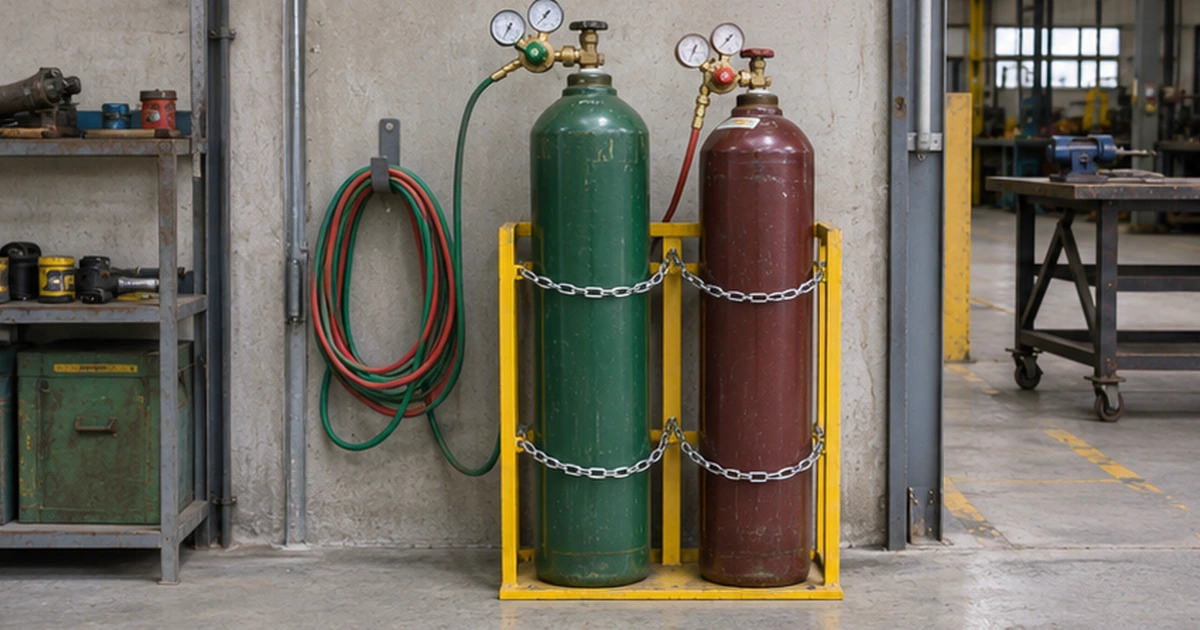
This acetylene cylinder safety guide covers the two gases used in oxy-fuel work, how each one behaves, and the handling, storage and transport rules that keep the workshop and the site safe.
Oxygen
Oxygen for welding and cutting is produced by separating air, which contains about 21% oxygen. Purity for cutting should be at least 99.5%. It is colourless, odourless and non-toxic. It does not burn on its own, but it makes any fire burn far more intensely.
For normal use it is supplied as a gas in steel cylinders of 40 or 50 litres at 150 or 200 bar. A 50-litre cylinder at 200 bar holds roughly 10 m³ of gas; a 40-litre cylinder at 150 bar roughly 6 m³. As a rule of thumb, gas volume equals cylinder volume multiplied by filling pressure.
Acetylene
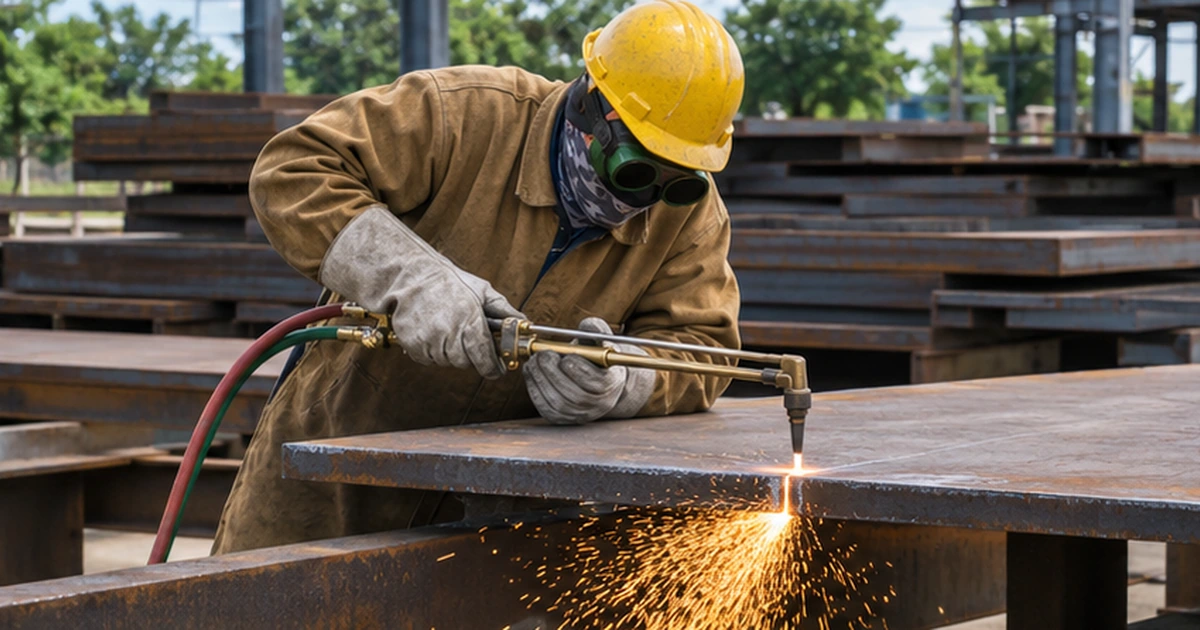
Acetylene (C2H2) is the most common fuel gas for oxy-fuel welding and cutting. Propane and methane can also be used, but acetylene gives the hottest flame with oxygen, mainly because of its high flame speed. It is colourless, lighter than air and has a distinctive smell.
Why Acetylene Cylinders Are Different
Acetylene is stable at low pressure but becomes unstable above about 1 bar, when it can decompose into carbon and hydrogen and explode if heated or struck. For this reason it is never stored as a free compressed gas.
The cylinder contains a porous mass soaked with acetone, and the acetylene is dissolved in the acetone. At 1 bar, one litre of acetone absorbs about 24 litres of acetylene. This allows filling pressures of around 18 bar without decomposition. A 50-litre cylinder typically holds about 10 kg of acetylene.
Safe Handling of Acetylene Cylinders
The HSE guidance on the safe use of acetylene covers the legal and practical side. The basic rules on site:
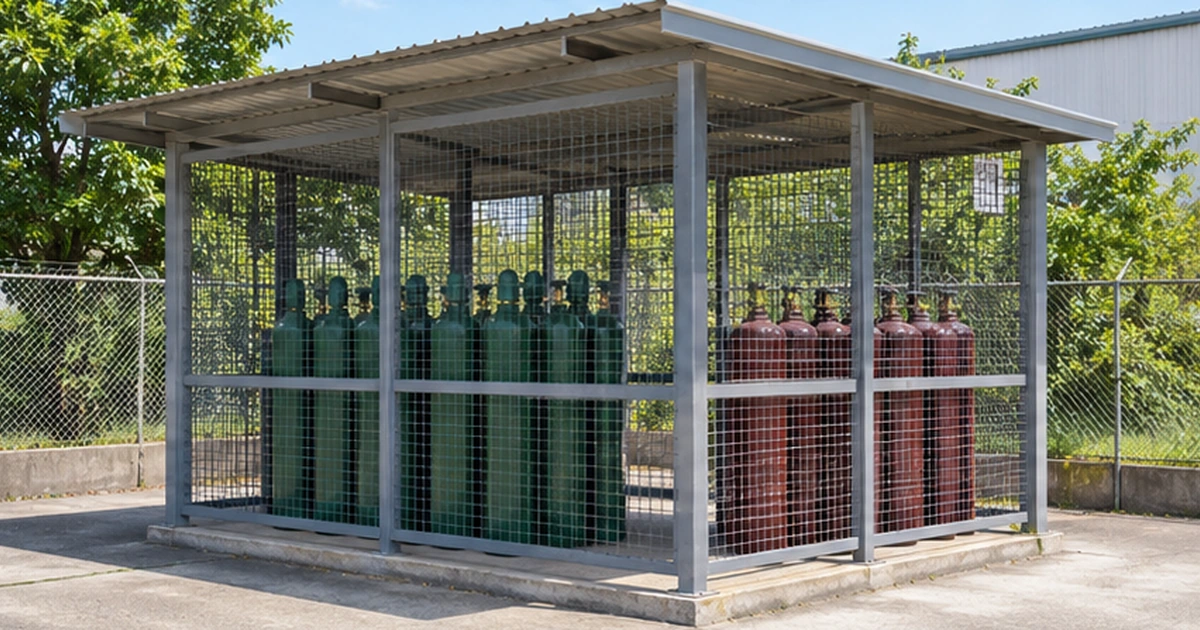
- Keep cylinders upright and secured, away from heat and flame
- Do not drop, strike or roll them
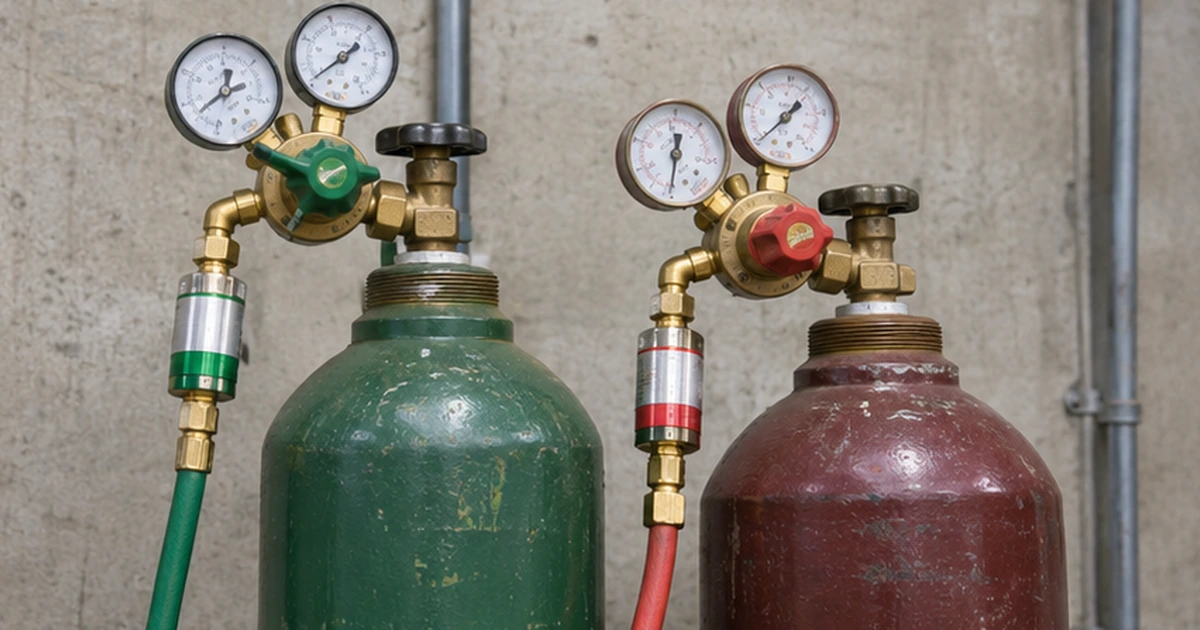
- Fit flashback arrestors on both oxygen and fuel lines
- Do not draw gas faster than the supplier’s stated withdrawal rate, or acetone is carried over
- A cylinder exposed to fire or flashback is dangerous: do not move it, evacuate and call the fire service
- Check contents by weighing, because pressure varies with temperature
Colour Coding
Cylinders are identified by the colour of the shoulder under EN 1089-3, which replaced older national standards such as UNI 4045. Oxygen is white and acetylene is maroon. Always read the label as well, since the colour alone is not proof of content.
Why Oxygen Purity Matters
In oxy-fuel cutting, the purity of the oxygen stream controls cutting speed and edge quality. A drop of just 1% in purity typically reduces cutting speed by about 25% and increases gas consumption by about 25%.
Oxygen Safety
- Never use oil or grease on oxygen regulators, valves or fittings
- Never use oxygen to blow dust off clothing or to ventilate a space
- Oxygen-enriched air makes clothing burn fiercely
- Close cylinder valves when work stops
Propane as an Alternative
For many heating and cutting jobs, propane can replace acetylene. UK safety guidance recommends using propane in preference to acetylene where possible, because acetylene is far more unstable in a fire. Acetylene remains the choice for gas welding, where its hotter flame is needed.
Hoses and Flashback
Oxygen and fuel hoses are colour-coded and fitted with the correct connectors so they cannot be swapped. Hoses are checked for cracks and leaks before use, and both lines are purged before lighting the torch. Flashback arrestors at the regulators stop a flame from travelling back into the cylinder.
Conclusion
Oxygen and acetylene give the hottest flame for gas welding and cutting, but acetylene cylinders need careful handling. For arc processes, shielding gases are a separate subject; see my MIG/MAG welding work.