

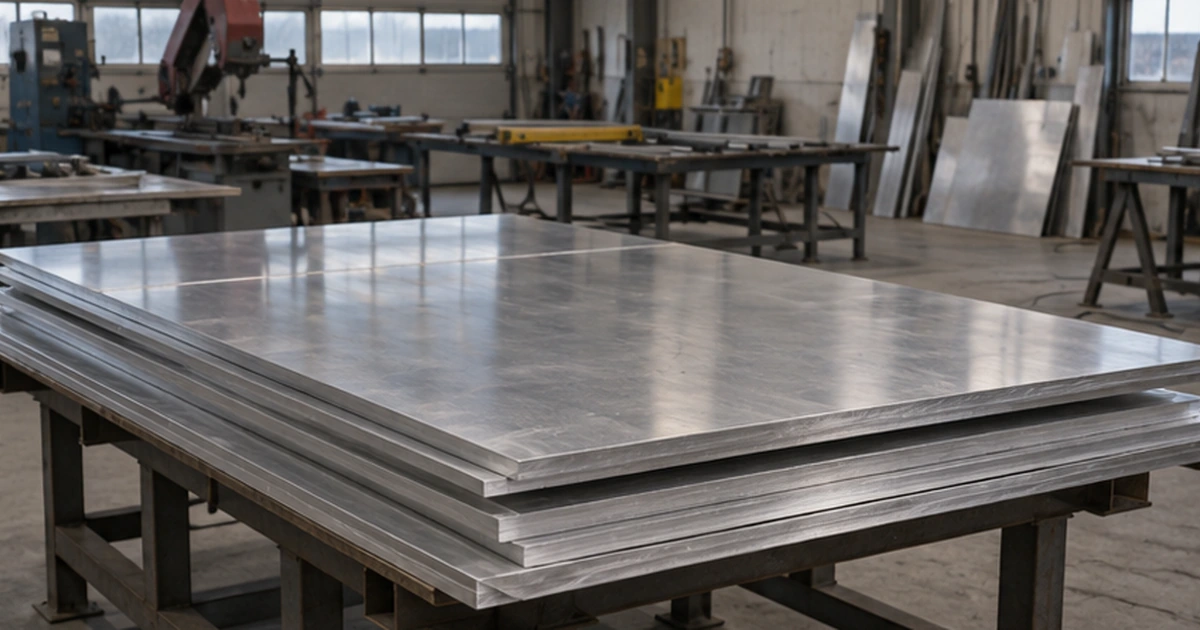
Why Aluminium Alloys Are Used
Pure aluminium has low strength, but aluminium alloys can be strong, and some match carbon steels. Combined with a density of about 2.7 g/cm³, against about 7.8 g/cm³ for steel, and good corrosion resistance, this is why aluminium keeps replacing steel in thin sections, in vehicles and in boatbuilding.
Cast alloys with excellent casting properties are used for engine blocks and housings. The main alloying elements are silicon, magnesium, zinc, copper and manganese.
The Alloy Series
- 1xxx: almost pure aluminium; soft, good weldability
- 2xxx: copper; high strength, generally poor fusion weldability
- 3xxx: manganese; moderate strength, good weldability
- 4xxx: silicon; used mainly as filler metal
- 5xxx: magnesium; excellent weldability, widely used in marine work
- 6xxx: magnesium and silicon; weldable, but the heat-affected zone loses strength
- 7xxx: zinc; very high strength, only some grades such as 7020 are weldable
TWI’s guide to the weldability of aluminium alloys covers each group and the matching fillers in detail.
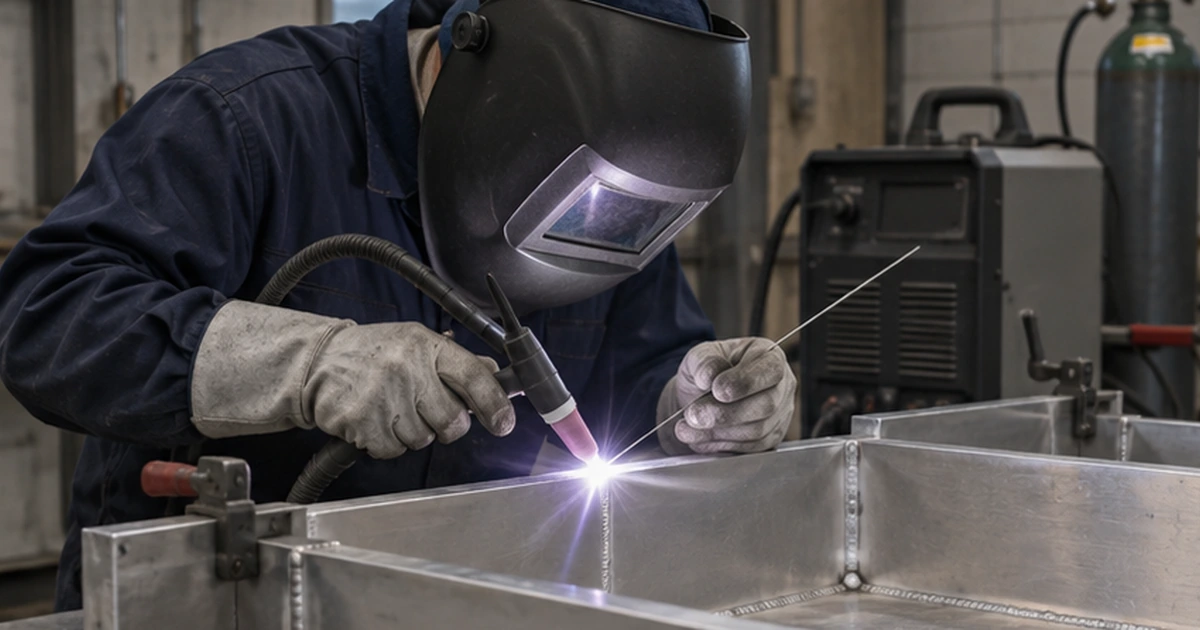
What Makes Aluminium Harder to Weld
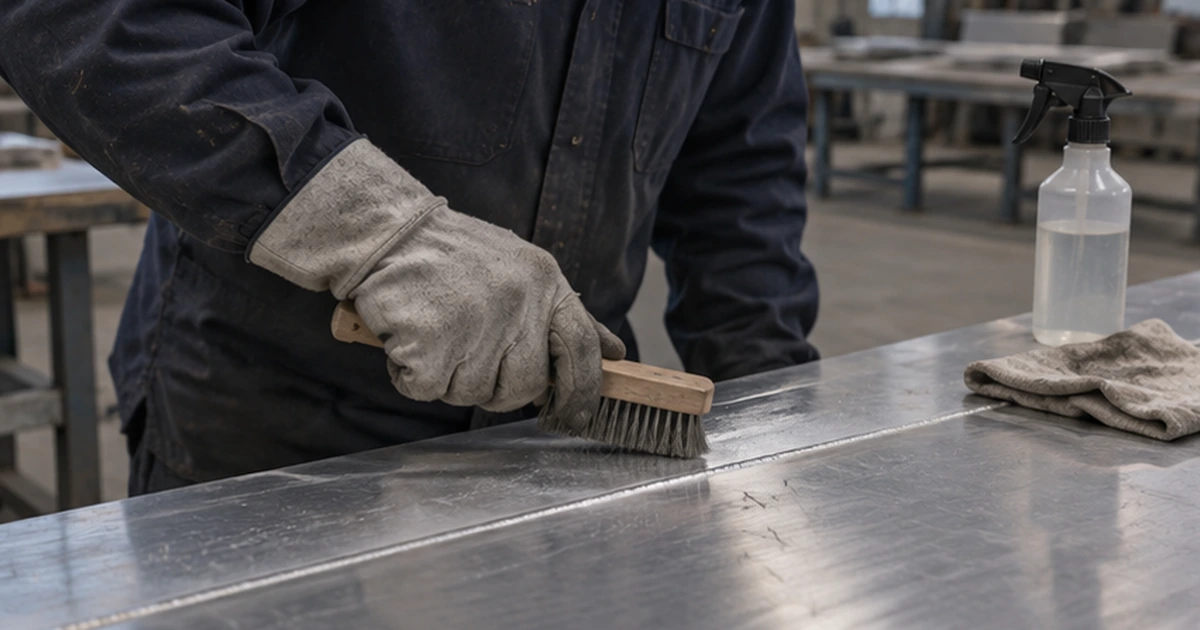
- The oxide layer melts at about 2,060 °C, while the alloy melts at around 660 °C or lower. It must be removed by brushing or chemical cleaning, and AC TIG helps break it up.
- High thermal conductivity draws heat away fast, so more heat input is needed than for steel of the same thickness.
- Thermal expansion is about twice that of steel, so distortion and solidification cracking are more likely. Crack-resistant 4xxx or 5xxx fillers reduce the risk.
- Hydrogen from moisture, oil or dirty wire causes porosity. Clean material, dry wire and correct gas shielding are essential.
In a production line with mechanised equipment, aluminium welding is routine. Repairs and modifications in a small workshop are harder and call for more experience than the same work on steel.
Filler Metals
The two most common filler families are 4xxx (aluminium-silicon, such as 4043) and 5xxx (aluminium-magnesium, such as 5356). Both resist solidification cracking, but the weld metal may not match the strength of the parent metal. The choice depends on the base alloy, strength, colour after anodising and service temperature.
Processes
MIG and TIG are the main arc processes for aluminium, with pure argon as the preferred shielding gas on most thicknesses. Friction stir welding, a solid-state process, is particularly suited to aluminium and is used for ship decks and panels because it avoids melting altogether.
Aluminium in Marine Work
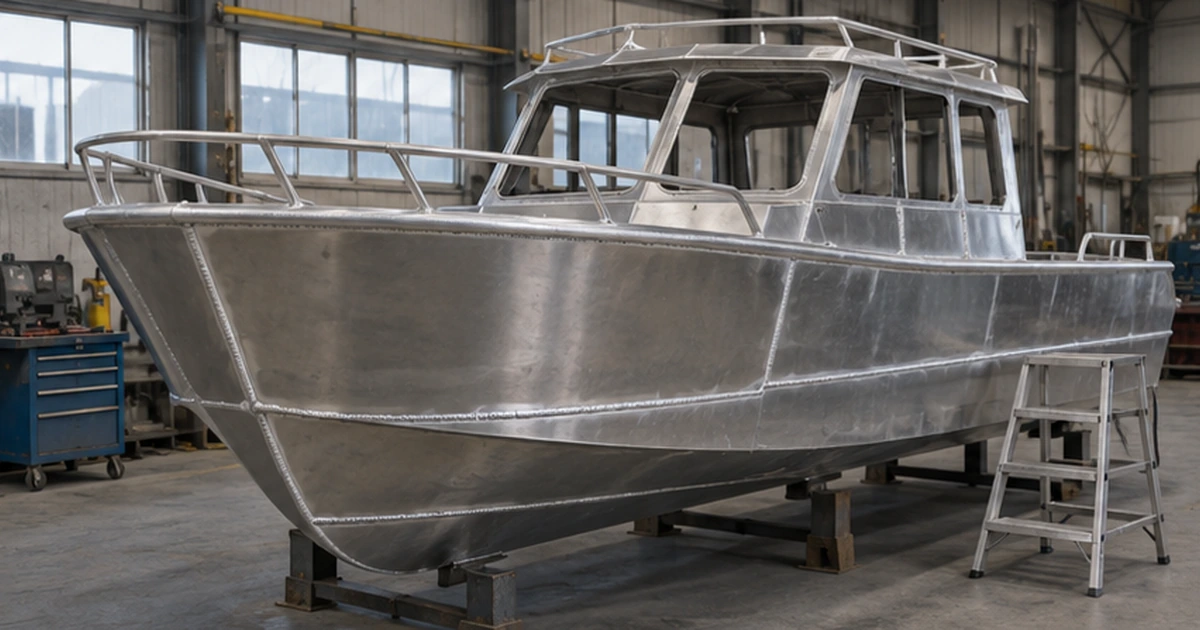
In boatbuilding and ship superstructures, 5xxx plate such as 5083 is widely used for its corrosion resistance in seawater and good weldability, often combined with 6xxx extrusions such as 6082. Welding procedures for these alloys are qualified to ISO 15614-2, and welders to ISO 9606-2.
Practical Tips
- Clean with a stainless brush used only on aluminium, then weld soon after
- Store wire in a dry place and keep the spool covered
- Use push technique with MIG
- Allow for more distortion than on steel and tack closely
Conclusion
Aluminium alloys offer low weight and good corrosion resistance, and the 5xxx and 6xxx series weld well with the right preparation. Oxide removal, heat control and filler choice decide the result. Most aluminium is welded by MIG or TIG; see my MIG/MAG welding work.