

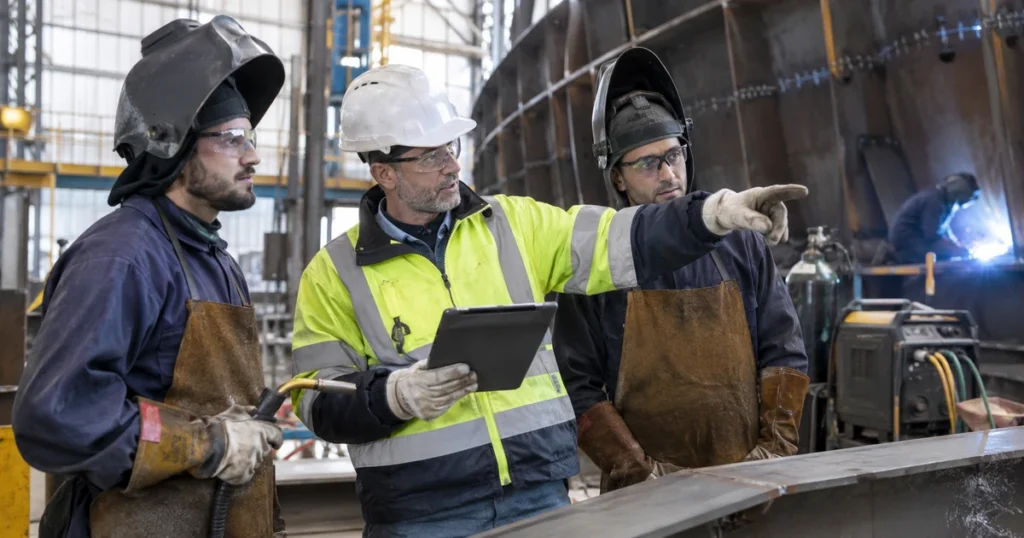
Welding Safety Starts Before the Arc
Welding safety is more than a helmet and gloves. In shipyards, plants and on site, the main risks are electricity, fire, fume, confined spaces and the working area itself. Each one is identified and controlled before work starts, through a risk assessment and, where needed, a hot work permit.
Electrical Risk
Damaged cables, worn electrode holders and poor return connections cause shocks and arcing. Equipment is checked before each shift, and extra care is needed in wet conditions or inside steel structures.
In confined or wet conditions, DC machines or voltage-reducing devices on AC machines lower the shock risk. Return clamps go as close to the weld as possible, never through lifting gear or bearings.
Fire and Hot Work
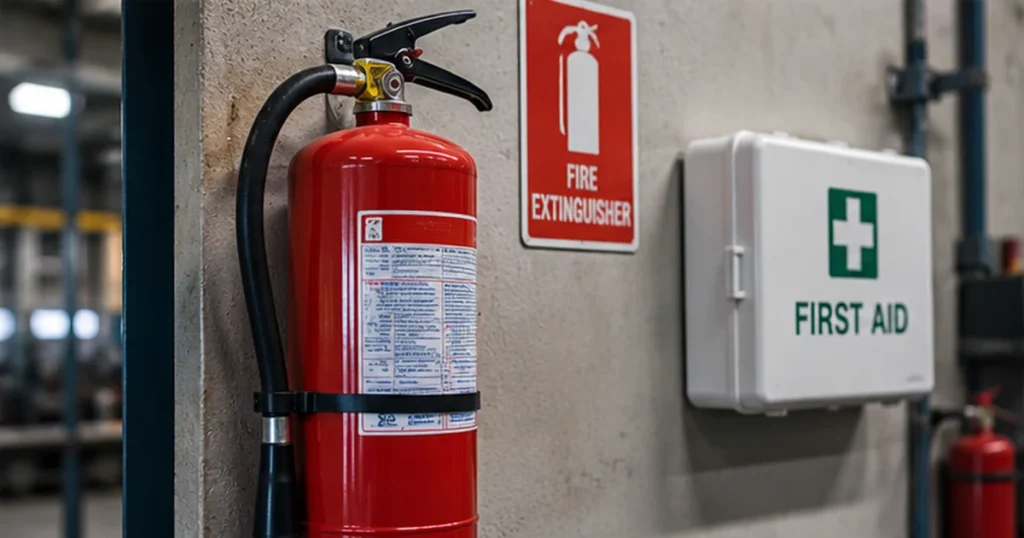
Sparks and spatter travel several metres. Combustibles are removed or covered, openings are sealed, an extinguisher is at hand, and a fire watch stays after the job ends. Tanks and pipes that held fuel must be cleaned and gas-free before welding.
Fume and Confined Spaces
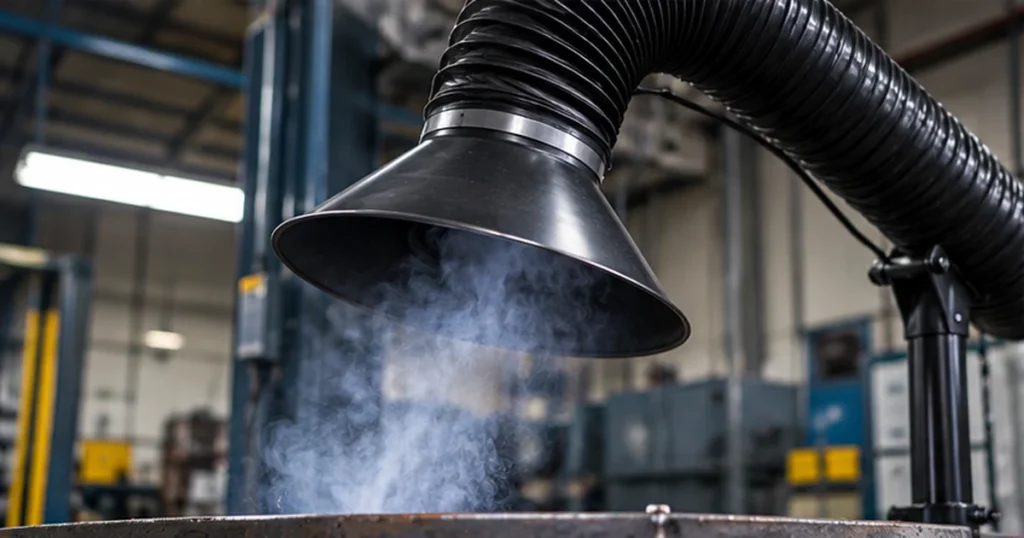
All welding fume, including mild steel fume, is now classed as able to cause lung cancer, so local exhaust ventilation is the first control and respiratory protection the second. In tanks, double bottoms and voids, argon and CO2 can displace oxygen. The HSE guidance on welding safety risks covers confined space work in detail.
Coated and Painted Steel
Welding or cutting through paint, primers, galvanising or old coatings releases extra fume, some of it toxic. On ship repair this is common, so coatings are removed back from the weld area where possible, and extraction and respiratory protection are chosen for the worst case, not the average.
Arc Radiation, Eyes and Skin
The arc gives off intense ultraviolet and infrared radiation. Short exposure causes arc eye and skin burns. Welders need the correct filter shade for the process and current, and screens protect other workers nearby, who are often the ones who get injured.
Personal Protective Equipment
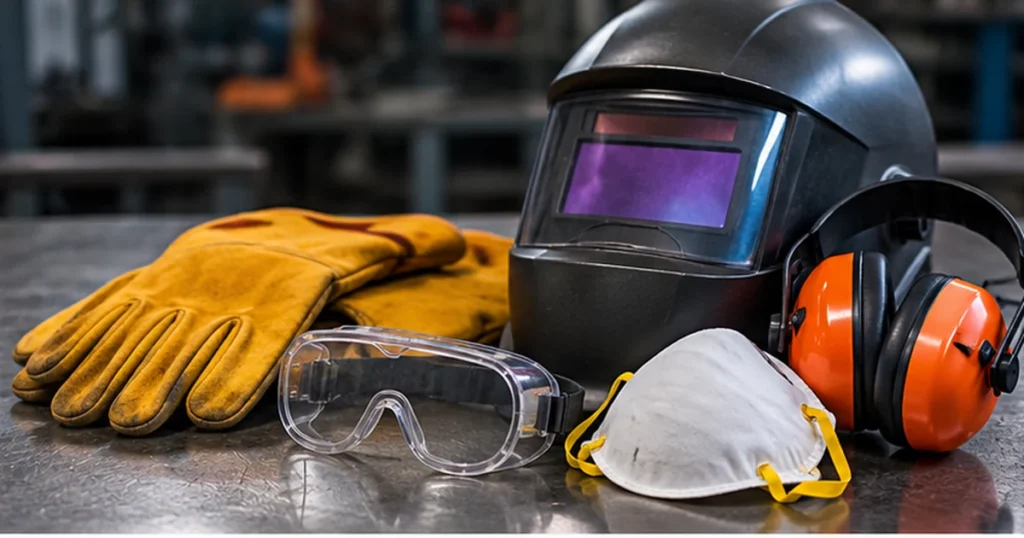
PPE is the last line of defence: a welding helmet with the right shade, flame-resistant clothing, gloves, safety boots and hearing protection. It works only when the other controls are in place. Good working practice also prevents welding defects.
Noise, Lifting and Working at Height
Grinding, gouging and plate handling are part of most welding jobs. Hearing protection, correct lifting equipment and secure platforms or harnesses are needed as much as welding PPE.
Before and After the Job
- Risk assessment and hot work permit where required
- Equipment, cables and gas lines checked
- Area cleared of combustibles; extinguisher ready
- Ventilation or extraction in place; gas test in confined spaces
- After work: fire watch, gas closed, area left safe
From My Experience
On site, the first thing I look at is not the joint but the area around it: what can burn, where the sparks will go, how the air moves and how we get out. On hot tapping work on live pipelines, the permit, gas testing and coordination with the operator are part of the job long before the first arc.
Conclusion
Most welding accidents are prevented before the arc is struck: with a risk assessment, checked equipment, a clear work area and good ventilation.
If you found this article useful, feel free to share it with colleagues who work with welding crews. — Zisis
Need Help on a Project?
For welding supervision and quality control on marine and industrial work, see Welding Supervision or request a quote.