

Why Cast Iron Cracks
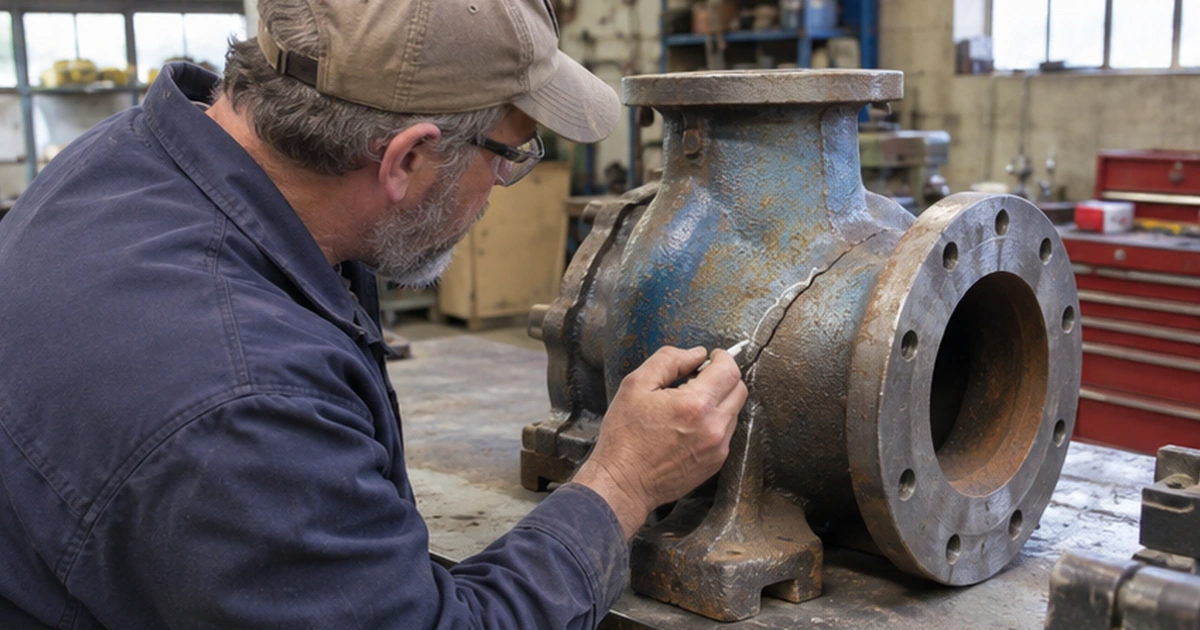
Cast iron contains 2 to 4% carbon, much of it as graphite. It has very little ductility, so it cannot stretch to absorb the shrinkage stresses that every weld creates. Heat from the arc also turns the iron next to the weld into hard, brittle martensite and iron carbide. Put together, these give the classic result: a crack beside the weld as soon as it cools.
Most cast iron welding is repair work on pump casings, gearboxes, engine blocks, valve bodies and machine bases. The aim is a sound, crack-free repair, not a joint as strong as steel.
Know What You Are Welding
Grey cast iron, with flake graphite, is the most common and the most difficult. Ductile (nodular) iron is more forgiving. Malleable iron can lose its properties if overheated. A spark test or a chip test helps: grey iron gives short, dull red sparks and its chips crumble. If the part has been soaked in oil for years, that oil will come out of the pores during welding and must be burned out first.
Preparing for Cast Iron Welding
- Find the full length of the crack, using dye penetrant if needed
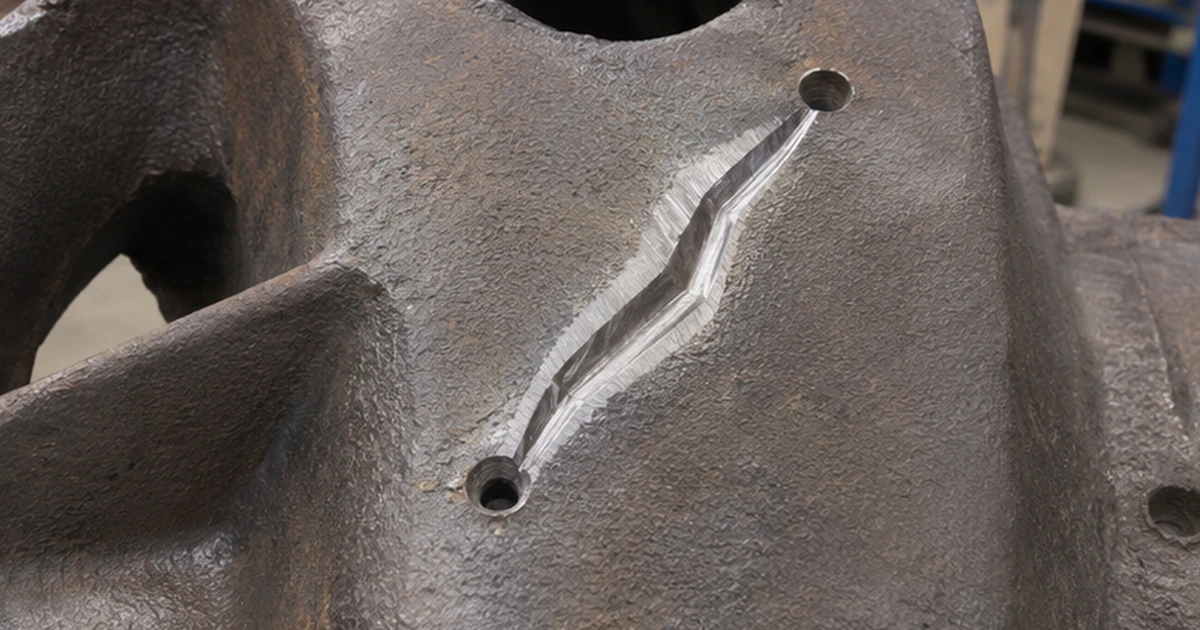
- Drill a small hole just beyond each end of the crack to stop it from running
- Grind a U or V groove, rounding off sharp corners
- Remove all oil and casting skin; heat gently to drive out absorbed oil
- Clamp or support the part so it cannot move during welding
Hot Method or Cold Method
In the hot method, the whole casting is preheated, typically to around 300 to 600 °C, welded while hot and then cooled very slowly, often buried in insulation or left in the furnace. This reduces hardness and stress and gives the best repairs, but it needs a furnace and a part that can tolerate the heat.
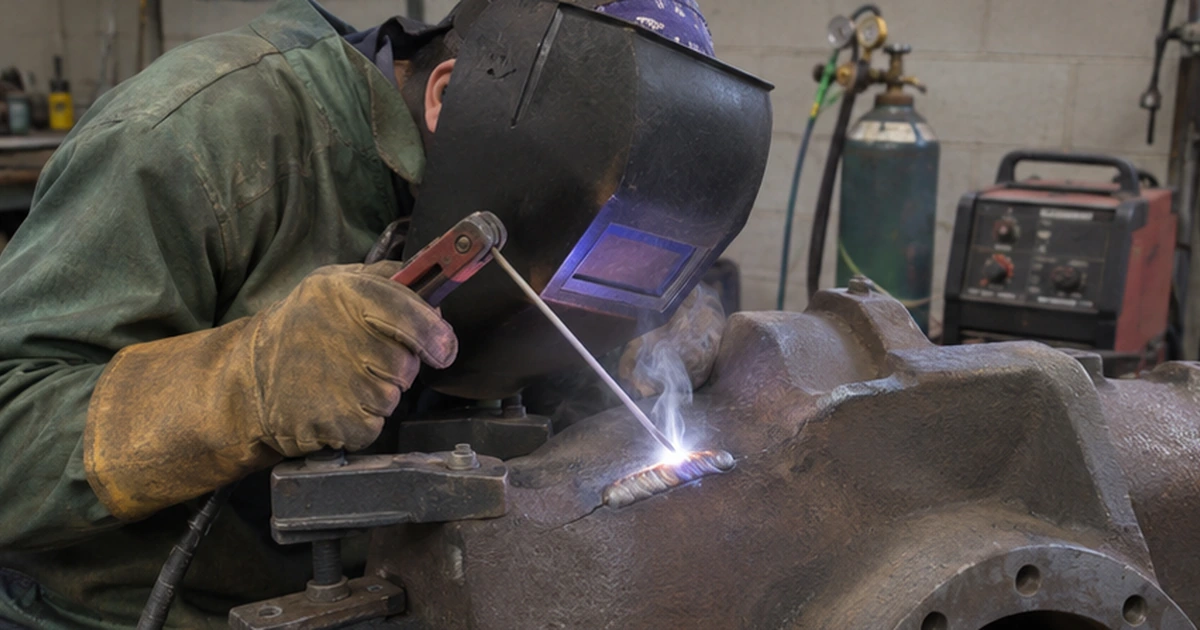
The cold method is used on site and on large parts. The casting stays near room temperature and the welder keeps heat input as low as possible: short beads of about 25 to 50 mm, a pause until the area can be touched by hand, then the next bead, often in a staggered sequence.
Electrodes and Peening
Nickel-based electrodes are the standard for cast iron welding. Pure nickel (ENi-CI) gives a soft, machinable deposit on thin sections. Nickel-iron (ENiFe-CI) is stronger and better suited to thicker castings and ductile iron. Small diameters and the lowest current that gives good fusion keep dilution down.
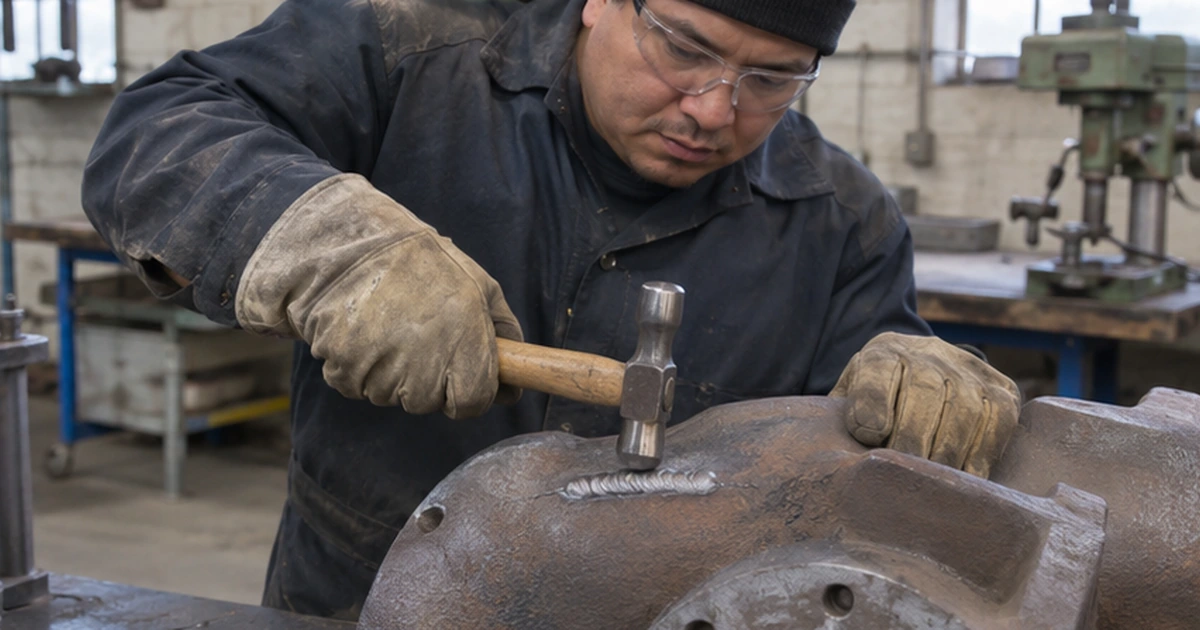
Each bead is peened immediately with a round-nosed hammer while still hot. Peening stretches the weld metal and offsets part of the shrinkage, reducing the chance of a crack.
From My Experience
The patience is the hard part. When I repair a cast housing with the cold method, I spend more time waiting than welding. Every time someone tries to speed up and run a long bead, the crack comes back next to it.
Conclusion
Cast iron welding works when you respect the material: identify it, prepare the crack, control heat with either full preheat or short cold beads, use nickel electrodes and peen every bead. For more on electrode technique, see MMA welding technique.
If you found this article useful, feel free to share it with colleagues who work with repair and maintenance. — Zisis
Need Help on a Project?
For MMA/SMAW welding on marine and industrial work, see MMA/SMAW Welding or request a quote.