

What Makes Welding Aluminium Different
Aluminium behaves very differently from steel under the arc. It conducts heat about four times faster, so heat spreads away from the joint. It melts at around 660 °C, yet its surface oxide melts above 2,000 °C. It does not change colour before melting, which gives the welder little warning. And molten aluminium dissolves hydrogen readily, which turns into porosity when the weld freezes.
Both TIG and MIG are used for welding aluminium. The right choice depends on thickness, quantity, position and the finish required.
Dealing with the Oxide Layer
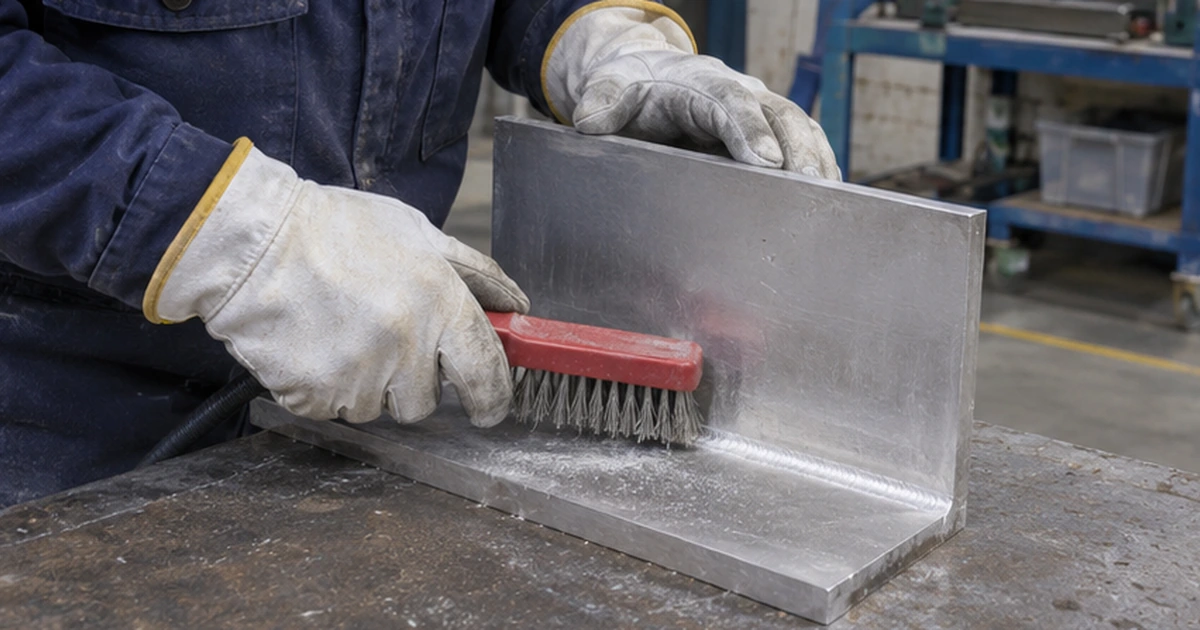
The oxide must be broken up for the filler and base metal to fuse. Mechanical cleaning removes most of it: solvent first to remove oil, then a dedicated stainless steel brush, used only on aluminium. Welding should follow soon after, as the oxide reforms within hours. In the arc, the electrode-positive part of the cycle provides the cleaning action that strips the remaining oxide.
TIG Welding of Aluminium
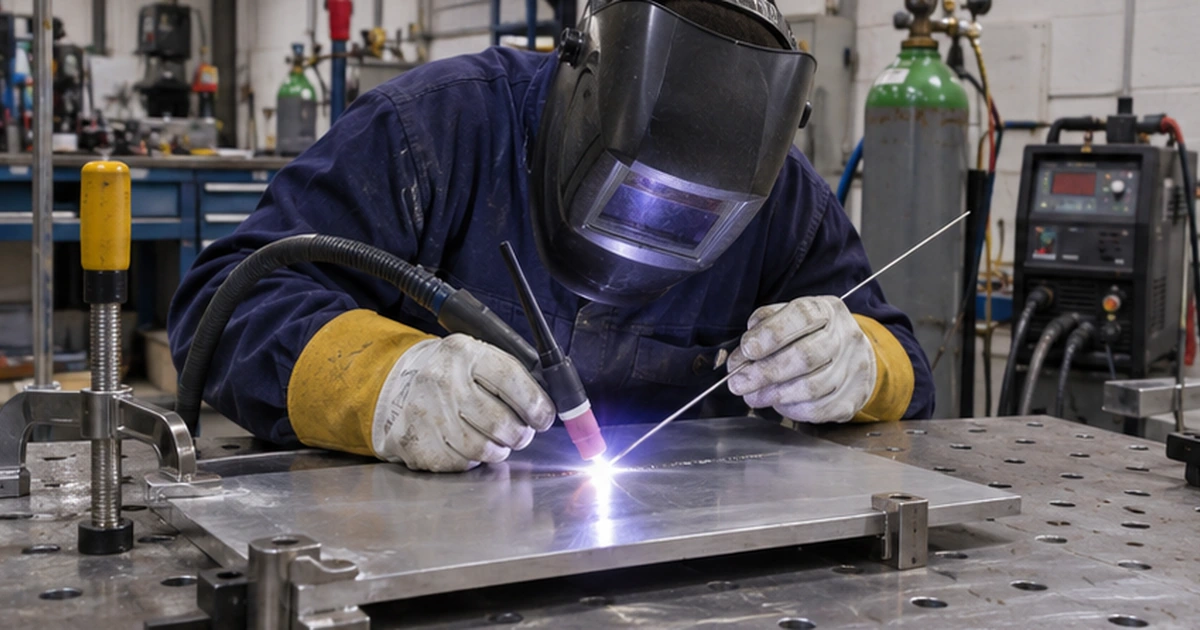
TIG is normally done with alternating current. The electrode-positive half cleans the oxide and the electrode-negative half puts heat into the work. Modern inverters allow the balance and frequency to be adjusted, narrowing the arc and controlling the cleaning zone. Pure argon is the standard gas; argon-helium mixes add heat on thick sections.
- Best for: thin sheet, pipe, small parts and visible welds
- Advantages: excellent control, clean welds, no spatter
- Limits: slow, and needs skill with both hands
MIG Welding of Aluminium
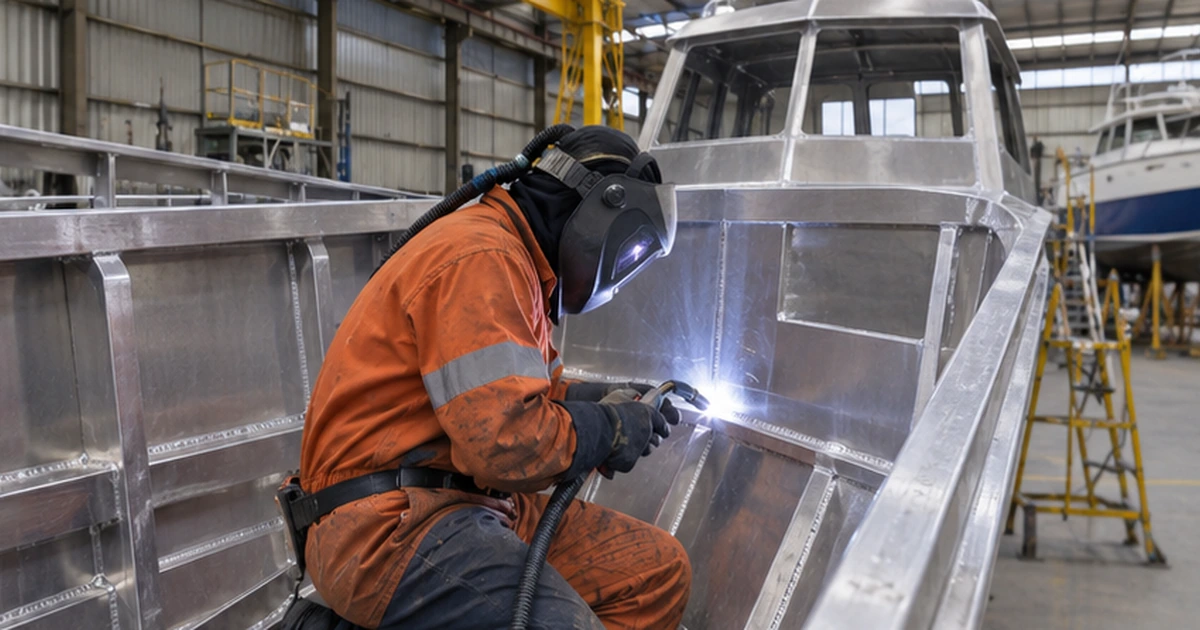
MIG uses DC electrode positive, so oxide cleaning is continuous. It is much faster than TIG and the choice for thicker material, long seams and production work such as boats, trailers and structures. Pulsed MIG gives good control on thinner sections and in position.
- Feeding: soft aluminium wire needs a push-pull or spool gun, U-groove rolls and a plastic liner
- Gas: pure argon, or argon-helium on thick plate
- Technique: push the torch, never drag it, to keep shielding and cleaning ahead of the pool
Choosing the Filler Metal
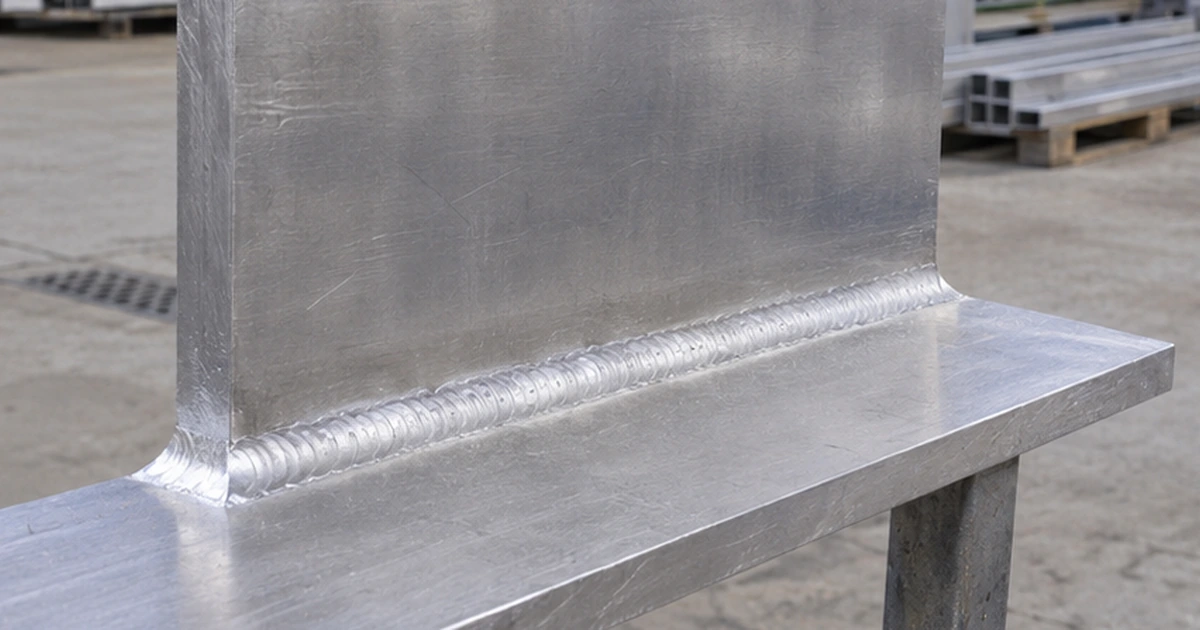
The two most common fillers are 4043 (aluminium-silicon) and 5356 (aluminium-magnesium). 4043 flows well and resists hot cracking but gives a weaker, grey weld that does not anodise to match. 5356 is stronger and better for marine structures, but should not be used for service above about 65 °C. The base alloy decides: see the filler tables for each grade before starting.
From My Experience
Most aluminium porosity I have seen came from dirty material, damp wire or a draught on site, not from the machine. I clean every joint right before welding, keep the wire spool covered and set up screens outdoors. With aluminium, preparation is half of the weld.
Conclusion
Welding aluminium is a matter of breaking the oxide, controlling heat and preventing hydrogen. TIG gives control on thin work; MIG gives speed on thicker sections. For alloy selection, see aluminium alloys and weldability.
If you found this article useful, feel free to share it with colleagues who work with aluminium fabrication. — Zisis
Need Help on a Project?
For precision TIG welding on marine and industrial work, see TIG Welding or request a quote.