

Types of Storage Tank
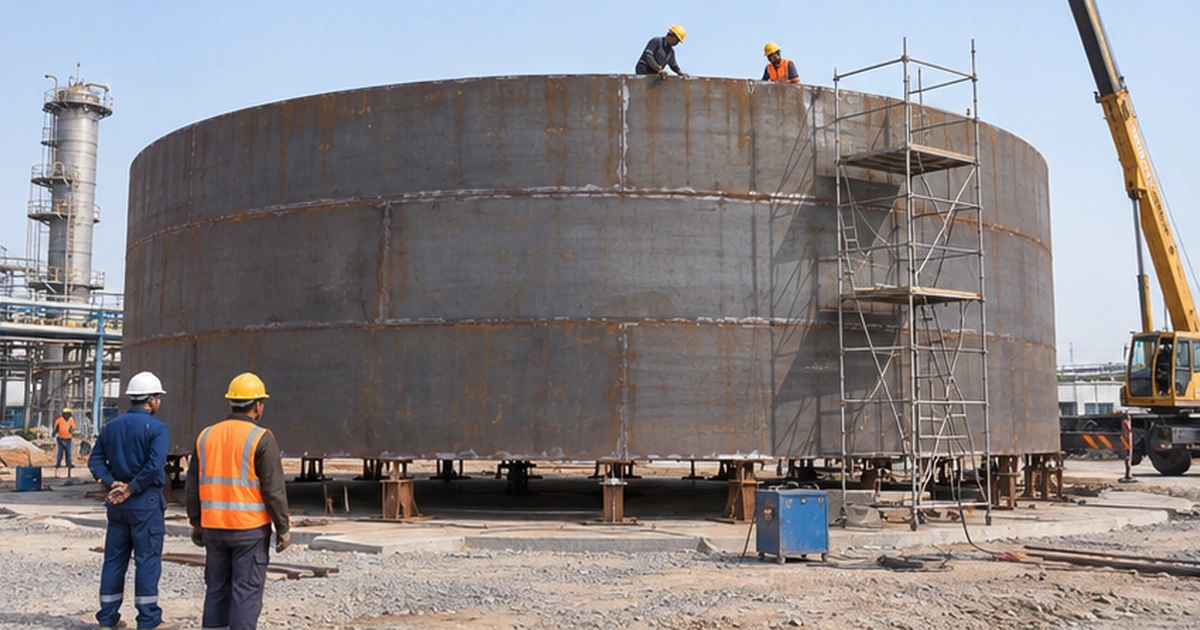
Fuel, water and chemicals are stored in tanks made of plastic, concrete or steel. Plastic tanks suit small domestic heating systems. Concrete tanks are possible but need internal linings that resist the stored product, which makes them expensive and rare. Steel remains the standard for any significant volume, from a few cubic metres in a boiler room to large field-erected tanks in refineries and terminals.
- Shop-built tanks: horizontal or vertical cylinders made in the workshop and delivered complete
- Field-erected tanks: large vertical tanks built on site plate by plate
- Single-wall and double-wall tanks: double-wall designs with leak detection are used underground and where regulations require them
How a Large Storage Tank Is Built
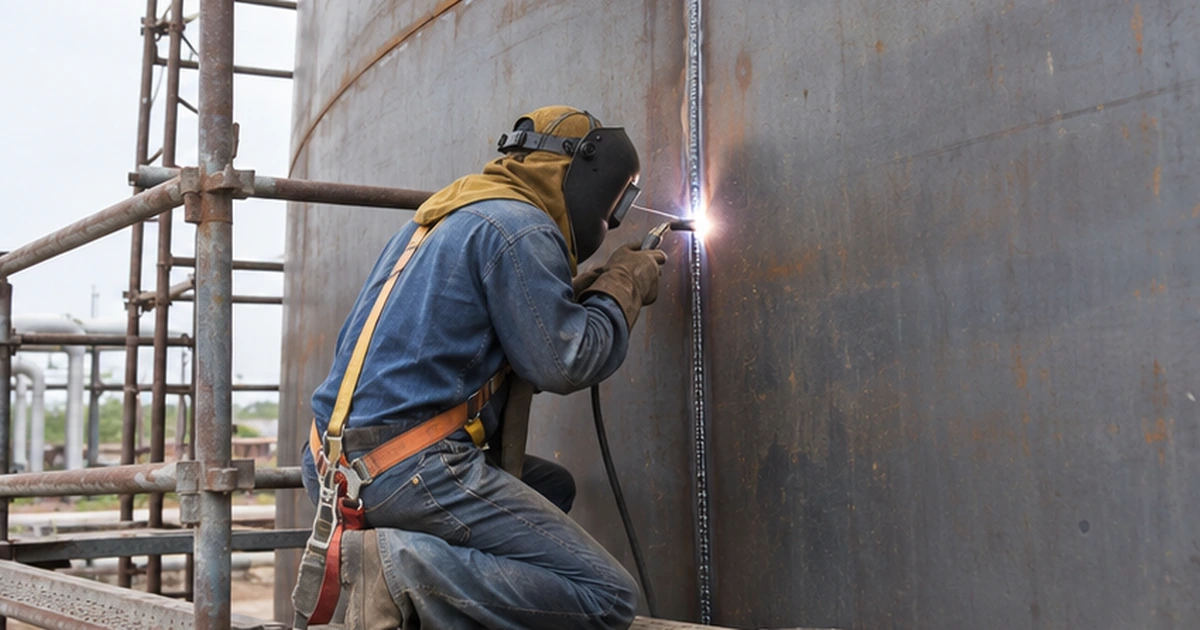
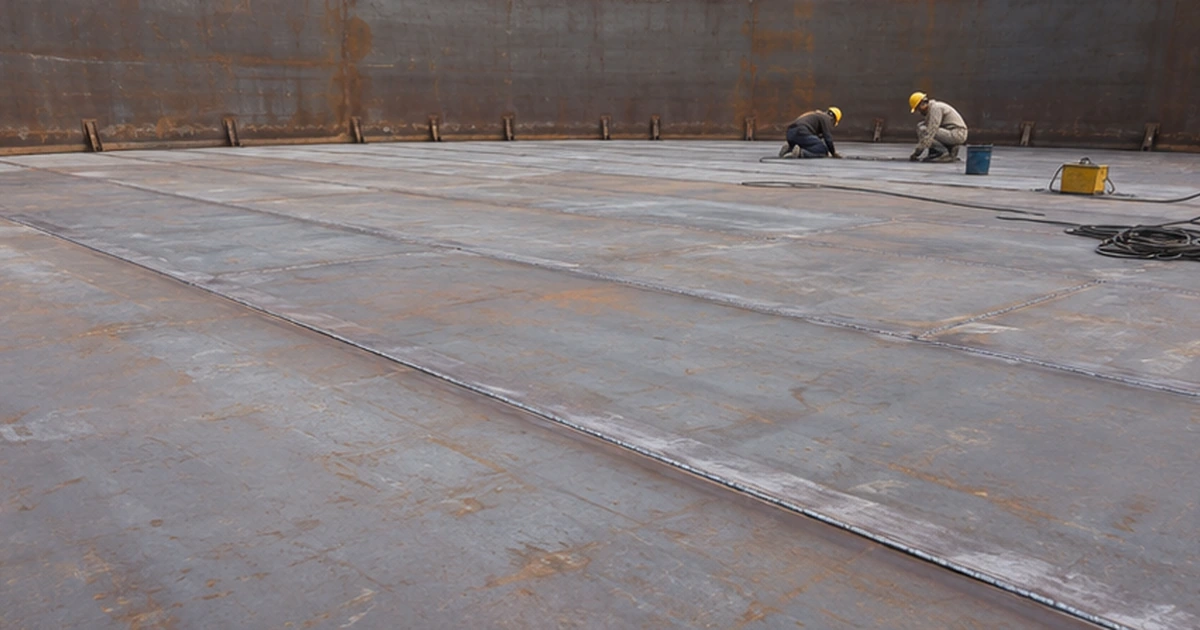
A field-erected storage tank starts with the bottom. Bottom plates are laid on a prepared foundation and usually lap welded, with an annular ring of thicker plates around the edge. The shell is then built course by course, each course thinner than the one below, since pressure from the liquid is highest at the bottom. The roof may be fixed, cone or dome shaped, or floating on the product to reduce vapour losses. Design codes such as API 650 and EN 14015 set the plate thickness, joint types and tests.
Welding the Joints
- Shell vertical seams: full-penetration butt welds, often by MMA, flux-cored or automatic vertical welding
- Shell horizontal seams: butt welds, frequently made with automatic submerged arc girth welders
- Shell-to-bottom joint: double fillet weld, the most highly stressed joint in the tank
- Bottom and roof plates: lap or butt welds with fillet welds
- Nozzles and manholes: reinforced openings welded with full penetration
On thinner shop-built tanks, MAG welding is common. Weld quality is controlled through qualified procedures, qualified welders and careful fit-up, as distortion of thin plates can be considerable.
Inspection and Testing
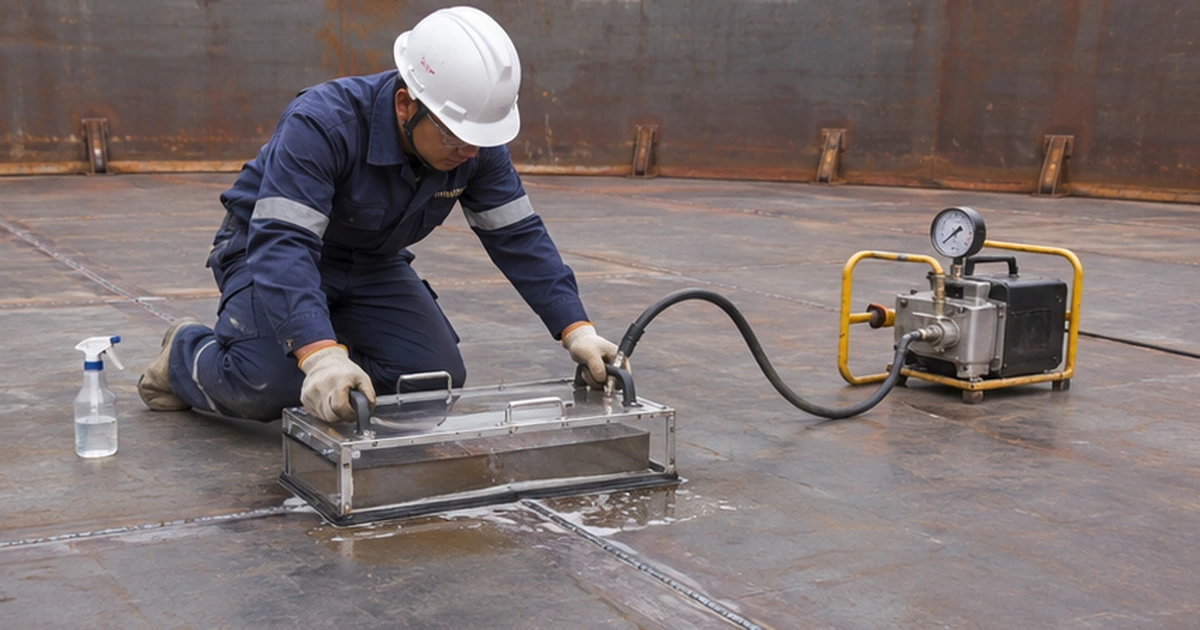
Shell butt welds are spot radiographed or ultrasonically tested according to the code. Bottom welds are checked with a vacuum box: soapy water is applied and a vacuum drawn, and any leak shows as bubbles. The shell-to-bottom weld is tested with penetrant or by air pressure between the fillets. Finally, the tank is filled with water for a hydrostatic test, and its settlement is monitored.
Repairs and Safety
Most tank repairs involve corroded bottoms, shell pitting near the floor, and nozzle or roof damage. Any hot work on a tank that has held fuel is dangerous. The tank is emptied, cleaned, gas freed and tested, and work proceeds only under a permit, with continuous gas monitoring. A tank that seems empty can still hold enough vapour to explode.
From My Experience
On tank repairs, the welding is the short part of the job. Cleaning, gas freeing, testing and setting up ventilation take most of the time. I do not strike an arc in or on a fuel tank until I have seen the gas test result and the permit is signed.
Conclusion
A steel storage tank is a simple shape built from many demanding welds, each one inspected and tested before the tank goes into service. For safe repairs, see hot work on tanks and containers.
If you found this article useful, feel free to share it with colleagues who work with tanks and terminals. — Zisis
Need Help on a Project?
For specialized welding on demanding materials on marine and industrial work, see Specialized Welding or request a quote.