

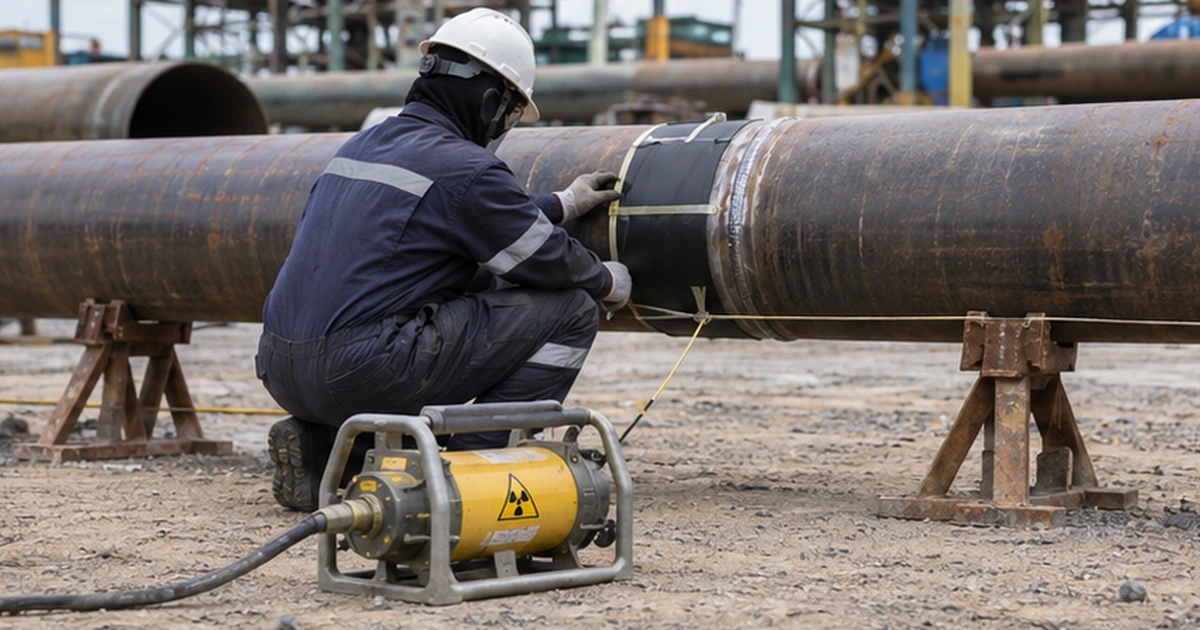
What Radiographic Testing Does
Radiographic testing (RT) passes X-rays or gamma rays through a weld onto a film or digital detector. Denser material absorbs more radiation, so voids and inclusions show as darker areas on the image. The result is a permanent picture of the inside of the weld, which can be interpreted, stored and reviewed later.
It is one of the oldest and most trusted methods of non-destructive testing (NDT) for welds, widely used on pipelines, pressure equipment, ship structures and process piping.
Sources of Radiation
- X-ray tubes: adjustable energy, good image quality, suited to workshops and thinner sections
- Gamma sources, such as iridium-192 and selenium-75: portable, need no power, common on site and on pipelines
- Pipeline crawlers: X-ray units that travel inside the pipe and expose each girth weld from within
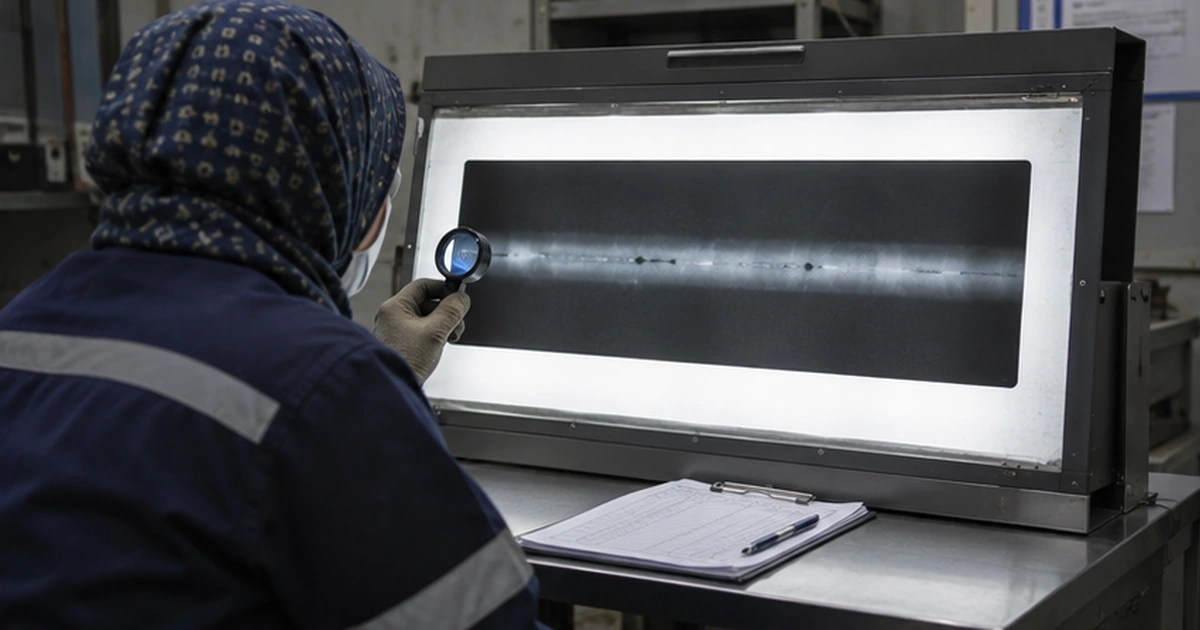
What Radiographic Testing Finds
RT is very good at detecting volumetric defects: porosity, slag inclusions, tungsten inclusions, incomplete penetration and burn-through. It also shows lack of fusion and cracks when they are aligned with the radiation beam. Planar defects lying at an angle, such as some sidewall fusion defects or fine cracks, can be missed. That is one reason ultrasonic testing is often used alongside or instead of RT on thick sections.
Reading the Radiograph
Image quality is checked with image quality indicators (IQIs), small wires or step holes placed on the weld, which show the smallest detail visible on the film. A qualified interpreter, typically certified to ISO 9712 Level 2 or 3, then assesses the weld against the acceptance standard specified for the job, such as ISO 10675, ASME or API 1104.
Film and Digital Radiography
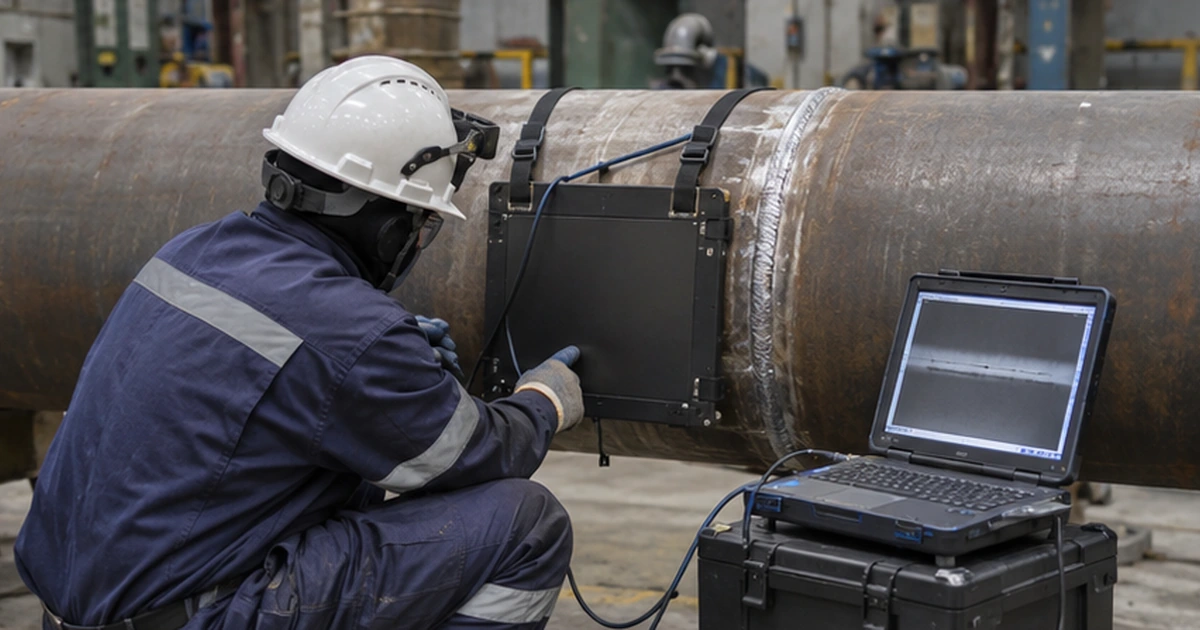
Traditional film needs processing with chemicals and a darkroom. Computed radiography uses reusable phosphor plates, and digital radiography uses flat-panel detectors that show the image within seconds. Digital methods reduce chemicals, speed up results and make storage and sharing easier, and they are increasingly accepted by codes and clients.
Safety
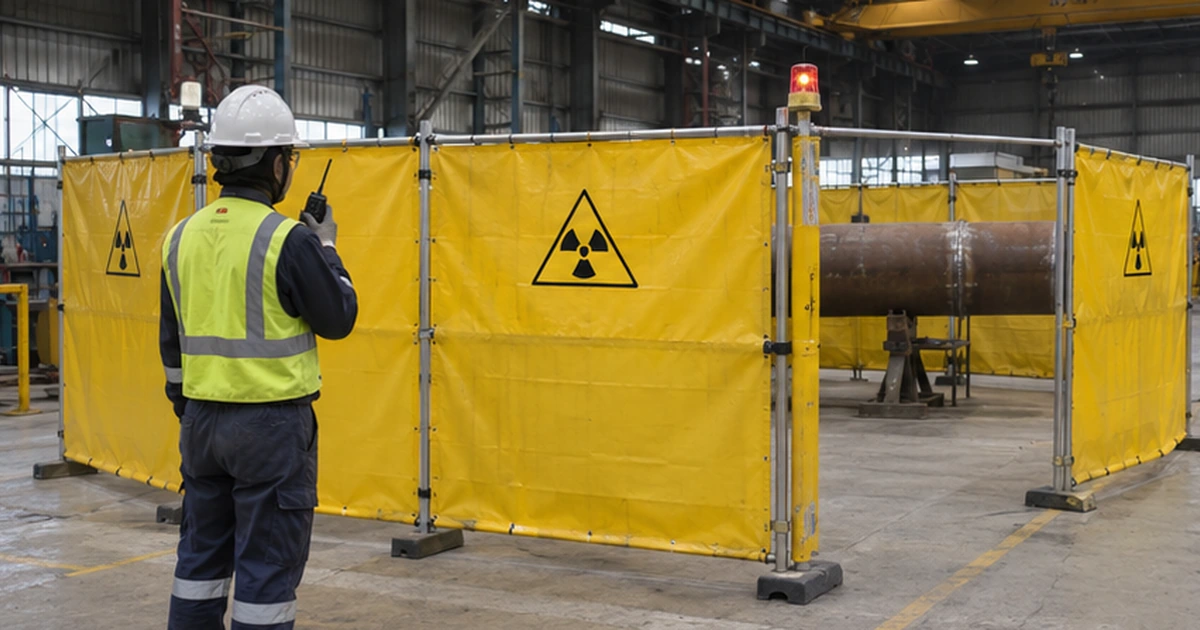
Radiation is invisible and can cause serious harm. Radiography is carried out only by licensed operators, with controlled areas, barriers, warning signs and dose monitoring. On site, other trades are moved out of the area, which is why RT is often scheduled at night or during breaks.
From My Experience
On pipeline and plant work, my welds are routinely radiographed. When RT is planned at the end of a shift, I make sure the joints are cleaned, numbered and ready, so the crew can shoot them without delay. A clean radiograph on the first shot is the best confirmation of a day’s work.
Conclusion
Radiographic testing gives a permanent image of the inside of a weld and is excellent for volumetric defects. Combined with other methods, it gives a full picture. See also ultrasonic testing of welds and welding defects and prevention.
If you found this article useful, feel free to share it with colleagues who work with inspection and QA teams. — Zisis
Need Help on a Project?
For welding supervision and quality control on marine and industrial work, see Welding Supervision or request a quote.