

Why Post-Weld Heat Treatment Is Used
Welding leaves residual stresses in and around the joint, often close to the yield strength of the steel. In some steels it also leaves a hard, brittle heat-affected zone. Post-weld heat treatment (PWHT) heats the welded component to a controlled temperature below the transformation range, holds it there, and cools it slowly. This relaxes residual stress, tempers hard microstructures and allows remaining hydrogen to escape.
When It Is Required
Codes such as ASME B31.3, ASME Section VIII and EN 13445 require PWHT based on material and thickness. Typical cases include thick carbon steel sections, chrome-moly piping for high-temperature service, equipment in sour or caustic service where stress corrosion cracking is a risk, and some components that must stay dimensionally stable after machining.
The PWHT Cycle
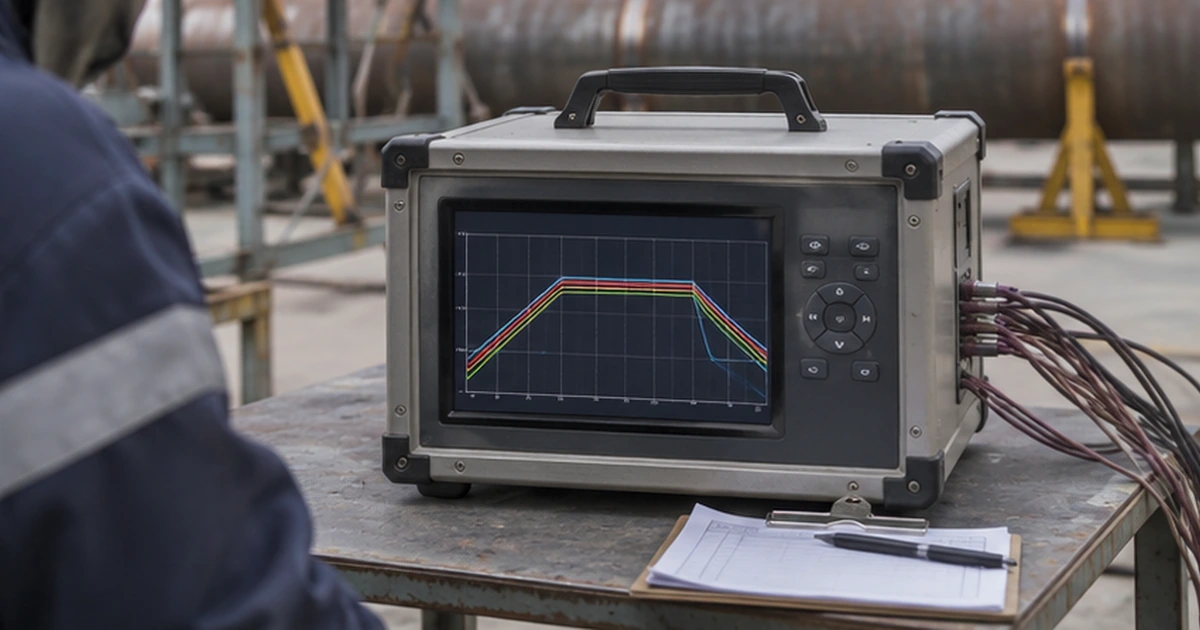
- Controlled heating rate, to avoid large temperature differences across the part
- Soak temperature: for carbon steel typically about 595 to 650 °C; for chrome-moly steels often 680 to 760 °C
- Hold time: usually based on thickness, often about one hour per 25 mm
- Controlled cooling rate down to a set temperature, after which the part can cool in still air
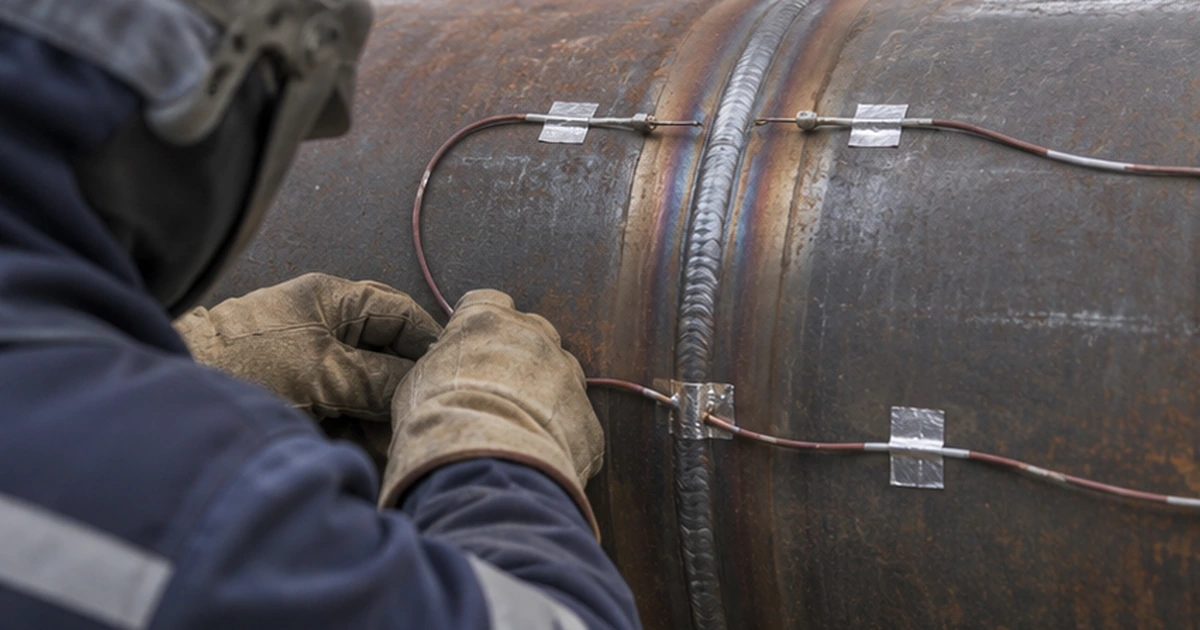
The cycle is recorded continuously with thermocouples and chart recorders, and the record becomes part of the quality documentation.
Furnace and Local PWHT
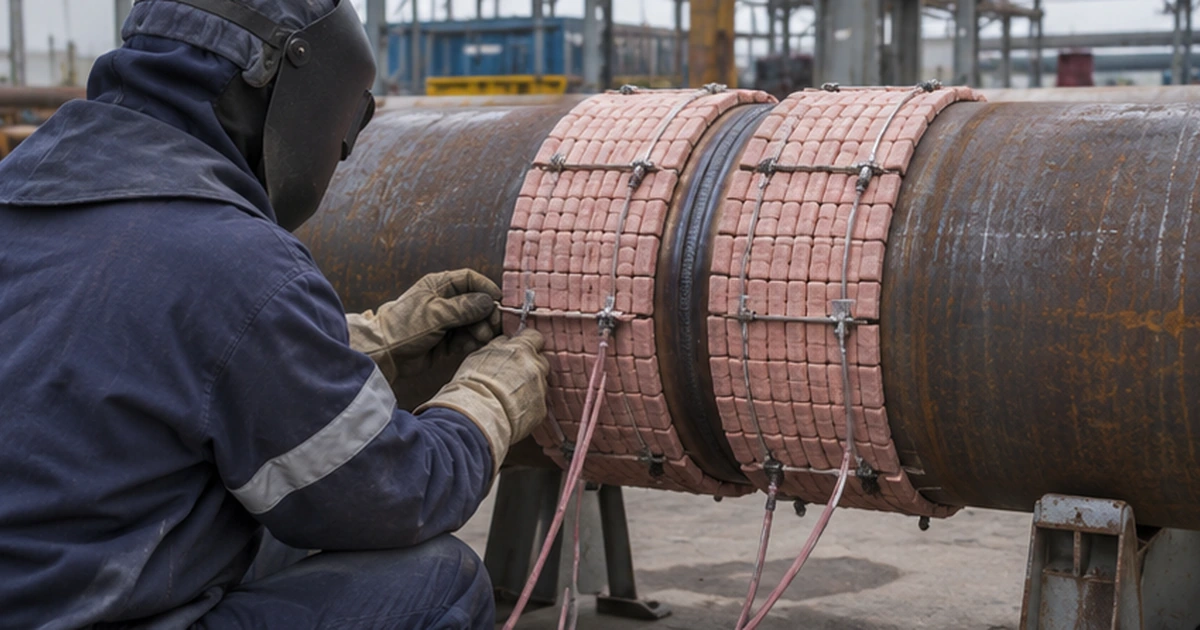
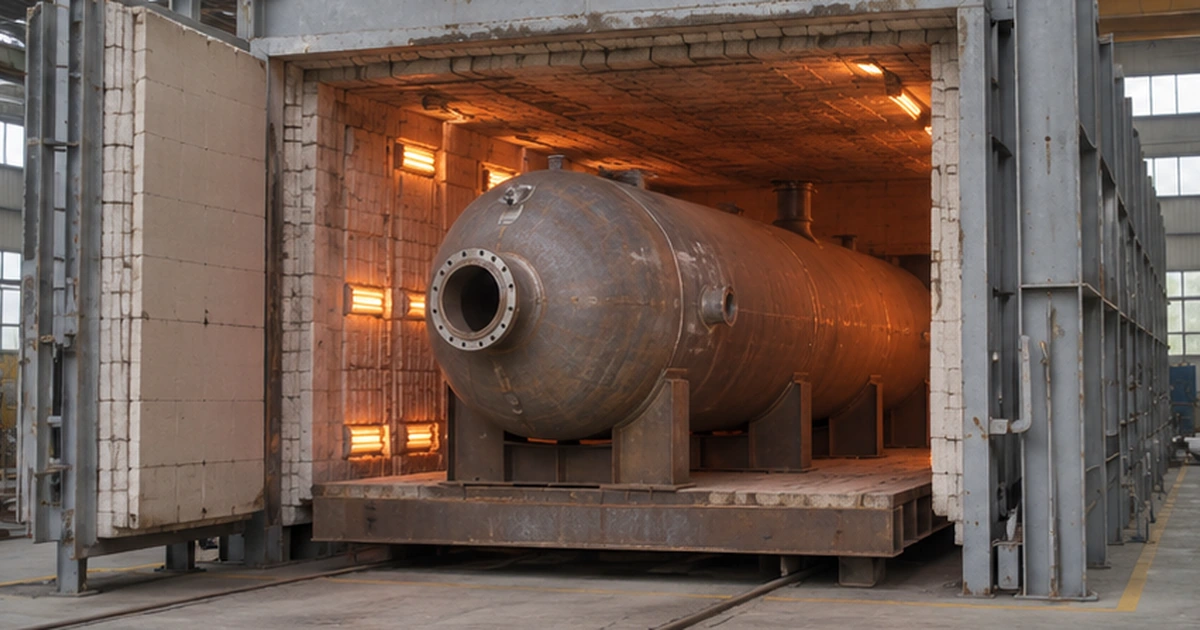
Whole components can be heat treated in a furnace, which gives the most uniform result. For pipelines, site piping and large structures, local PWHT is used: electric resistance pads or induction coils are placed around the weld, covered with insulation, and controlled by thermocouples. The heated band must be wide enough to avoid creating new stresses at its edges.
Common Mistakes
Typical problems are thermocouples placed in the wrong position, too narrow a heated band, heating too fast, or insufficient insulation in wind. On some materials, overheating or repeated cycles can reduce strength and toughness. PWHT is not used on austenitic stainless steels in the same way, and on some quenched and tempered steels it can do more harm than good, so the WPS and material data decide.
From My Experience
When a WPS calls for PWHT, I coordinate with the heat treatment crew before welding starts, so thermocouple positions and access are planned. Welds that must be heat treated should be complete, inspected and free of attachments that would be left outside the heated band.
Conclusion
Post-weld heat treatment relieves stress and tempers hard welds when codes and service conditions call for it. It works only with the correct cycle and proper control. See also annealing, quenching and tempering and preheat and interpass temperature.
If you found this article useful, feel free to share it with colleagues who work with plant and piping engineers. — Zisis
Need Help on a Project?
For welding supervision and quality control on marine and industrial work, see Welding Supervision or request a quote.