

Why Back Purging Is Needed
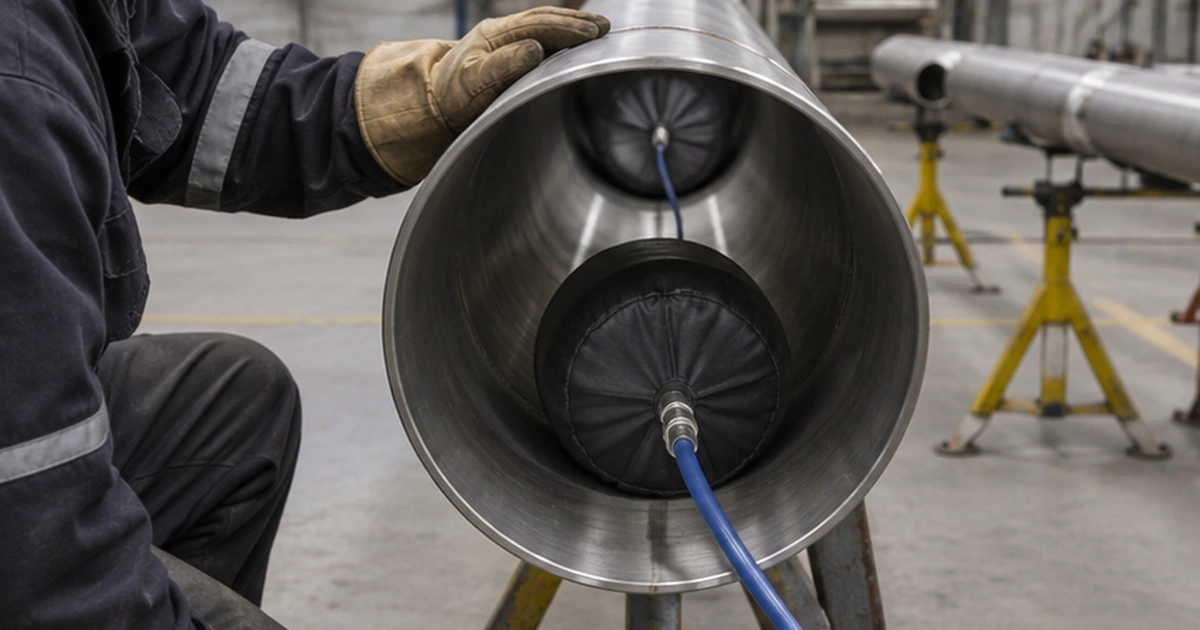
When stainless steel is welded, the root side of the joint is heated as much as the face. If air reaches it, chromium oxidises, forming heavy discoloration and a rough, scaled surface often called sugaring. That oxidised layer has lost much of its corrosion resistance, exactly on the inside of the pipe where the process fluid flows. Back purging replaces the air inside the pipe with inert gas so the root stays clean.
Purge Gases
- Argon: the most common purge gas for stainless steel, nickel alloys and titanium
- Nitrogen: cheaper, used for austenitic and some duplex stainless where the procedure allows
- Forming gas (nitrogen-hydrogen mixes): used for austenitic stainless, but not for duplex, ferritic or titanium
Setting Up the Purge
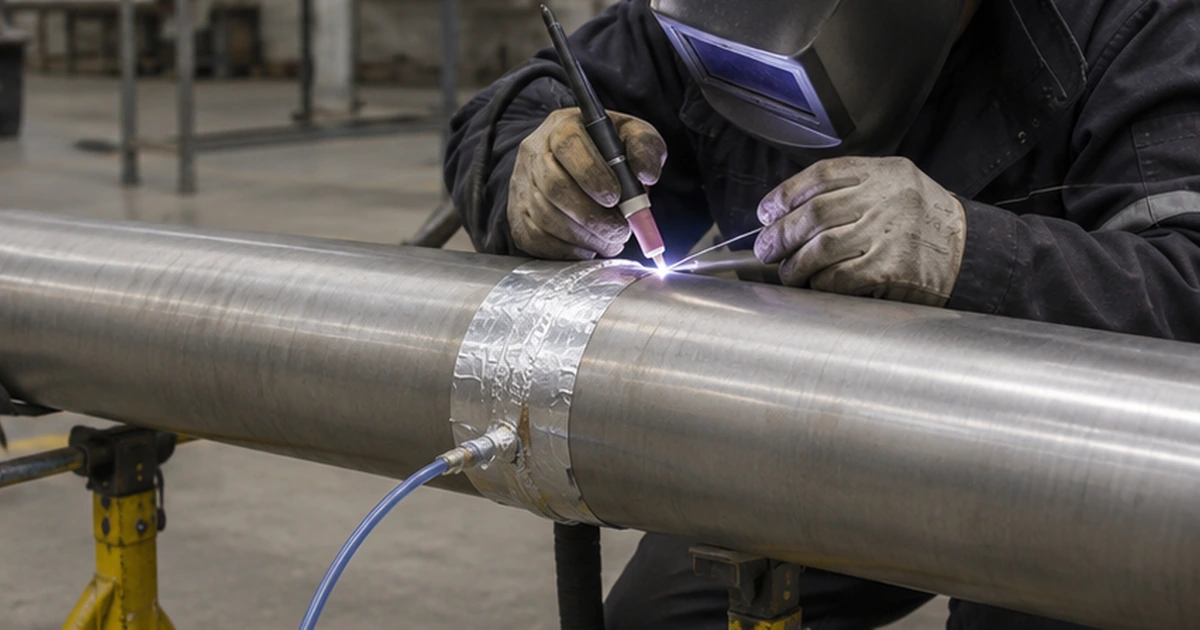
To reduce gas use and purge time, the volume is limited with purge dams: inflatable bladders, soluble paper, foam or purpose-made plugs placed on either side of the joint. The joint gap is sealed with tape, which is peeled back progressively as welding proceeds. Gas enters at one end and exits through a vent at the other or at the joint, high for argon, which is heavier than air.
How Low Should Oxygen Be?
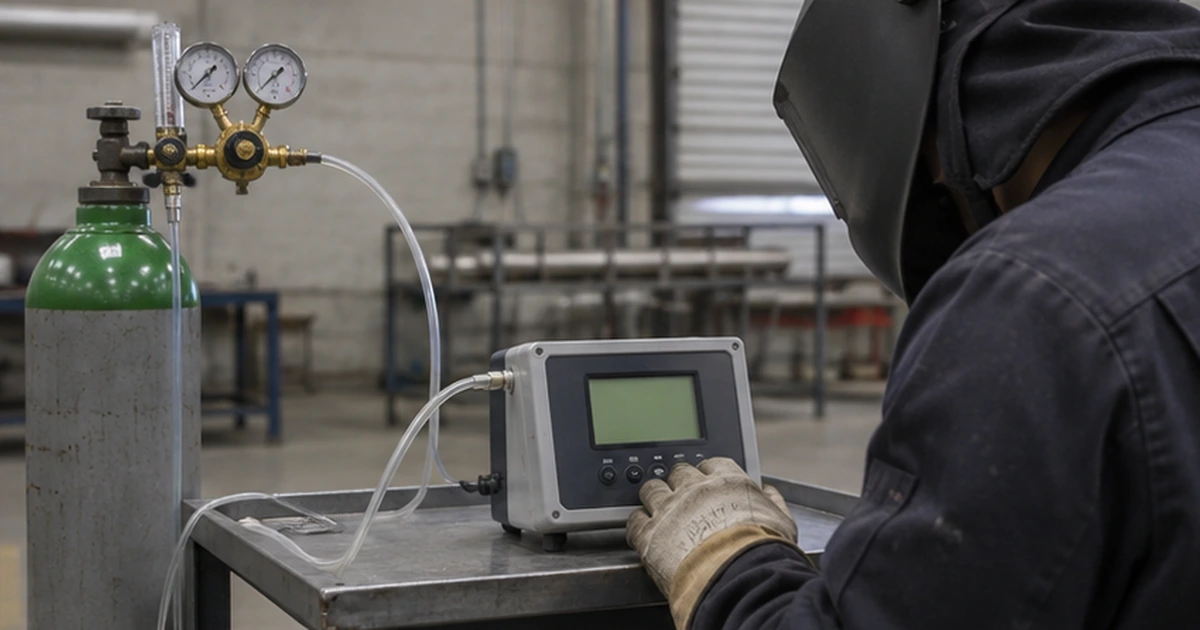
The only reliable way to know when the purge is ready is to measure it with an oxygen monitor. For austenitic stainless steel, many procedures require less than about 50 to 100 ppm of oxygen; for duplex, super duplex and titanium, lower limits are common. Purge time depends on volume and flow; trying to speed it up with very high flow causes turbulence that pulls air in.
Judging the Result
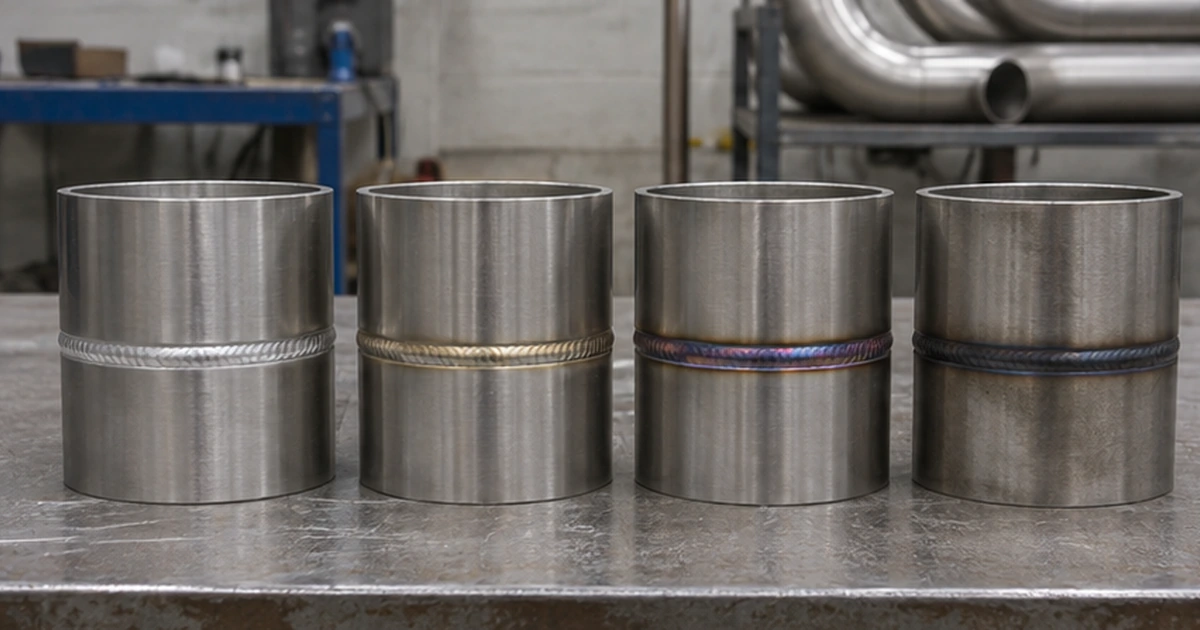
The colour of the root shows how good the purge was. Silver to light straw is generally acceptable; darker straw, blue and grey indicate increasing oxidation. Industry colour charts, such as those used in hygienic and pharmaceutical piping standards, define acceptance levels. Where discoloration exceeds the limit, the weld may need cleaning by pickling or be cut out and redone.
From My Experience
On hygienic stainless and duplex piping, I never start the root until the oxygen meter shows the required level, and I keep the purge running through the second pass. Waiting a few minutes for the reading is nothing compared to cutting out a joint because the inside turned black.
Conclusion
Back purging keeps the root of stainless pipe welds clean and corrosion resistant. Use the right gas, limit the volume, measure oxygen and check the colour. See the hygienic stainless piping project and duplex stainless steel welding.
If you found this article useful, feel free to share it with colleagues who work with pipe welders. — Zisis
Need Help on a Project?
For precision TIG welding on marine and industrial work, see TIG Welding or request a quote.