

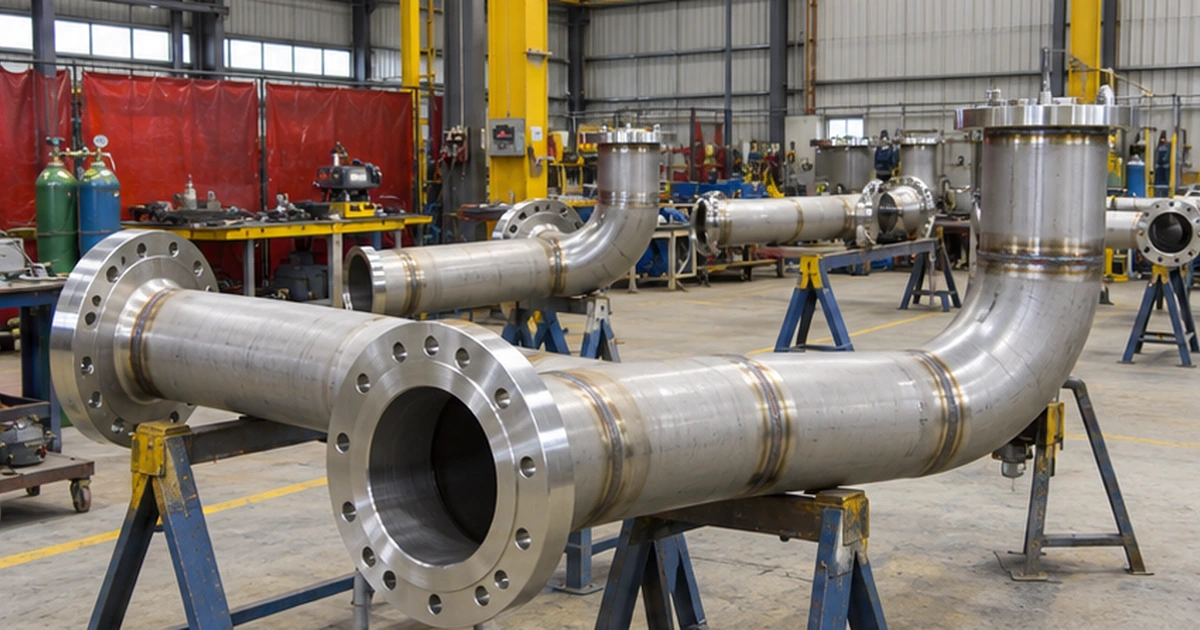
What Is Duplex Stainless Steel
Duplex stainless steel has a mixed structure of roughly equal parts austenite and ferrite. Compared with ordinary austenitic grades, it has more chromium (20–28%), up to 5% molybdenum, less nickel (up to 9%) and some nitrogen. The result is a steel that is both stronger and more corrosion resistant.
The strength difference is large: type 304 has a 0.2% proof strength of around 280 N/mm², a 22% chromium duplex at least 450 N/mm², and super duplex at least 550 N/mm². Thinner walls can be used, which saves weight and cost.
Where Duplex Is Used
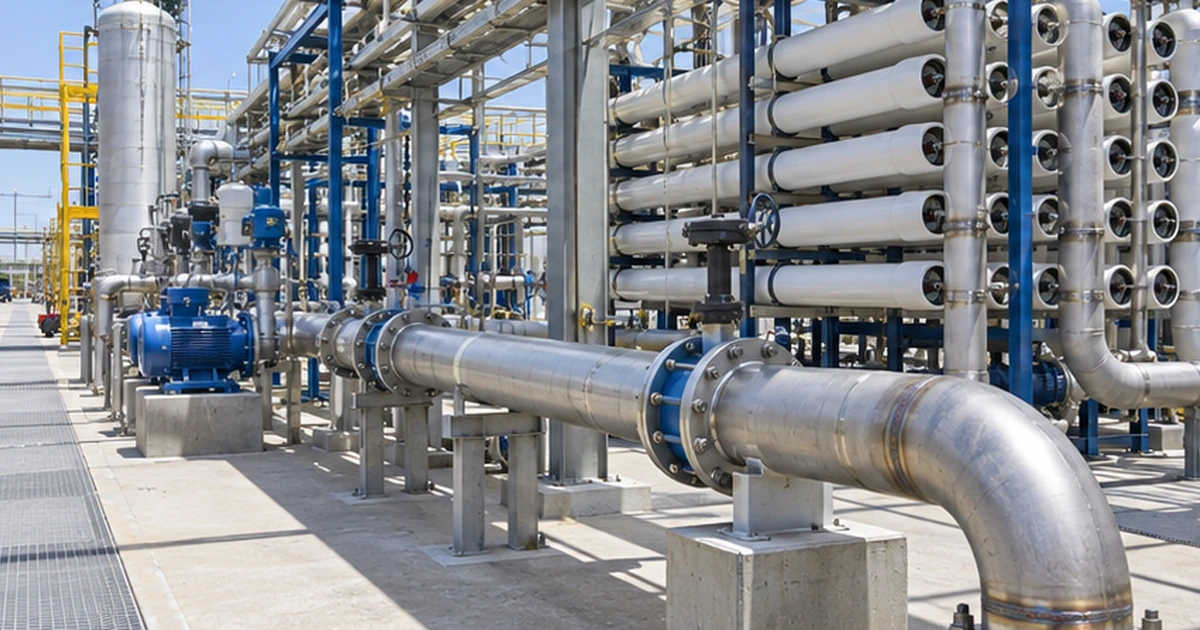
- Desalination plants and seawater systems
- Oil and gas, offshore and subsea piping
- Chemical and process plants
- Heat exchangers, pressure vessels and tanks
- Marine and ship systems exposed to chlorides
Welding Duplex: Keeping the Balance
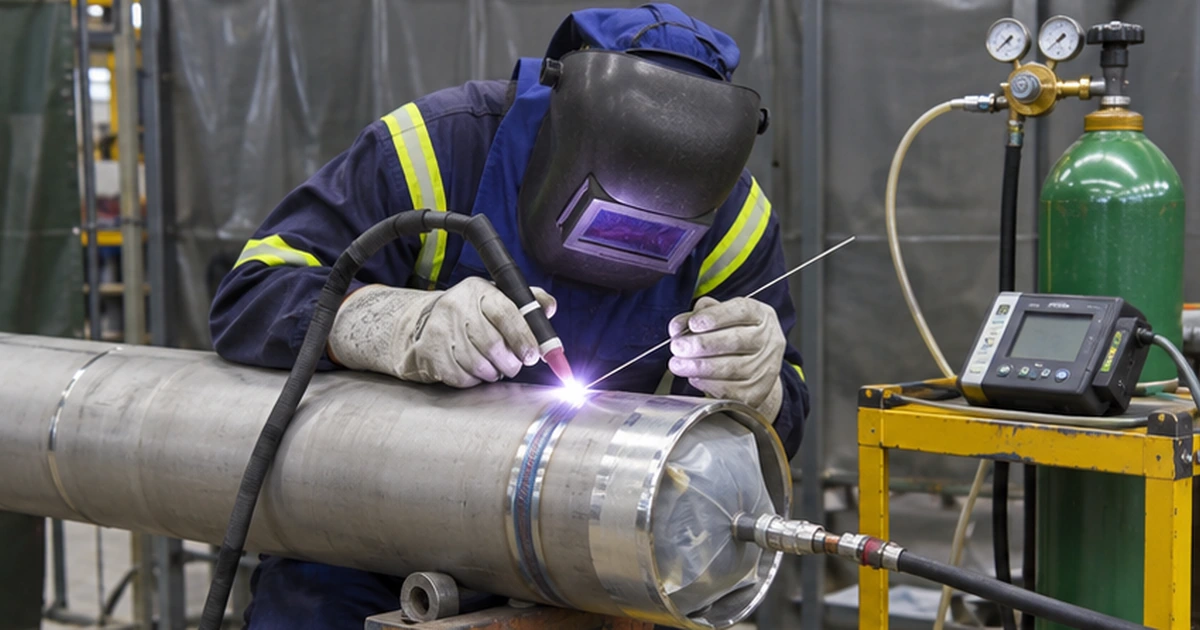
Duplex is readily weldable, but the procedure must be followed strictly. Too little heat input leaves too much ferrite; too much heat or slow cooling can form brittle intermetallic phases. TWI’s guide to duplex stainless steel sets out the controls:
- Heat input kept within the range qualified in the WPS
- Maximum interpass temperature: typically 250 °C for duplex and 150 °C for super duplex, and many codes set 150 °C for both
- No preheat in normal conditions
- Filler with extra nickel to restore the phase balance in the weld
- No autogenous TIG welding, because corrosion resistance is seriously reduced
- Argon purging of the root, and stray arc strikes ground out
Joining Duplex to Carbon Steel
Duplex is often welded to carbon steel at supports and connections. Fillers such as 22% chromium duplex, nickel-based types or type 309 austenitic stainless can be used, chosen so that the weld is stronger than the weaker of the two parent metals. Dilution from the carbon steel side is kept as low as possible.
Joint preparation is also more tightly controlled than for ordinary stainless steel, because a wide root gap changes the heat input and with it the phase balance.
Testing
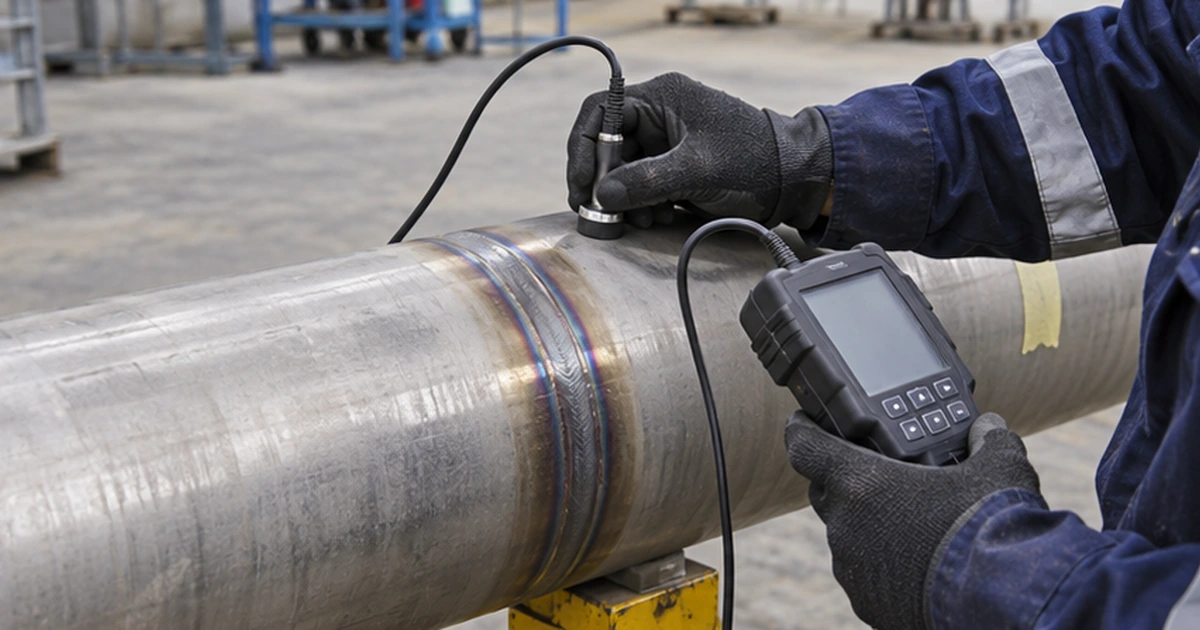
Procedure qualification for duplex usually adds ferrite measurement and corrosion testing to the normal mechanical tests, to prove the phase balance and corrosion resistance of the weld and heat-affected zone.
From My Experience
I have worked on duplex pipework for desalination, where seawater gives no second chances. On that kind of job, discipline matters more than speed: measuring interpass temperature on every joint, keeping the purge going and following the WPS exactly. Duplex rewards a careful welder and punishes shortcuts.
Conclusion
Duplex and super duplex offer strength and corrosion resistance that ordinary stainless steels cannot match, provided heat input, interpass temperature and filler choice are controlled. For the TIG side of the work, see TIG welding: advantages and limits.
If you found this article useful, feel free to share it with colleagues who work with duplex and stainless piping. — Zisis
Need Help on a Project?
For precision TIG welding on marine and industrial work, see TIG Welding or request a quote.