

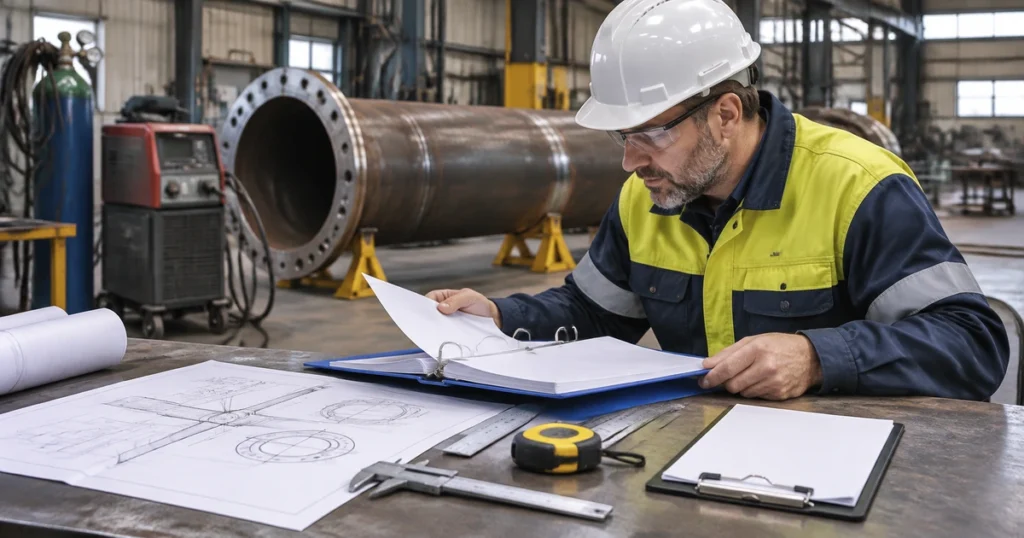
What Is a Welding Procedure Specification
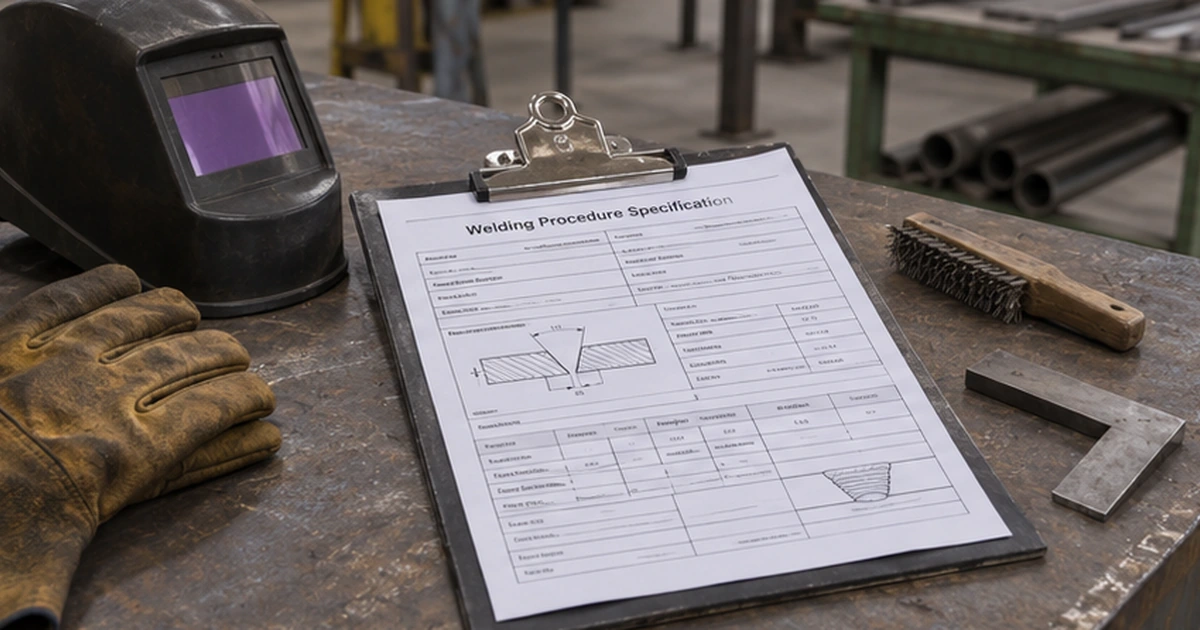
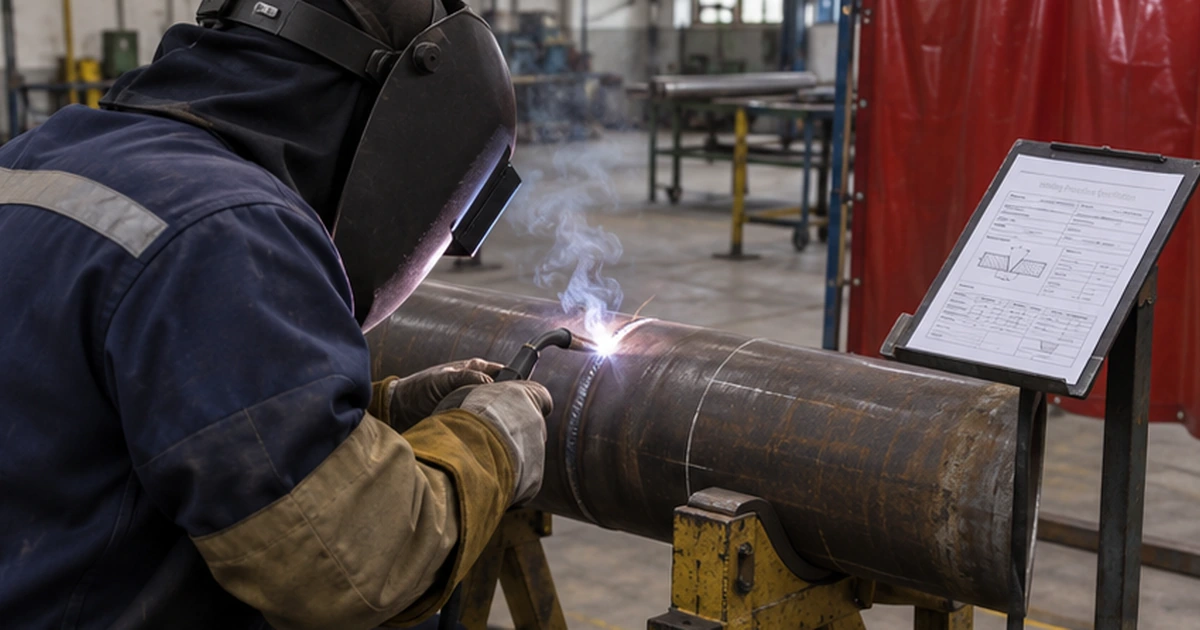
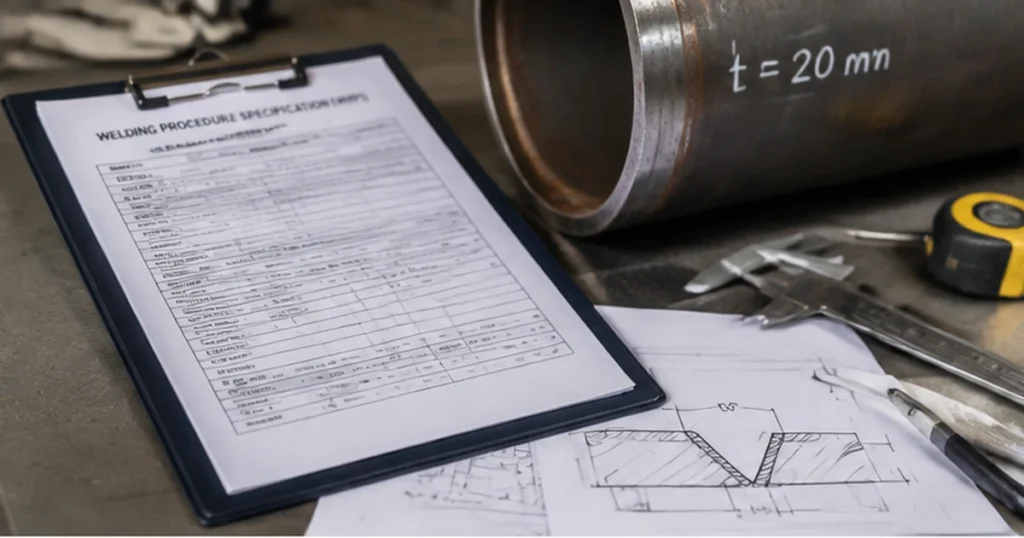
A welding procedure specification (WPS) is the written instruction for making a weld. TWI describes it as the document that details the welding variables needed for the required weld quality and mechanical properties. Welders work to it, and supervisors and inspectors check against it.
What a WPS Contains
- Welding process
- Parent material, grade and thickness range
- Filler metal and shielding gas or flux
- Joint design and welding position
- Current, voltage, polarity, travel speed or heat input
- Preheat, interpass temperature and any PWHT
For arc welding, the content of a WPS is set out in ISO 15609-1.
A WPS should be short and practical, usually one or two pages, so the welder can keep it at the workstation and actually use it.
Essential Variables
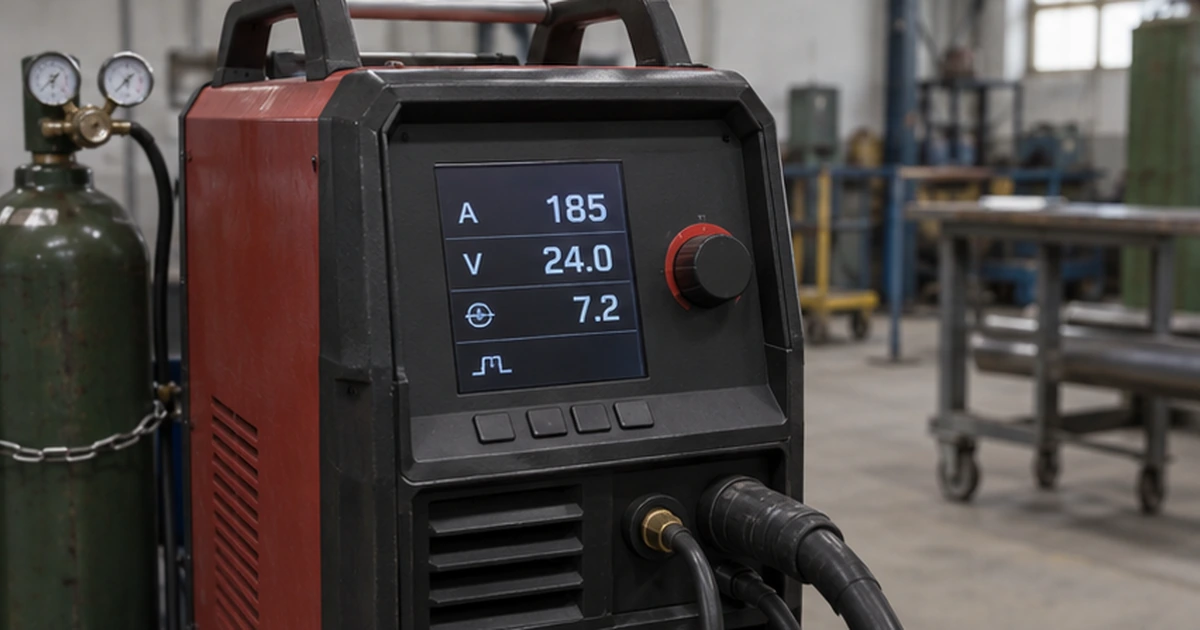
In ship construction, the WPS is often described as the recipe for a weld. Its essential variables include the process, current and voltage ranges and polarity, travel speed or heat input, consumables, parent material and thickness range, joint design, welding sequence and position. Classification societies such as ABS, Lloyd’s, DNV and RINA may also issue lists of approved consumables.
How a WPS Is Qualified
- pWPS: the preliminary procedure, written before testing
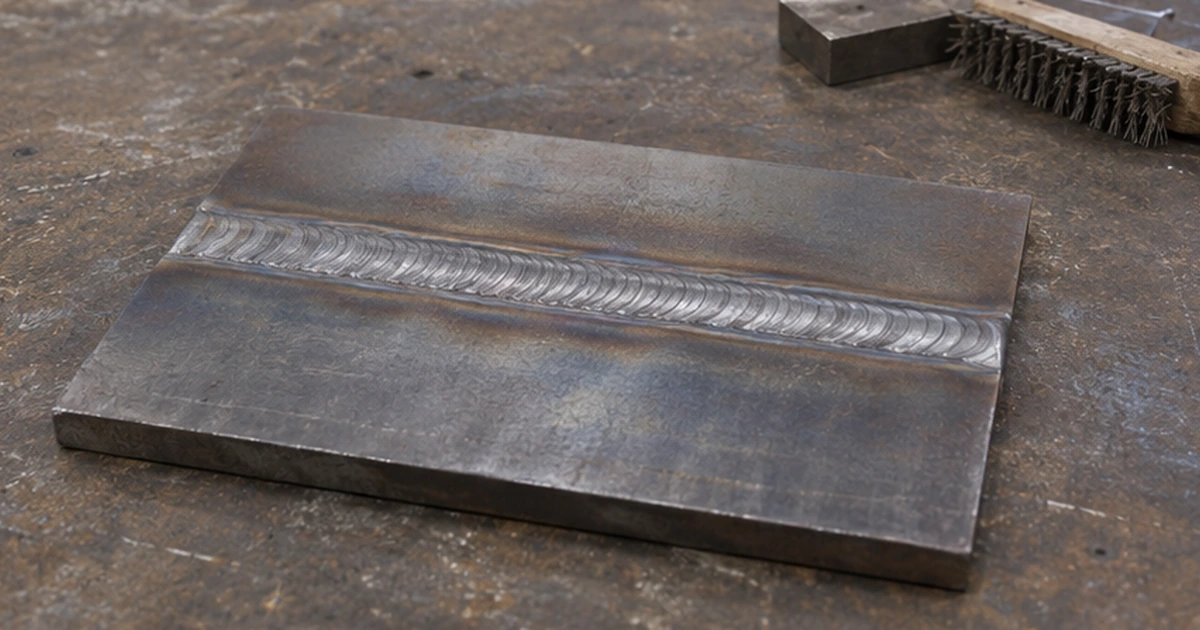
- Test weld: made to the pWPS and tested by NDT and mechanical tests
- WPQR (ISO) or PQR (ASME): the record proving the procedure works
- WPS: the approved procedure issued for production, within the qualified ranges
Procedure tests for steels are covered by ISO 15614-1; ASME Section IX is used for pressure equipment to ASME codes.
Each qualified procedure covers a defined range of thickness, diameter, position and materials. Work outside that range needs a new or extended qualification, which is why contractors build up a library of approved procedures over the years.
Procedure and Welder Qualification
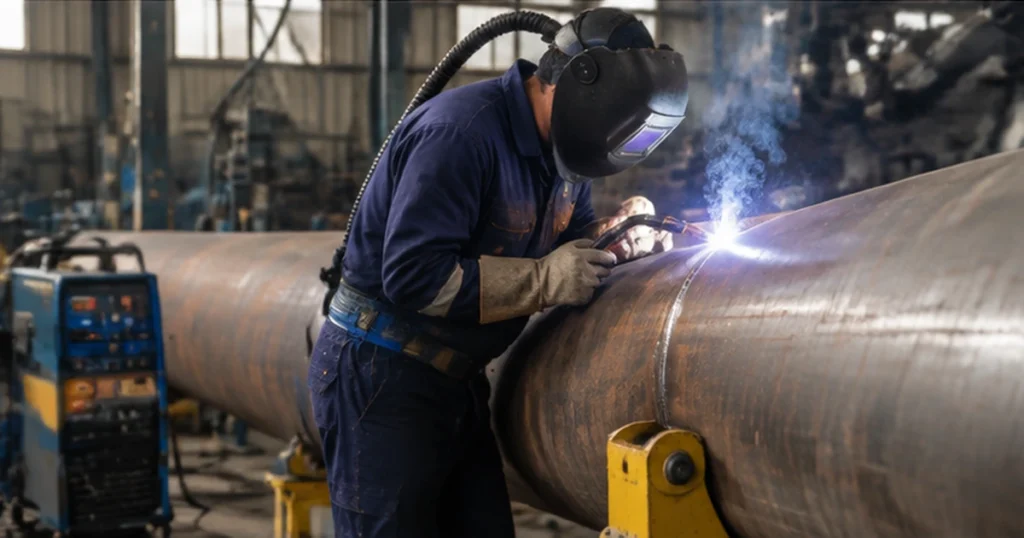
Qualifying the procedure and qualifying the welder are two different steps. The procedure test proves the method works; the welder test, for example to ISO 9606-1, proves that a particular welder can apply it. Both are needed for production welding on most codes.
Other Routes to Approval
A procedure test is the most common route, but not the only one. Standards also allow standard welding procedures based on tests made by another organisation, as described in ISO 15612, and AWS D1.1 includes prequalified procedures for structural steel within strict limits.
Why It Matters on the Job
In shipyards and plants, the WPS ties together the welder’s qualification, the consumables and the inspection records. Working outside it is one of the main causes of welding defects and rejected joints.
Records and Traceability
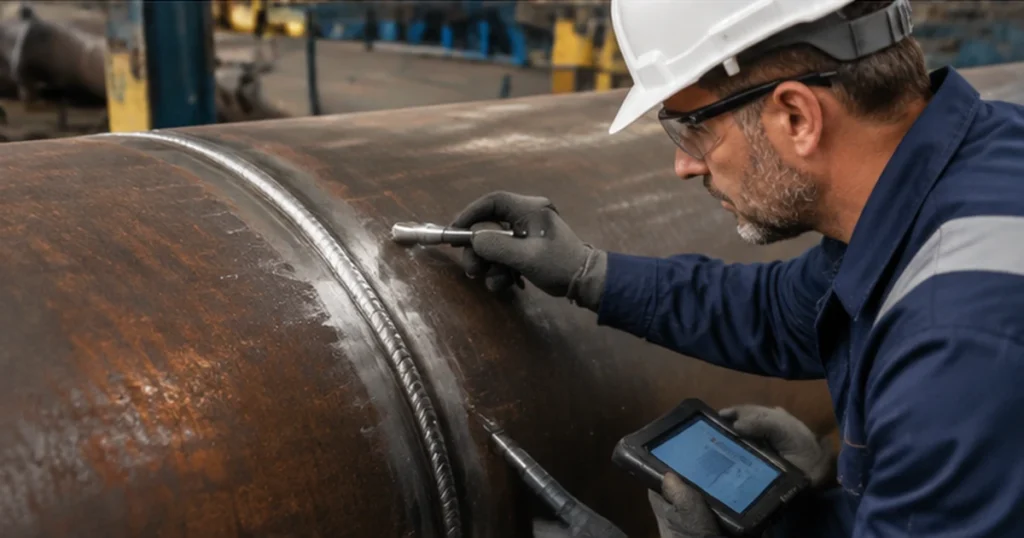
On a well-run project, each weld can be traced back to the WPS used, the welder who made it, the consumable batch and the inspection result. This is what classification societies and clients ask to see at handover, and it is much easier to keep these records daily than to rebuild them at the end.
From My Experience
On industrial and marine jobs, I work to the client’s approved WPS and keep a copy at the workstation. When a joint falls outside the qualified range, the right move is to stop and ask for a qualified procedure, not to adjust and hope. That one habit prevents most arguments with inspectors.
Conclusion
A WPS is the recipe for a weld. Qualified and followed, it gives the same result every time and gives the client proof that it does.
If you found this article useful, feel free to share it with colleagues who work with welding procedures. — Zisis
Need Help on a Project?
For welding supervision and quality control on marine and industrial work, see Welding Supervision or request a quote.