

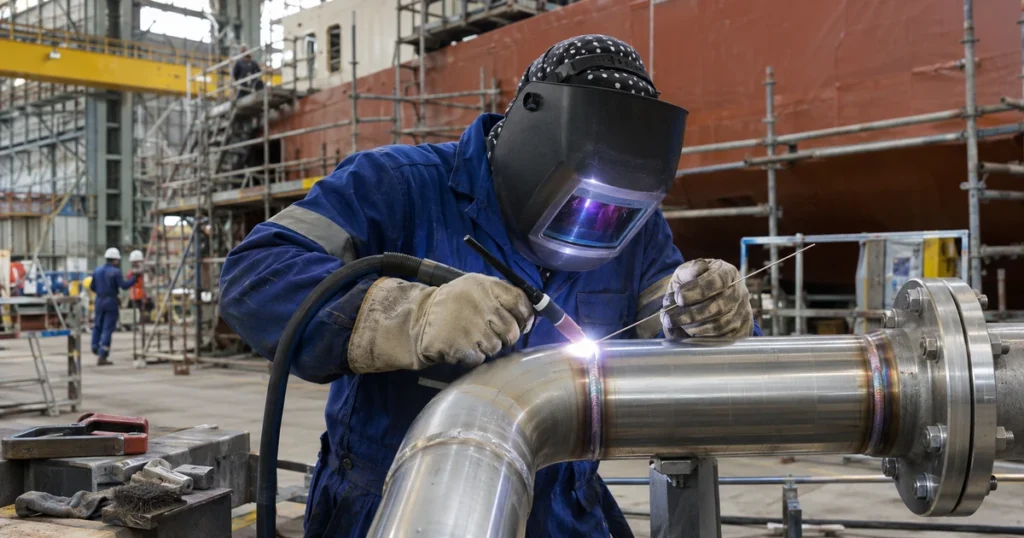
What Is TIG Welding
TIG welding, also called gas tungsten arc welding (GTAW), uses a non-consumable tungsten electrode and an inert shielding gas, usually argon. Filler metal is added by hand from a separate rod when needed. It is a manual process that needs both hands and a skilled welder.
A Short Background
TIG welding became an overnight success in the 1940s for joining magnesium and aluminium. Using an inert gas shield instead of slag made it a strong alternative to gas and manual metal arc welding, and it played a major role in the acceptance of aluminium for high-quality structural work.
Current Type and Tungsten
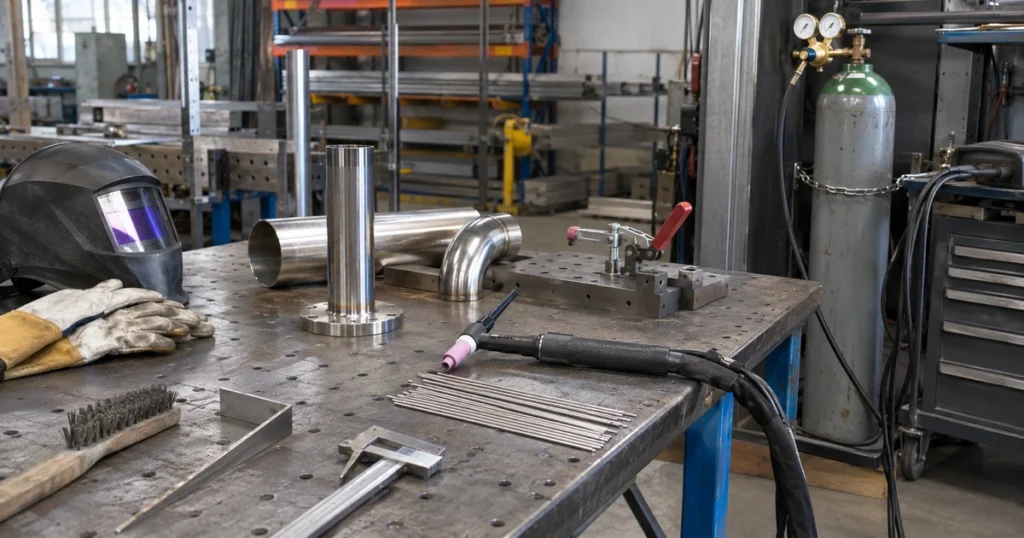
The power source can be DC or AC. DC with the electrode negative is used for carbon steel, stainless steel, copper, nickel alloys and titanium. AC is used for aluminium and magnesium, because it breaks up the surface oxide. The tungsten type and tip shape are chosen to suit the current.
Advantages of TIG Welding
- Precise control of heat and filler, so it suits thin material and root passes
- Clean welds with no spatter and no slag
- Welds almost any metal: carbon and stainless steel, aluminium, copper, nickel alloys, titanium
- High-quality welds for pressure piping and critical joints
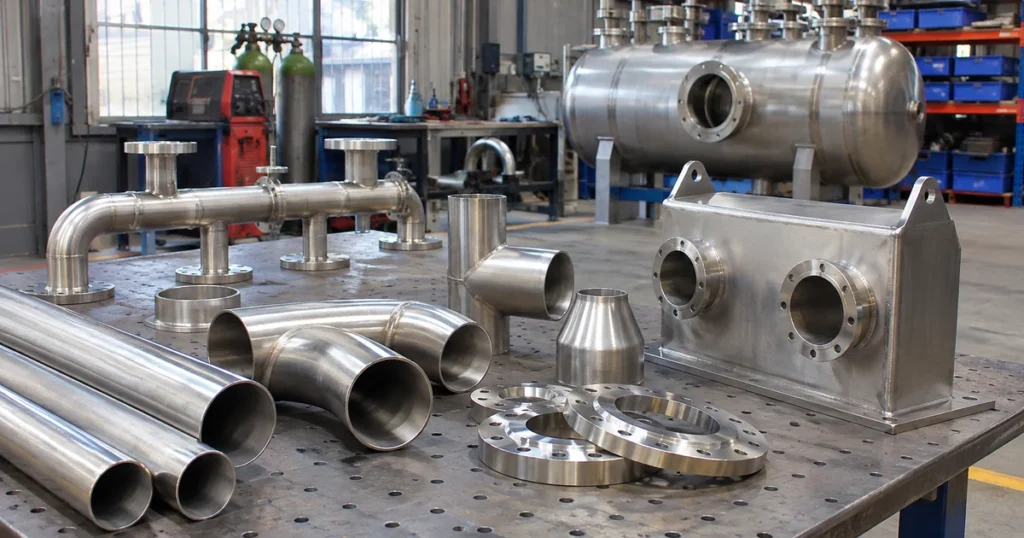
On stainless steel and duplex pipework, the inside of the pipe is purged with argon during the root pass. This keeps the root clean and protects corrosion resistance, which is why TIG is standard on desalination, chemical and food-grade lines.
Limits
- Low deposition rate, so it is slow on thick sections
- Needs clean material and a well-trained welder
- Sensitive to wind and draughts on site, which disturb the gas shield
- Higher cost per metre than MIG/MAG or MMA
On site, wind screens or welding habitats are used to protect the gas shield. Where these are not practical, MMA is often the safer choice.
Filler Rods and Cleanliness
TIG filler rods are matched to the parent metal, such as ER70S-2 or ER70S-6 for carbon steel and ER316L for 316L stainless. Because there is no flux to clean the weld, everything depends on cleanliness: degreased joints, clean rods, stainless brushes kept for stainless only, and a tungsten that is re-ground as soon as it is contaminated.
TIG in Practice
On thick-wall pipe, the usual approach is a TIG root and hot pass, then filling and capping with MMA or MIG/MAG. This combines TIG quality at the root with faster processes for the bulk of the weld. The choice is fixed in the welding procedure specification.
Orbital TIG
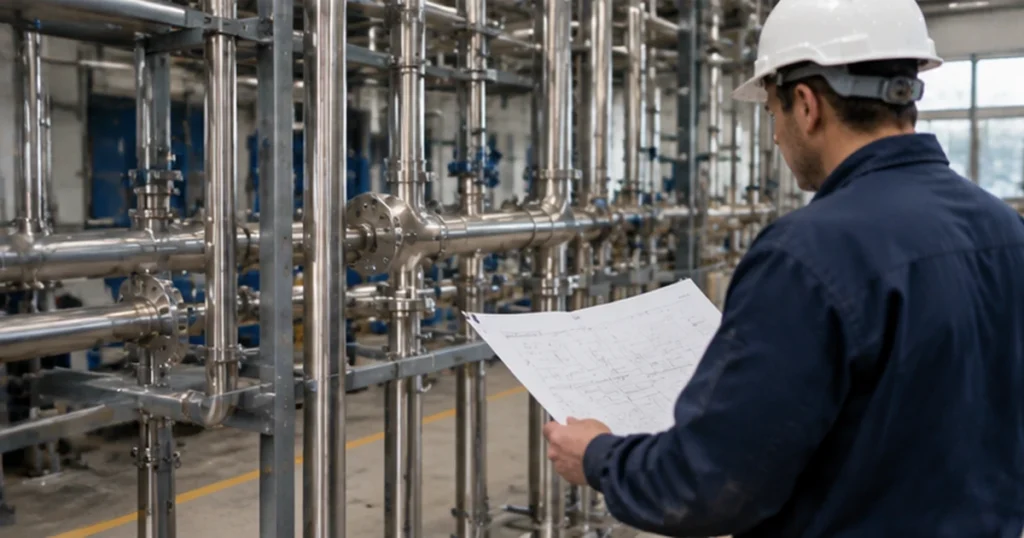
TIG is also widely used in mechanised systems. Orbital welding heads travel around the pipe and are used in chemical plant, boilers and clean process lines. They need less manual skill, but the operator must be well trained and joint fit-up must be accurate.
From My Experience
On the refinery piping and the duplex pipework for desalination that I have worked on, TIG was the process for the critical passes, with argon purging inside the duplex lines. On that kind of work, the extra time TIG takes is small compared with the cost of a rejected root.
Conclusion
TIG welding is the choice for quality and control, especially on stainless steel, non-ferrous metals and root passes. Where speed matters more, other processes take over.
If you found this article useful, feel free to share it with colleagues who work with TIG welding. — Zisis
Need Help on a Project?
For precision TIG welding on marine and industrial work, see TIG Welding or request a quote.