

Why Tungsten Electrodes Matter
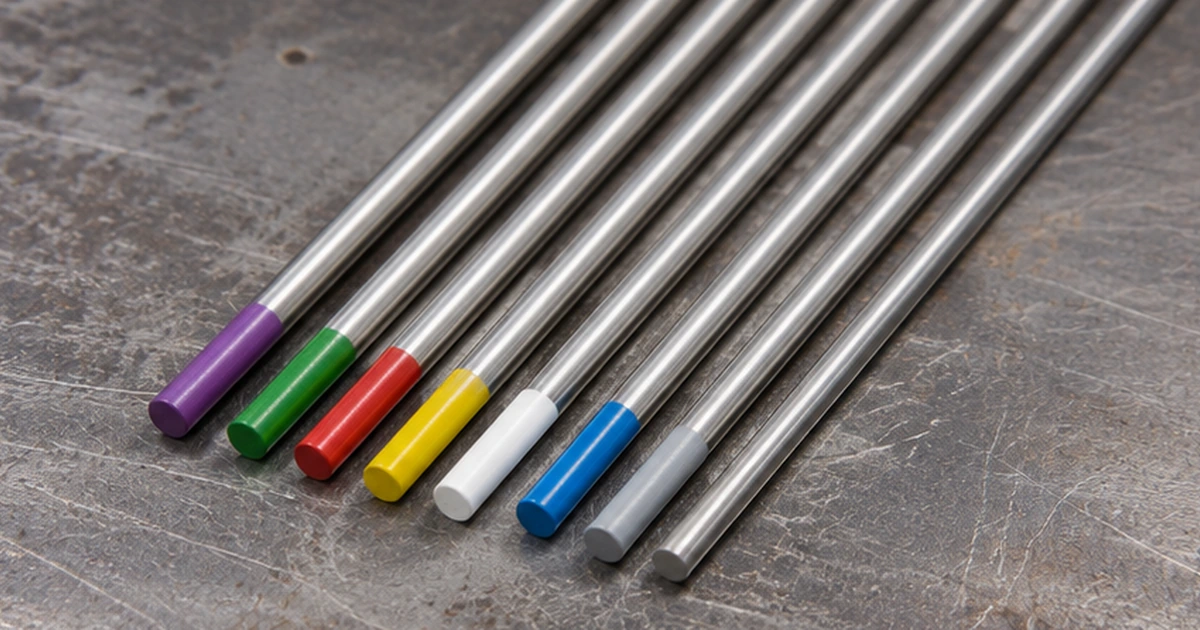
In TIG welding, the arc forms between a small tungsten electrode and the workpiece. Tungsten has the highest melting point of any metal, about 3,400 °C, so the electrode carries the current without melting. Small additions of rare-earth oxides make the arc start more easily and run more steadily, and each type is identified by a colour band on the tip.
The metal itself was first isolated in 1783 by the Spanish brothers Juan José and Fausto Elhuyar. Two centuries later, it is the material that makes TIG welding possible.
The Main Types and Colours
- Blue, 2% lanthanated (WL20): easy starting, long life, AC and DC. A good all-round choice for steel, stainless and aluminium
- Gold, 1.5% lanthanated (WL15): similar to WL20, widely used
- Grey, 2% ceriated (WC20): good at low current, suits thin material and orbital welding
- Purple, rare-earth mix (WR): general purpose on AC and DC
- White, zirconiated (WZ8): holds a balled tip on AC, used mainly for aluminium
- Green, pure tungsten (WP): traditional choice for AC on aluminium, lowest cost
- Red, 2% thoriated (WT20): excellent on DC, but slightly radioactive; grinding dust needs control, and many users have moved to lanthanated types
Preparing the Tip
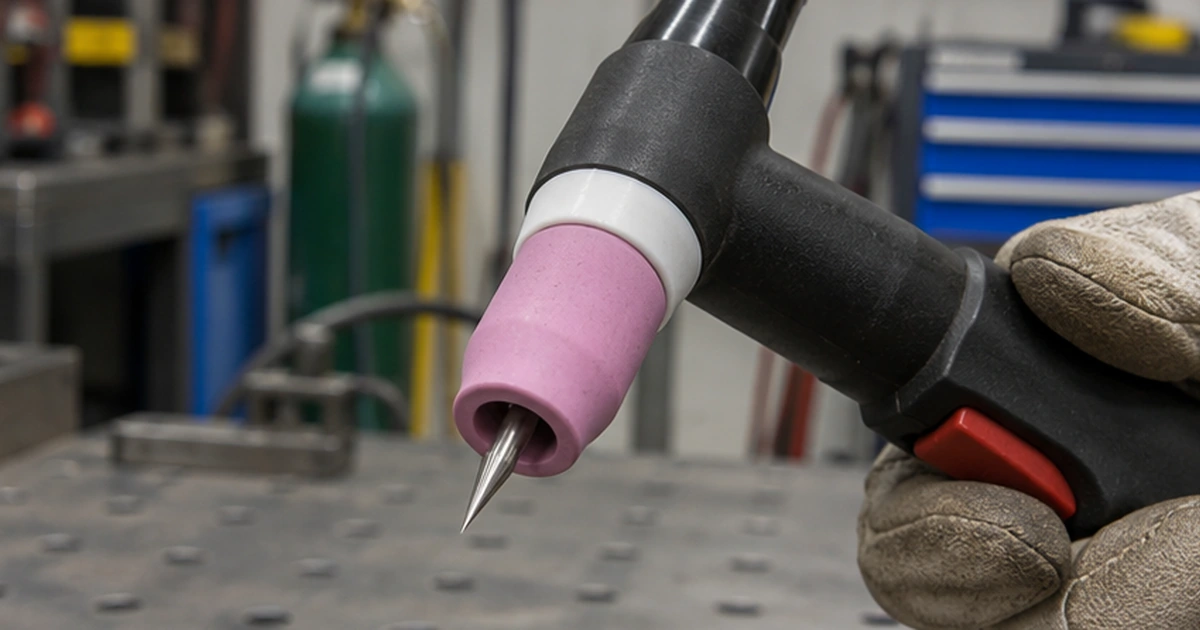
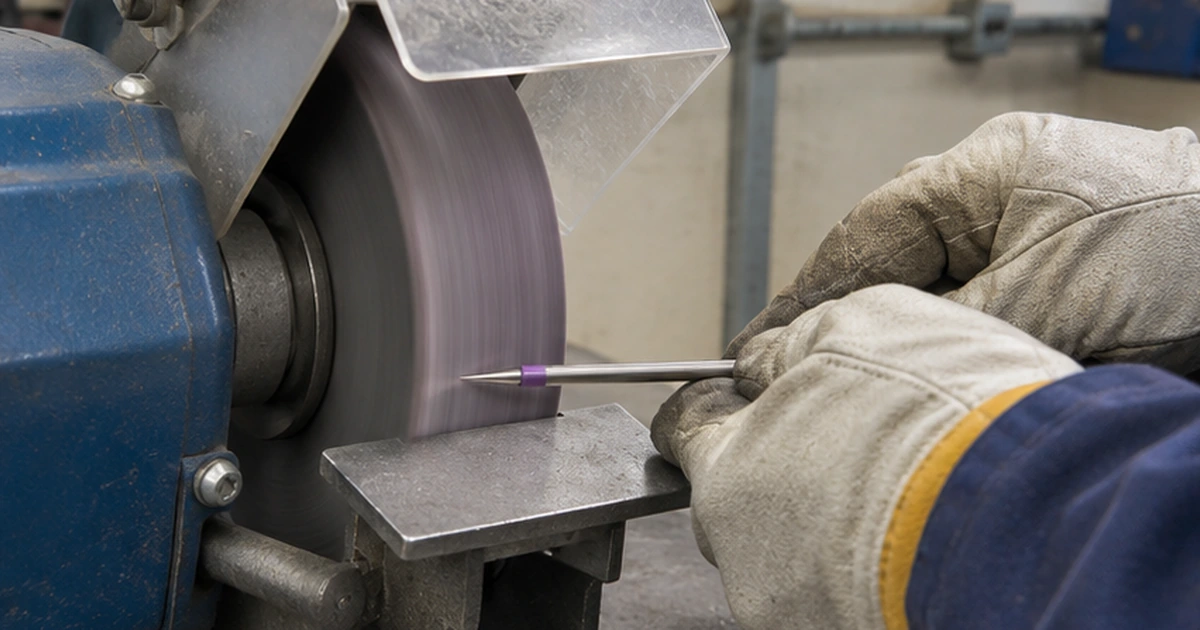
For DC welding of steel and stainless, the tungsten is ground to a point, usually with a taper of about two to three times the diameter. Grind lengthwise, along the electrode, never around it, so the arc stays stable and centred. On AC for aluminium, a blunter tip or small ball is used. TWI covers the full set-up in its guide to TIG welding equipment.
Diameter and Current
Diameter is chosen for the current: 1.6 mm for light work, 2.4 mm as the common all-round size, 3.2 mm for higher currents. A tungsten that is too thin for the current overheats and erodes; one that is too thick gives an unstable, wandering arc at low current.
Common Problems
- Wandering arc: tip ground around instead of lengthwise, or contaminated
- Tungsten inclusions in the weld: touching the pool or too much current for the diameter
- Balling on DC: wrong polarity or tungsten too thin
- Black, oxidised tungsten: gas post-flow too short, so the hot electrode is exposed to air
From My Experience
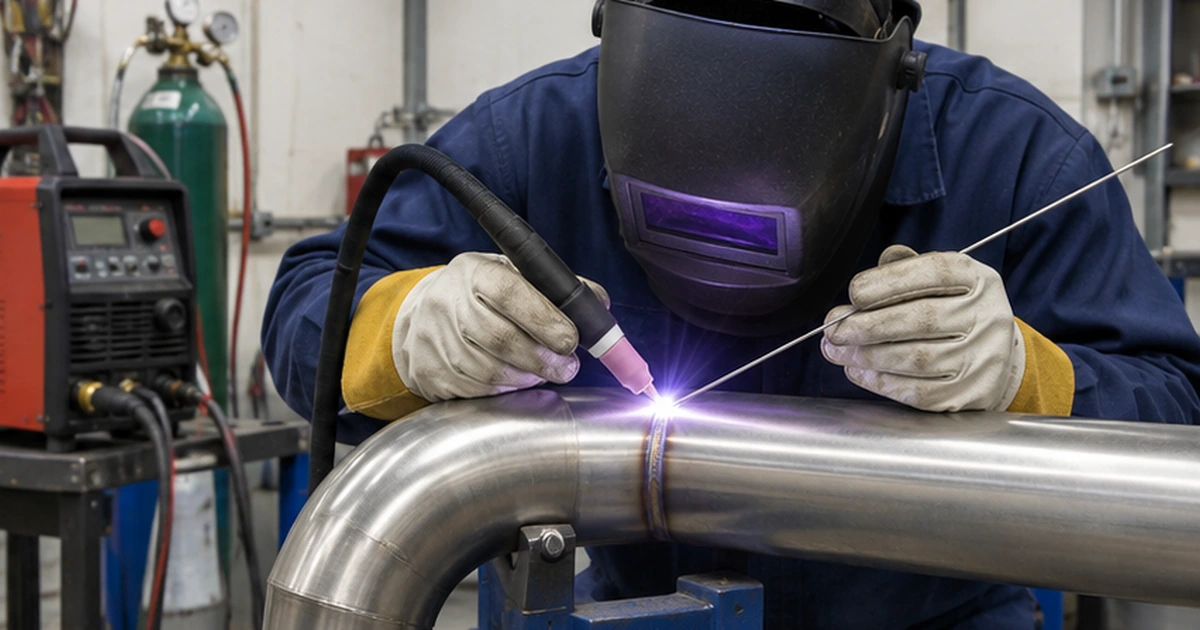
On stainless and duplex pipework I use lanthanated tungsten almost exclusively. It starts reliably, holds its point and avoids the dust issue of thoriated electrodes. The moment the tungsten touches the weld pool or the filler rod, I stop and re-grind it, because a contaminated tip costs more in repairs than the minute it takes to fix.
Conclusion
The colour band tells you what the tungsten is made for. Choose the type for the current and material, grind it correctly, and keep it clean. For more on the process, see TIG welding: advantages and limits.
If you found this article useful, feel free to share it with colleagues who work with TIG welding. — Zisis
Need Help on a Project?
For precision TIG welding on marine and industrial work, see TIG Welding or request a quote.