

Why Welding Fume Matters
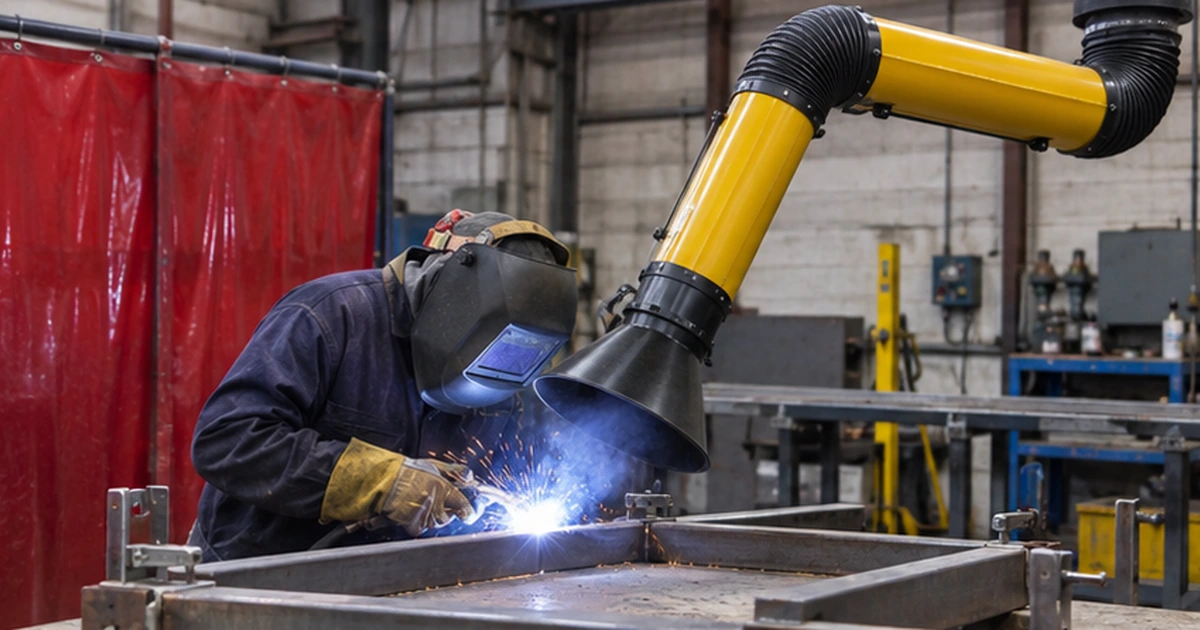
Every arc process produces fume: fine metal particles and gases released from the electrode, the parent metal and any coatings. All welding fume, including mild steel fume, is now recognised as able to cause lung cancer, and it can also cause asthma and other lung conditions. Controlling it is a legal duty for employers, not an extra.
The amount of fume depends on the process, current, materials and coatings. MMA and flux-cored welding produce more than TIG; stainless steel and galvanised or painted steel add specific hazards. The HSE guidance on controlling the risks from welding sets out what is expected.
Extraction at the Source
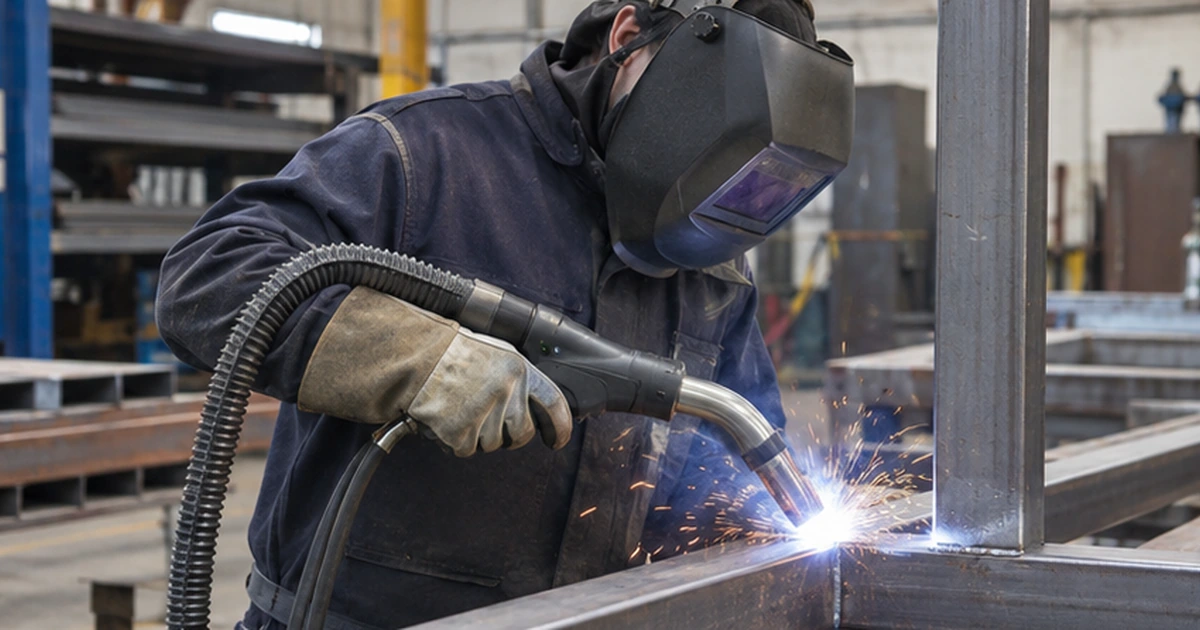
The most effective control is to capture fume where it is made, before it reaches the welder’s breathing zone. Local exhaust ventilation (LEV) does exactly that.
- On-torch extraction: a nozzle built into the MIG/MAG torch draws fume right at the arc
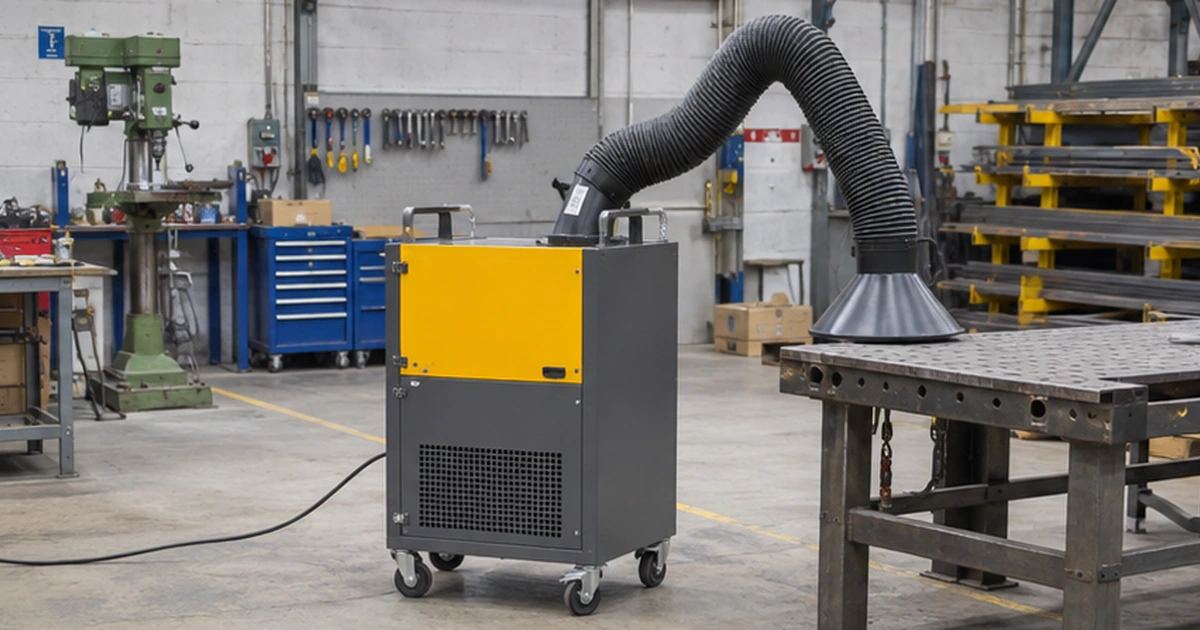
- Extraction arms and hoods: flexible arms placed close to the weld, connected to a fan and filter
- Mobile units: compact extractors with a magnetic nozzle that can be moved around a site or ship
- Downdraught benches: for small parts welded at a fixed workstation
The hood must be positioned close to the arc and moved as the weld progresses. A hood left half a metre away does very little.
General Ventilation
Roof fans and open doors dilute fume in the workshop, but they do not stop the welder breathing the plume rising from the arc. General ventilation supports extraction; it does not replace it. Electrostatic filters can clean particles from recirculated air, but they do not remove gases.
Respiratory Protection
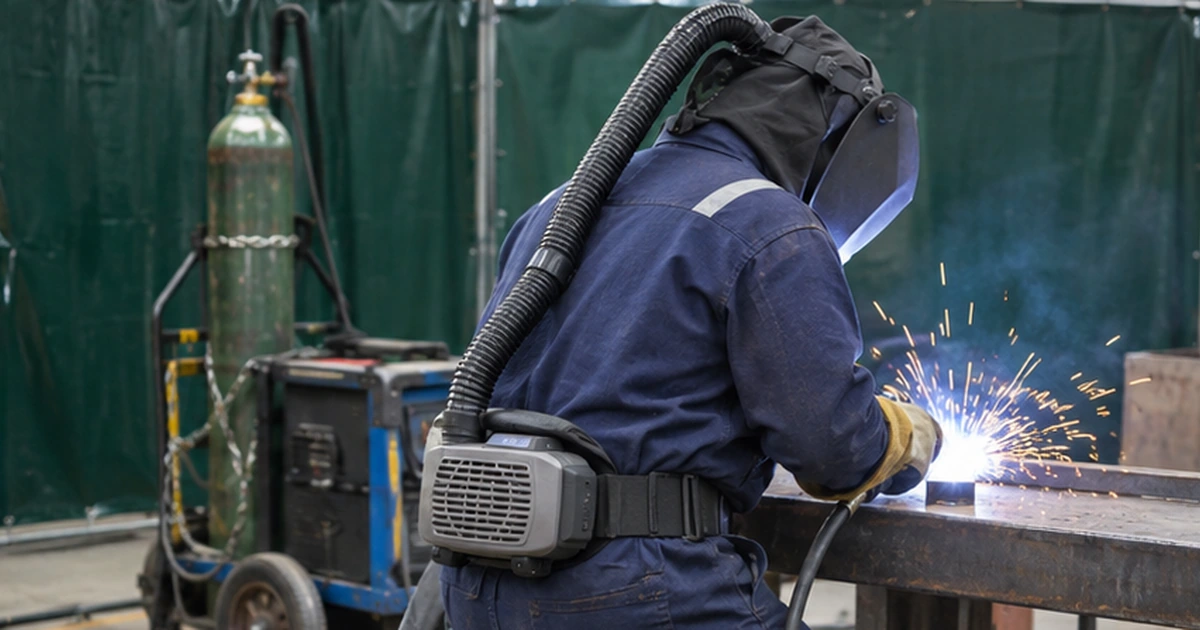
Where extraction cannot capture enough fume, such as in tanks, double bottoms or awkward positions on site, respiratory protection is needed. Powered air-purifying respirators built into the welding helmet are comfortable for long shifts. In confined spaces with a risk of low oxygen, only supplied-air equipment is suitable.
Fume from Different Materials
Some materials need extra care. Stainless steel fume contains chromium and nickel compounds. Galvanised steel releases zinc oxide, which causes metal fume fever, a flu-like illness. Old paints and primers can contain lead. Where possible, coatings are removed from the weld area before welding, and extraction is chosen for the worst material on the job.
Maintaining the Equipment
Extraction only works if it is maintained. Filters need changing, hoses must be free of holes, and LEV systems should be examined and tested at regular intervals. Welders should be trained to position the hood and to check that the system is running before they start.
From My Experience
On ship repair work, much of the welding happens in enclosed spaces where air does not move. I treat extraction and respiratory protection as part of setting up the job, in the same way as cables and gas lines. A welder who can breathe clean air works better and for longer, and the quality of the work shows it.
Conclusion
Welding fume is a serious health risk, but it can be controlled. Capture it at the source, support it with general ventilation, and add respiratory protection where needed. For the wider picture, see my article on welding safety on site.
If you found this article useful, feel free to share it with colleagues who work with welding crews. — Zisis
Need Help on a Project?
For welding supervision and quality control on marine and industrial work, see Welding Supervision or request a quote.