

Why Joint Preparation Matters
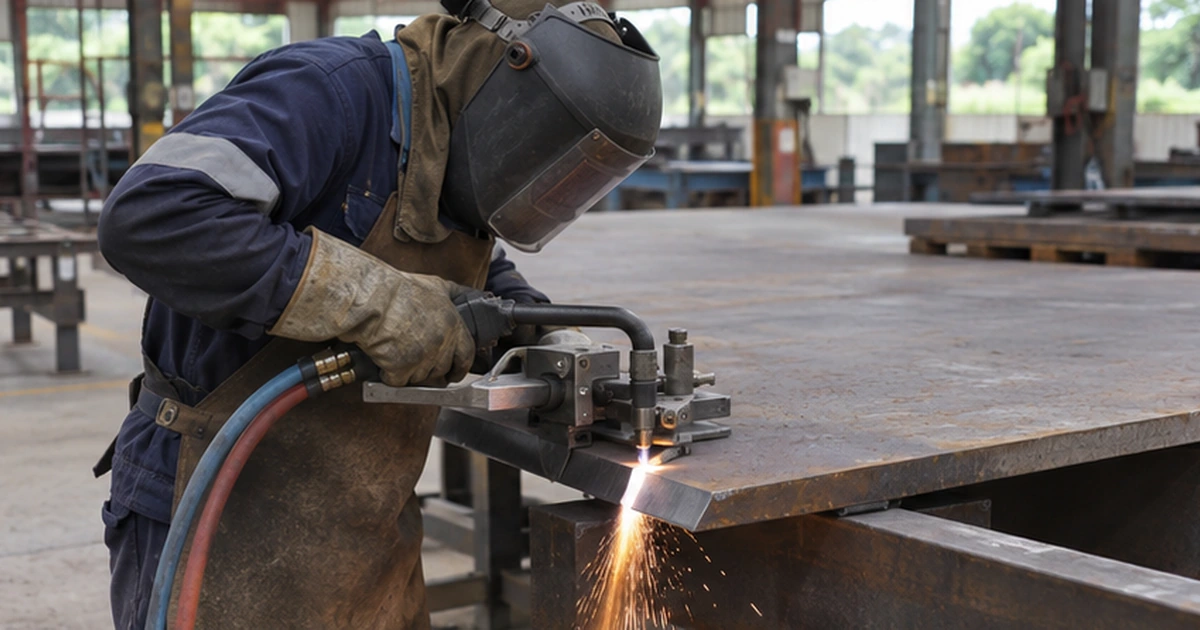
Good joint preparation is the first step of every successful weld. Even where no bevel is needed, the edges must be cut clean and square. On thicker material, the edges are bevelled so the welder can reach the root and fuse the full thickness. Poor preparation is one of the most common causes of lack of fusion and incomplete penetration.
Cutting Methods
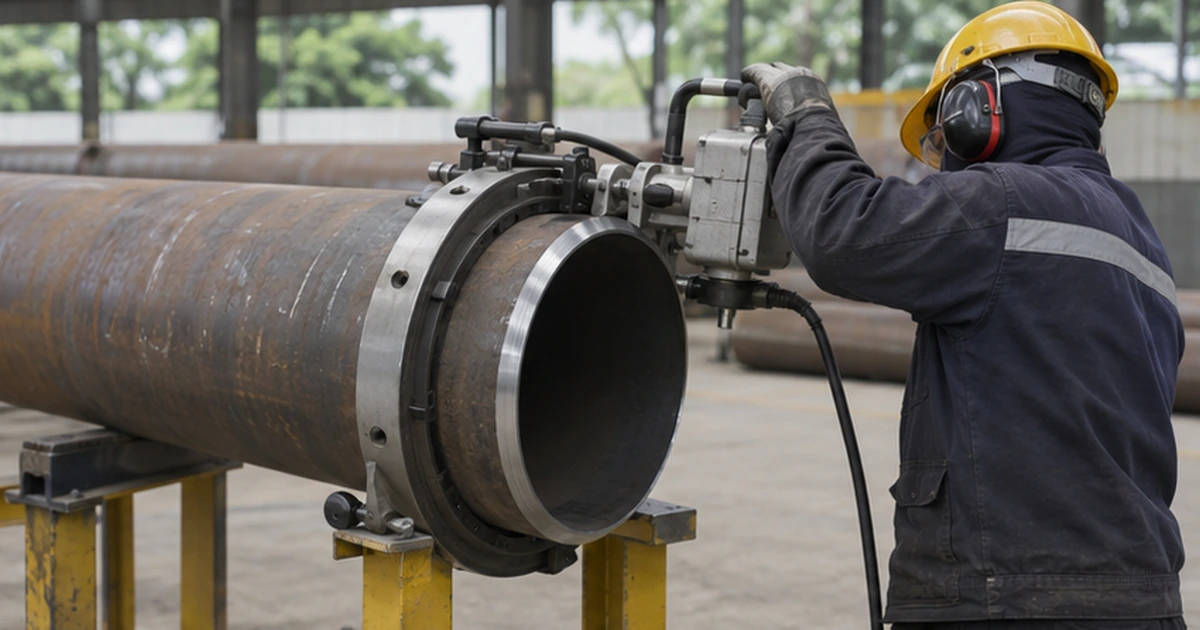
- Oxy-fuel cutting: the classic method for carbon steel plate, sections and pipe. Steel heated to about 1,100 °C burns rapidly in a jet of pure oxygen
- Plasma cutting: cuts stainless steel and aluminium as well as carbon steel, faster on thinner plate
- Air carbon arc gouging (arc-air): removes metal to open up cracks and back-gouge roots
- Laser cutting: precise on thinner plate, used in fabrication shops
- Machining and waterjet: no heat at all, for high-value materials and tight tolerances
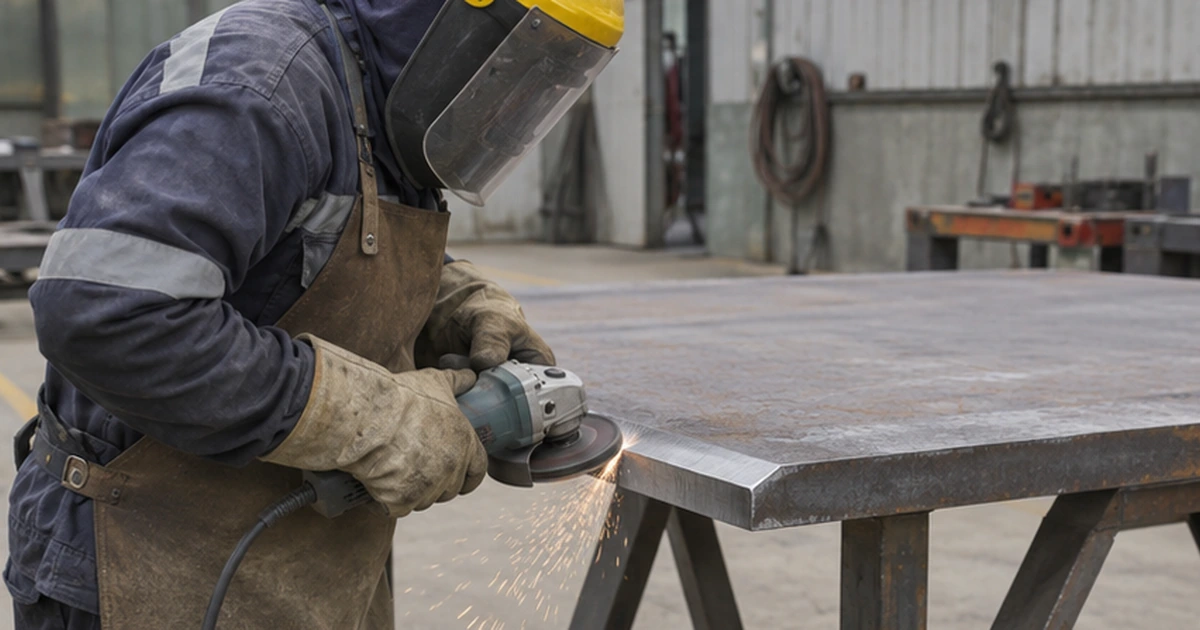
TWI explains how the cutting method is chosen in its note on cutting in fabrication. Thermal cutting leaves an oxide layer and a heat-affected edge, which are ground off before welding.
Bevel, Root Face and Gap
- Bevel angle: typically 30–37.5° per side, giving a 60–75° included angle for single-V joints
- Root face: a small flat land, often 1–2 mm, that supports the root pass
- Root gap: the opening at the root, set by the WPS, often 2–4 mm for manual welding
- Thick plate: double-V or J preparations reduce weld volume and distortion
Fit-Up and Cleaning
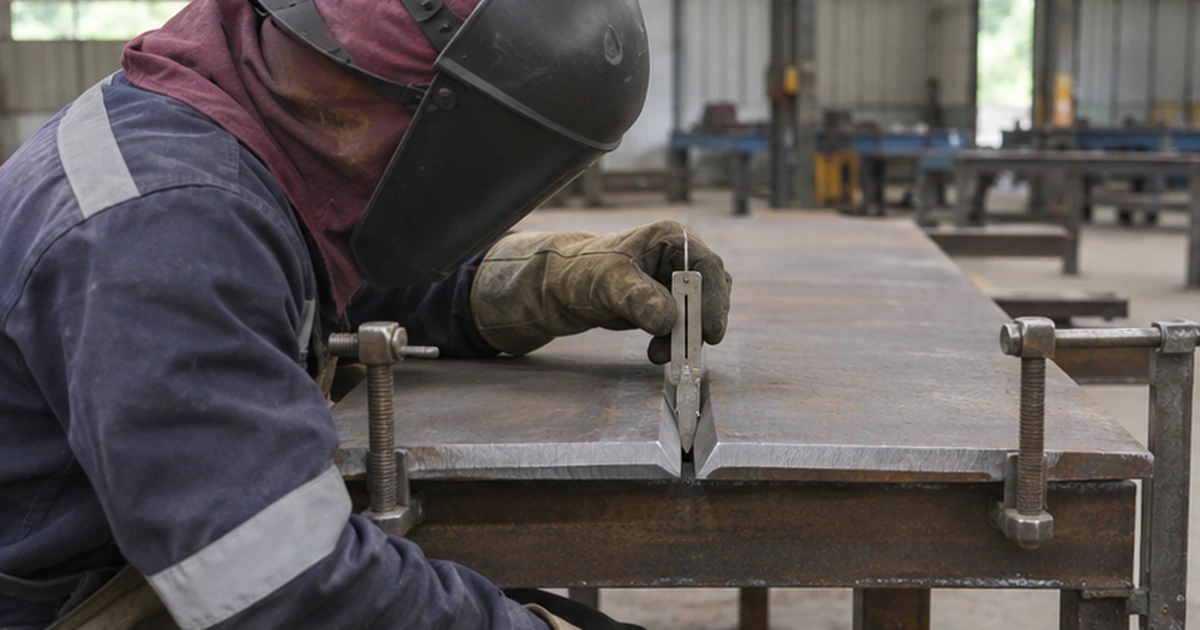
The parts are aligned within the tolerances of the code and tacked at regular spacing. Misalignment at the root, an uneven gap or a step between pipe ends all make a sound root pass much harder. Finally, the bevel and about 25 mm either side are cleaned of rust, paint, oil and moisture.
Back-Gouging and Backing
On double-sided welds, the root of the first side is often gouged out from the back to sound metal before the second side is welded. On single-sided joints, a backing strip, ceramic backing or gas purge supports the root. The method is part of the WPS and must be followed exactly.
Back-gouging with arc-air leaves a carbon-rich surface, which is ground clean before welding.
From My Experience
On pipe work, I spend real time on the fit-up before the first arc: checking the gap all round, the alignment and the tacks. On site, this is the part of the job nobody sees, but it decides whether the radiographs come back clean. A good fit-up makes a good welder look even better; a poor one makes the best welder struggle.
Conclusion
Careful cutting, the right bevel, a consistent gap and clean metal turn a difficult joint into a routine one. They are also the best defence against welding defects.
If you found this article useful, feel free to share it with colleagues who work with fabrication and pipe work. — Zisis
Need Help on a Project?
For welding supervision and quality control on marine and industrial work, see Welding Supervision or request a quote.