

What Good MMA Welding Technique Means
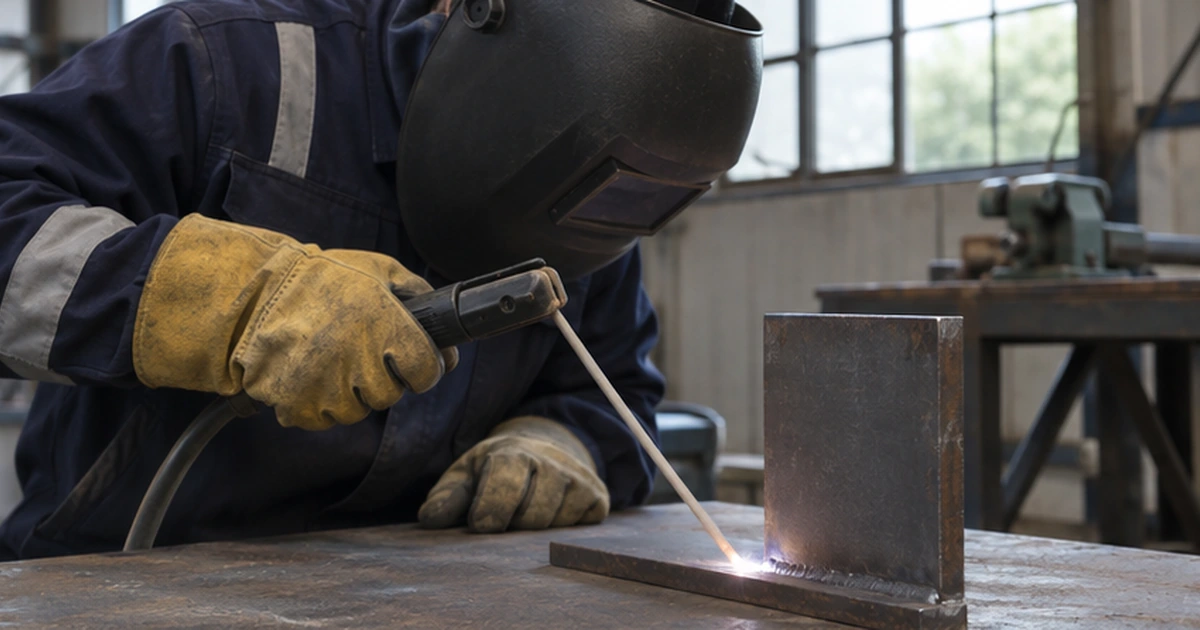
Manual metal arc (MMA) welding, also called stick welding or SMAW, is still the most versatile process on site. It needs no gas, works outdoors and in all positions, and welds most steels. TWI describes it as the most versatile of the welding processes in its guide to MMA welding. But because everything is in the welder’s hand, MMA welding technique decides the quality of the joint.
The Five Variables
- Current: set within the electrode’s range for diameter and position. Too low gives poor fusion and slag traps; too high gives undercut and spatter
- Arc length: about equal to the core diameter. A long arc lets air in and causes porosity
- Electrode angle: roughly 10–20° from vertical in the direction of travel, and balanced between the plates on fillets
- Travel speed: steady, so the bead has the specified size and the slag does not run ahead of the pool
- Manipulation: straight stringer beads or a narrow weave, as the WPS allows
Striking and Restarting
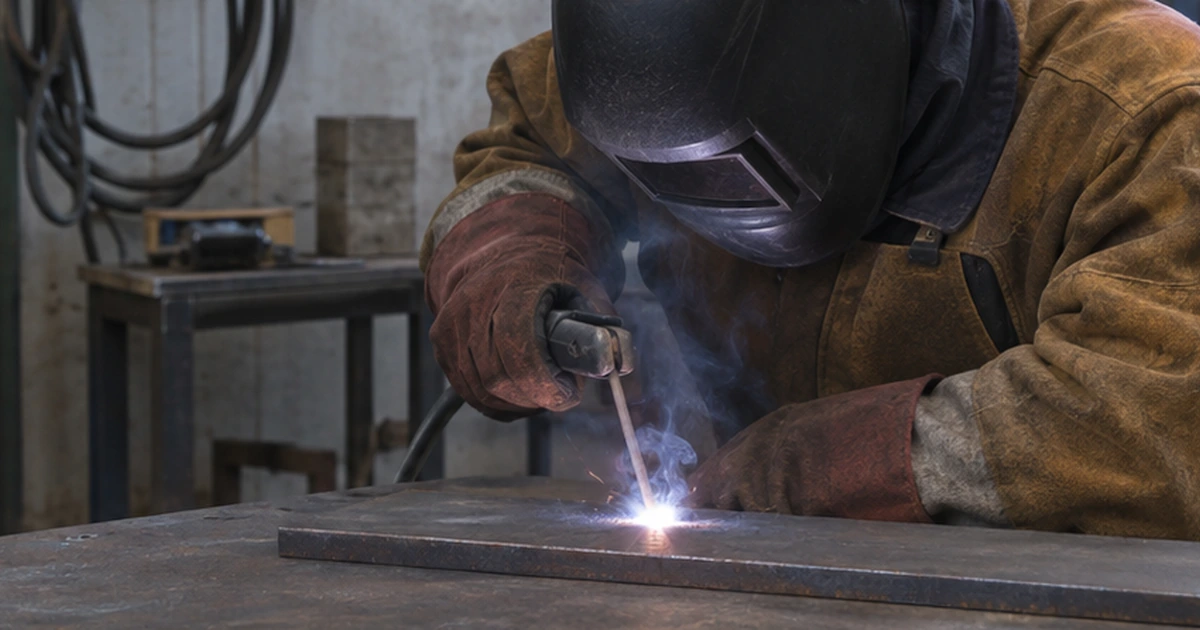
Strike the arc inside the joint, never on the plate surface beside it, because stray arc strikes can crack. When changing electrodes, clean the crater, restart slightly ahead of it and bring the arc back over the end of the previous bead. This avoids cold laps and crater cracks.
Positions
Vertical-up and overhead welding need lower current, a shorter arc and a controlled weave or step technique, so gravity does not pull the pool away. Basic low-hydrogen electrodes are normally run vertical-up; cellulosic electrodes are designed for vertical-down pipeline work.
Between Passes
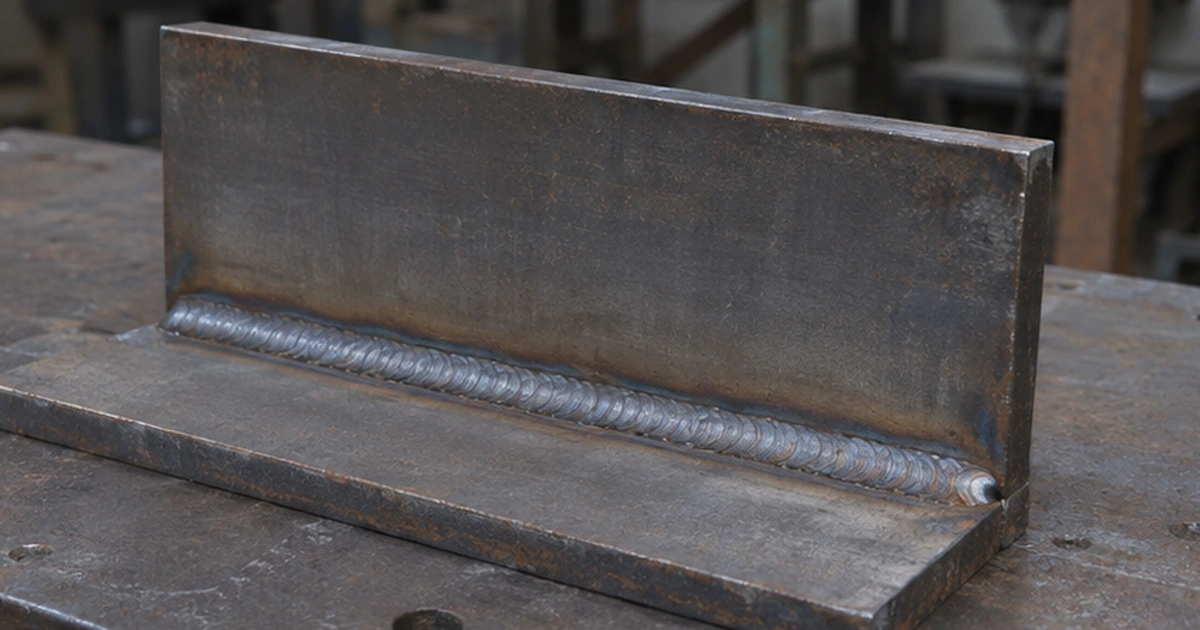
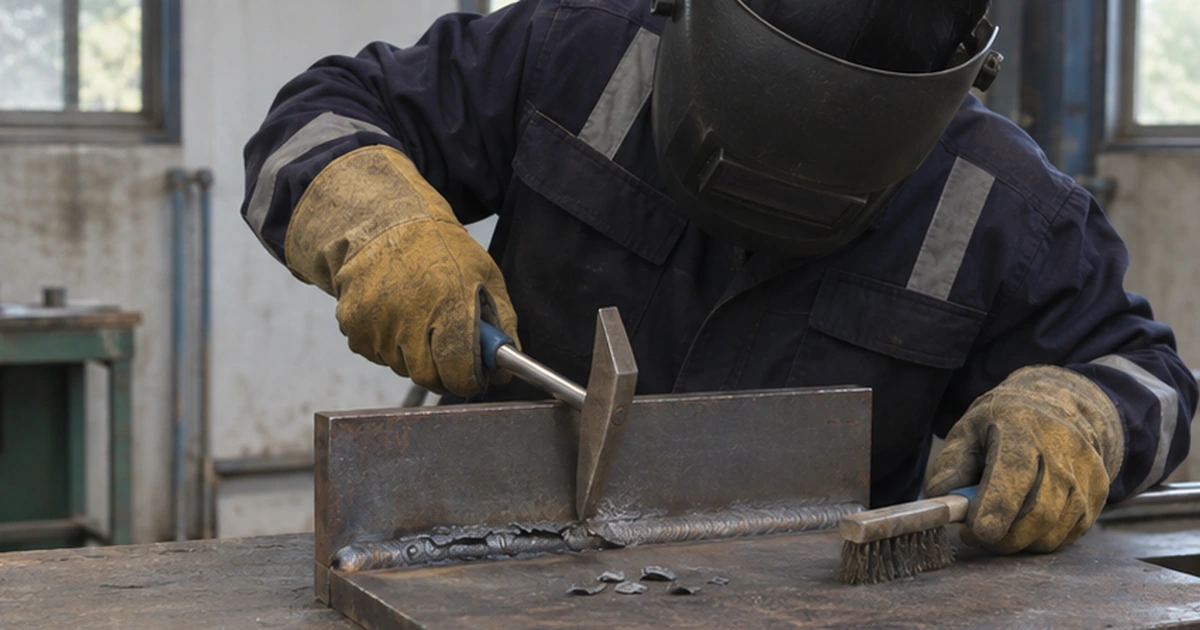
Remove all slag with a chipping hammer and wire brush before the next pass, and check the bead for defects. On multi-pass welds, keep the interpass temperature within the WPS limits.
Practice and Qualification
Good technique is built by practice on test plates in every position the job requires, then proven in a welder qualification test such as ISO 9606-1. On class and pressure work, that certificate is what allows a welder to weld production joints.
Common Faults and Their Causes
- Porosity: long arc, damp electrodes or dirty joint
- Undercut: current too high or wrong angle
- Slag inclusions: poor cleaning or current too low
- Uneven bead: inconsistent speed or arc length
From My Experience
On the rudder crack repair in Tuzla, around 120 kg of basic electrodes went into one cavity, pass after pass, over more than two weeks. A repair like that is only as good as the consistency of every single pass: the same arc length, the same cleaning and the same care on the last day as on the first.
Conclusion
Good MMA welding technique comes down to the right current, a short arc, a steady angle and speed, clean restarts and thorough cleaning. The electrode itself is covered in my article on steel welding electrodes.
If you found this article useful, feel free to share it with colleagues who work with MMA welding. — Zisis
Need Help on a Project?
For MMA/SMAW welding on marine and industrial work, see MMA/SMAW Welding or request a quote.