

What Steel Welding Electrodes Do
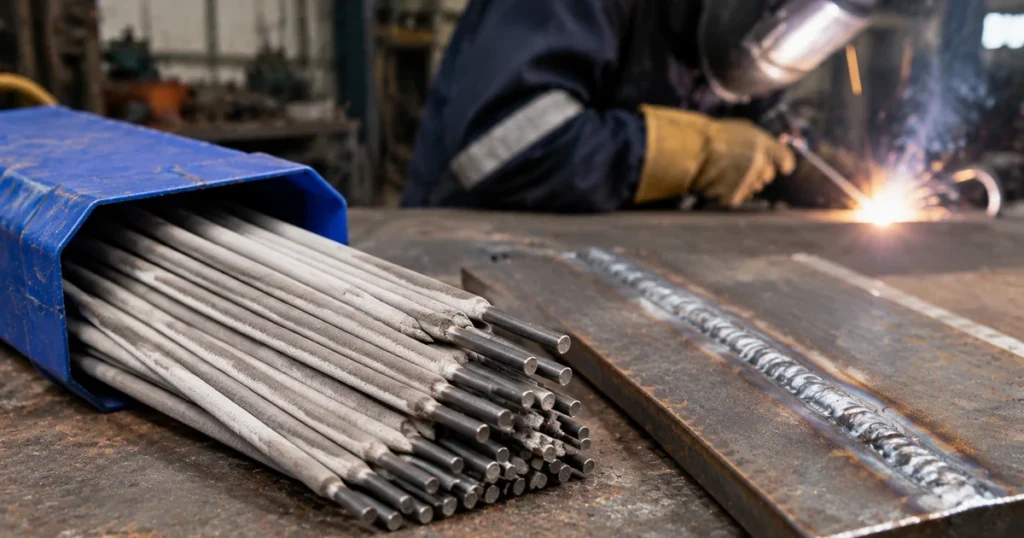
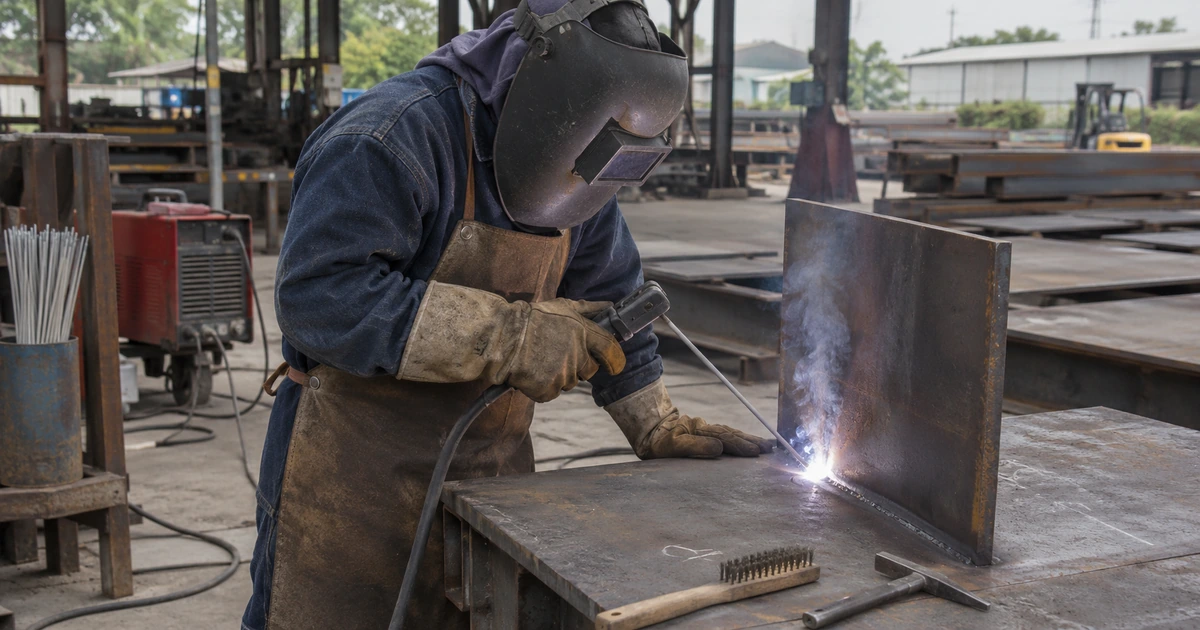
Steel welding electrodes are the consumables of MMA/SMAW welding. The metal core becomes the filler metal, and the coating stabilises the arc, shields the weld pool and forms a slag over the bead. The type of coating decides how the electrode runs and what weld metal it produces.
Main Coating Types
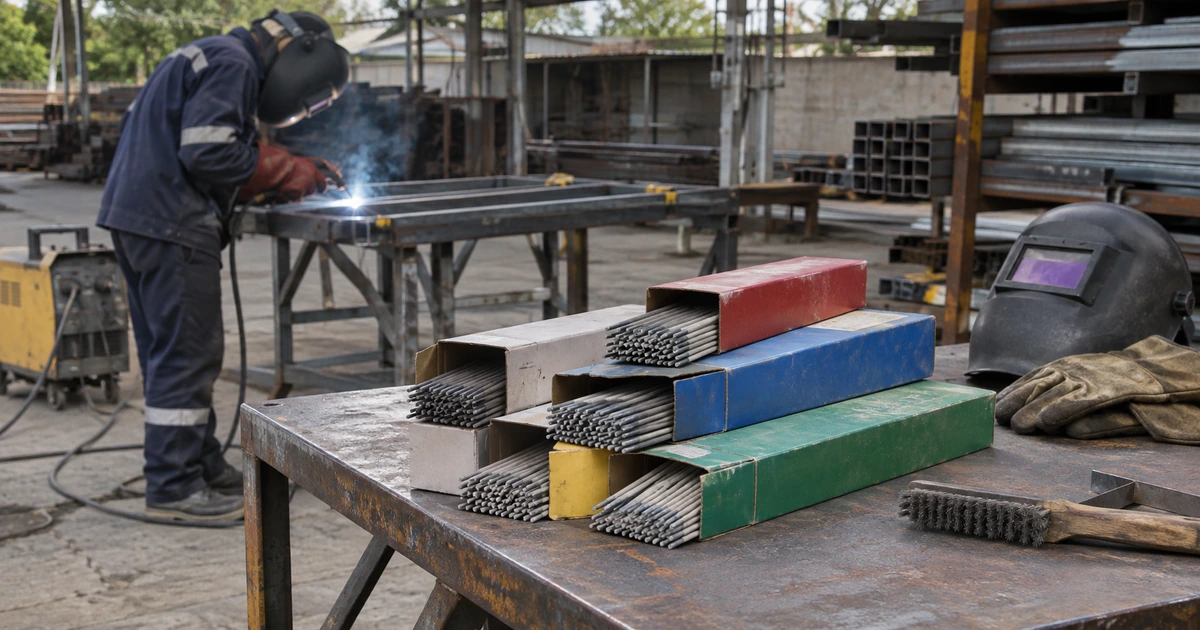
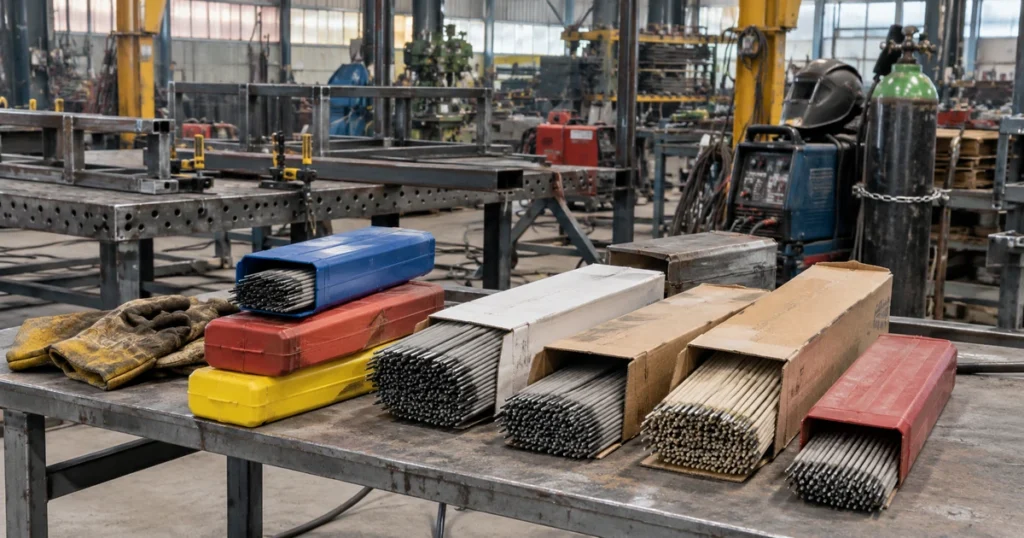
- Rutile (e.g. E6013): easy to use, smooth bead, easy slag removal. General fabrication and repair.
- Basic, low hydrogen (e.g. E7018): tough, crack-resistant weld metal. Structural, pressure and ship work. Must be kept dry.
- Cellulosic (e.g. E6010): deep penetration and fast vertical-down welding. Pipeline root passes.
- Iron powder (e.g. E7024): high deposition for flat and horizontal fillets.
The AWS number also tells you a lot: in E7018, “70” means 70 ksi (about 490 MPa) minimum tensile strength, “1” means all positions, and “8” the coating type and current.
Classification
- AWS A5.1: carbon steel electrodes
- AWS A5.5: low-alloy steel electrodes
- AWS A5.4: stainless steel electrodes
In Europe the equivalents are EN ISO 2560, EN ISO 3580 and EN ISO 3581. For stainless steel, the ferrite content of the weld metal affects cracking resistance and corrosion behaviour, as explained in TWI’s guide to MMA welding.
Stainless and Dissimilar Joints
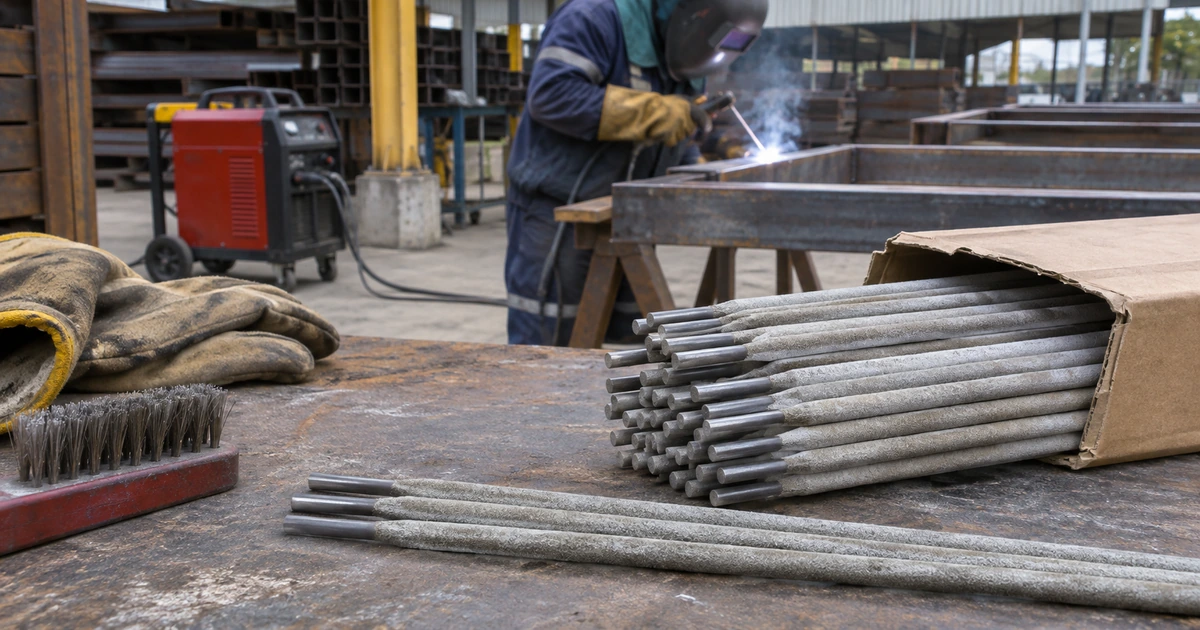
Stainless steel electrodes are chosen to match or over-alloy the parent metal, for example 316L electrodes on 316L pipe. For joints between carbon steel and stainless steel, a more highly alloyed electrode such as type 309L is normally used, so that dilution from the carbon steel side does not leave a crack-sensitive weld.
How to Choose an Electrode
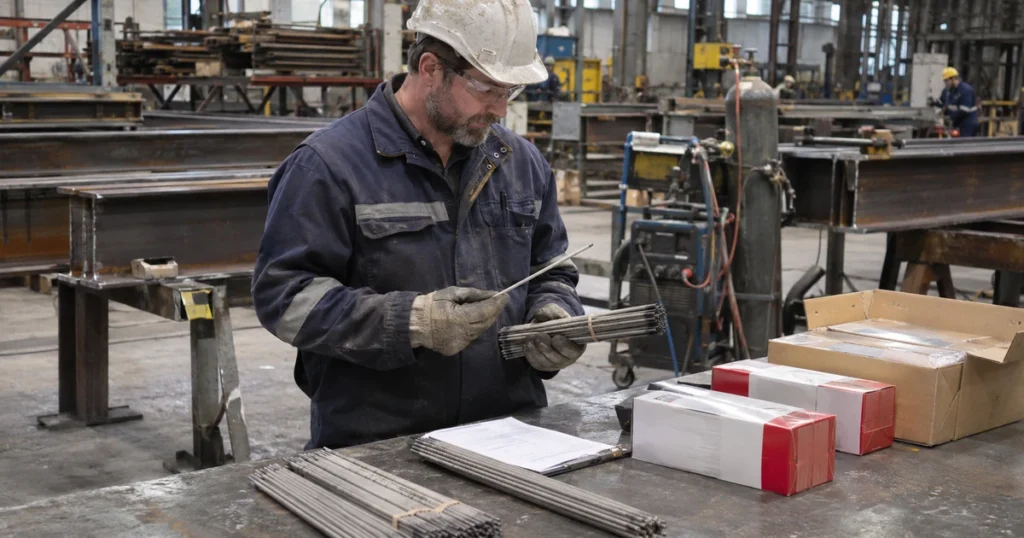
- Match the strength of the steel
- Check impact requirements and service temperature
- Check the welding positions on the job
- Check the current available: AC or DC
- Follow the WPS and any approval required by the client or class society
Diameter and Current
A common rule of thumb for rutile electrodes is roughly 30–40 A per millimetre of core diameter, adjusted for position and joint. The datasheet always takes priority. Too little current gives poor fusion; too much gives undercut, spatter and an overheated electrode.
Class Society Approvals
In shipbuilding and ship repair, consumables are often required to be on the approved list of the classification society, such as ABS, Lloyd’s Register, DNV or RINA. The approval grade is printed on the packet and on the manufacturer’s certificate, and inspectors check it.
Storage and Handling
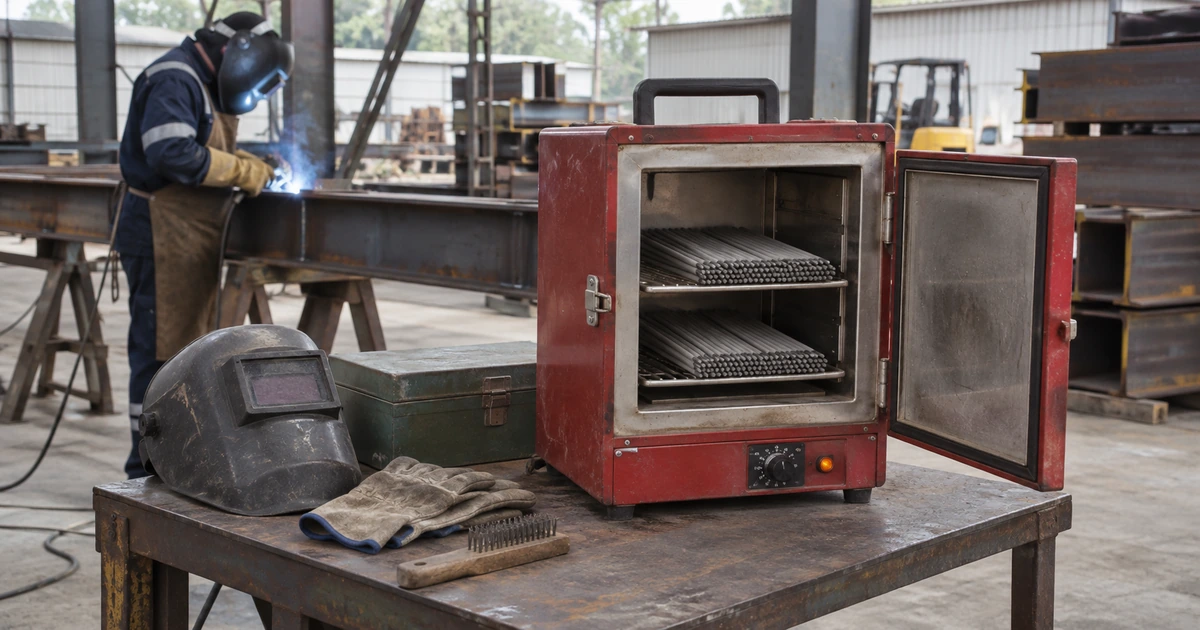
Low-hydrogen electrodes pick up moisture from the air. They are stored in a heated cabinet or quiver and, if exposed, re-baked to the manufacturer’s instructions. Damp electrodes cause porosity and hydrogen cracking.
Rutile and cellulosic electrodes are less sensitive and should not be over-dried, because cellulosic coatings need some moisture to work properly. Always follow the storage instructions on the packet.
From My Experience
Before I strike an arc on any job, I check three things: that the electrode classification matches the WPS, that the batch certificate is there, and how the electrodes have been stored. On the rudder crack repair in Tuzla, the whole build-up was made with MMA electrodes, and keeping them dry for the full length of the job mattered as much as the welding itself.
Conclusion
Choosing the right electrode means matching the coating type and classification to the steel, the position and the WPS, and keeping it dry until it reaches the arc.
If you found this article useful, feel free to share it with colleagues who work with MMA welding. — Zisis