

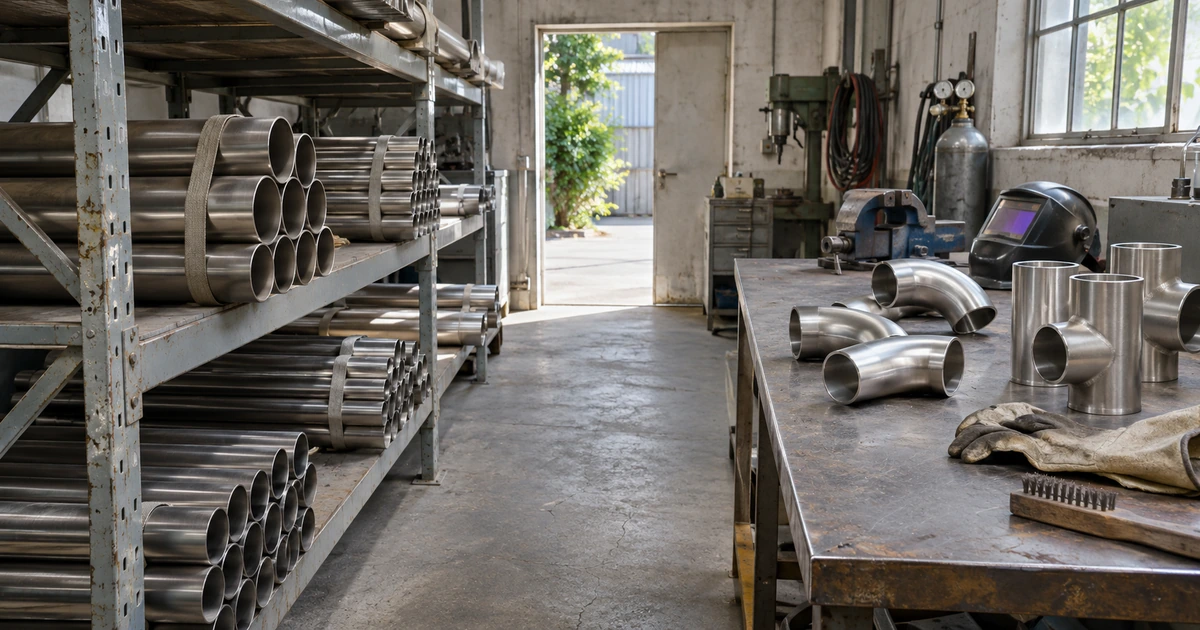
304 vs 316: The Key Difference
Both are austenitic stainless steels. Type 304 contains about 18% chromium and 10% nickel and is the most widely used grade. Type 316 adds about 2–3% molybdenum, which greatly improves resistance to pitting and crevice corrosion in chlorides. As TWI puts it, the molybdenum-bearing grade 316 is better than 304 where corrosion is the concern.
When to Use Each Grade
- 304: indoor equipment, food processing, architectural work, tanks for non-aggressive liquids
- 316: seawater, marine fittings, chemical and pharmaceutical plants, coastal installations
- Both have an L version (304L, 316L) with low carbon, below 0.03%, for welded structures
Even 316 has limits. In warm seawater and aggressive chloride service it can still pit or suffer stress corrosion cracking, which is where duplex grades take over.
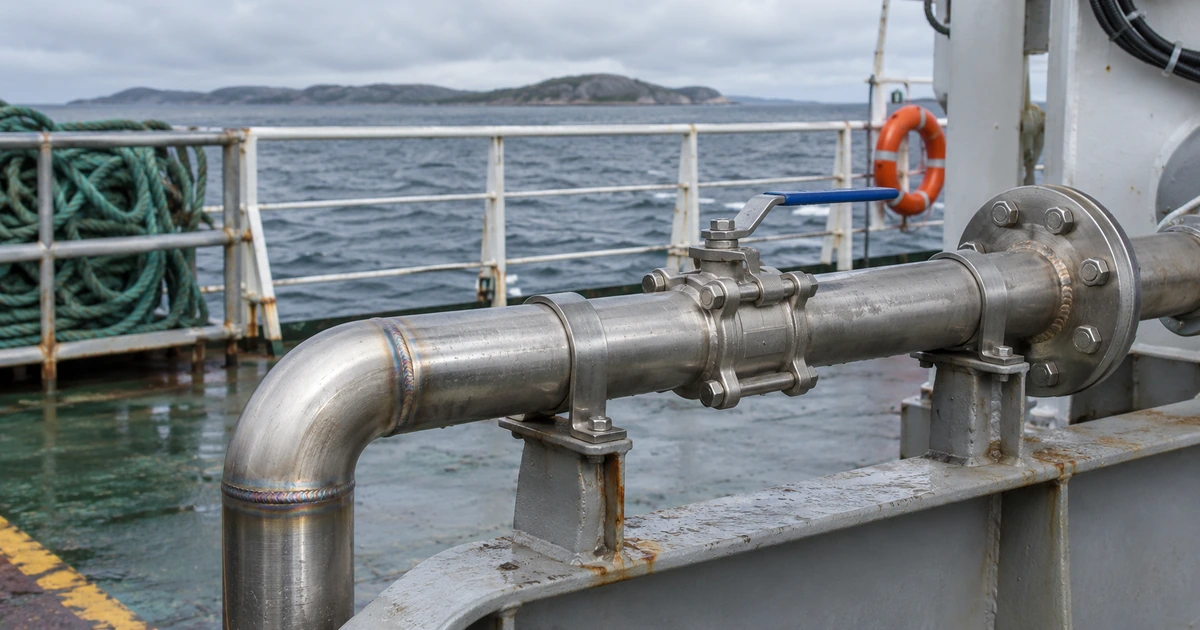
Welding 304 and 316
Both weld well with TIG, MIG and MMA. There is no type 304 filler metal: 304 is welded with type 308 filler, and 316 with 316L filler. These fillers give a small amount of ferrite in the weld, which protects against hot cracking. Use the L grades to avoid carbide precipitation, known as weld decay.
Austenitic stainless steels conduct heat about three times less than carbon steel and expand about 30% more, so they distort more. Low heat input, balanced sequences and good clamping help.
Is Stainless Magnetic?
Plate and pipe in 304 and 316 are essentially non-magnetic. Welds made with matching fillers are slightly magnetic, because of the small ferrite content designed into them. That is normal and does not mean the wrong material was used.
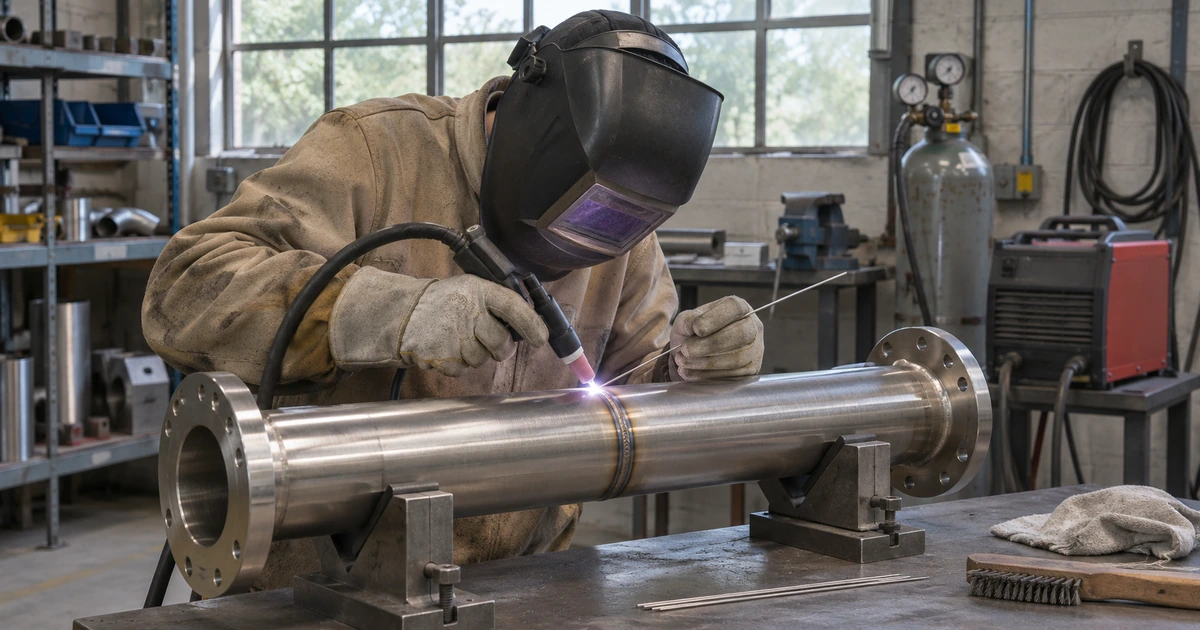
Cleaning After Welding
Heat tint, the coloured oxide around a stainless weld, reduces corrosion resistance. On marine and process work it is removed by brushing with stainless-only brushes, pickling paste or electrochemical cleaning, followed by rinsing. Carbon steel tools and grinding discs must never be used on stainless, because embedded iron particles start rust spots.
Cost and Availability
316 costs more than 304, mainly because of its molybdenum and higher nickel content. Over the life of a marine or chemical installation, the lower risk of corrosion failures usually justifies the difference.
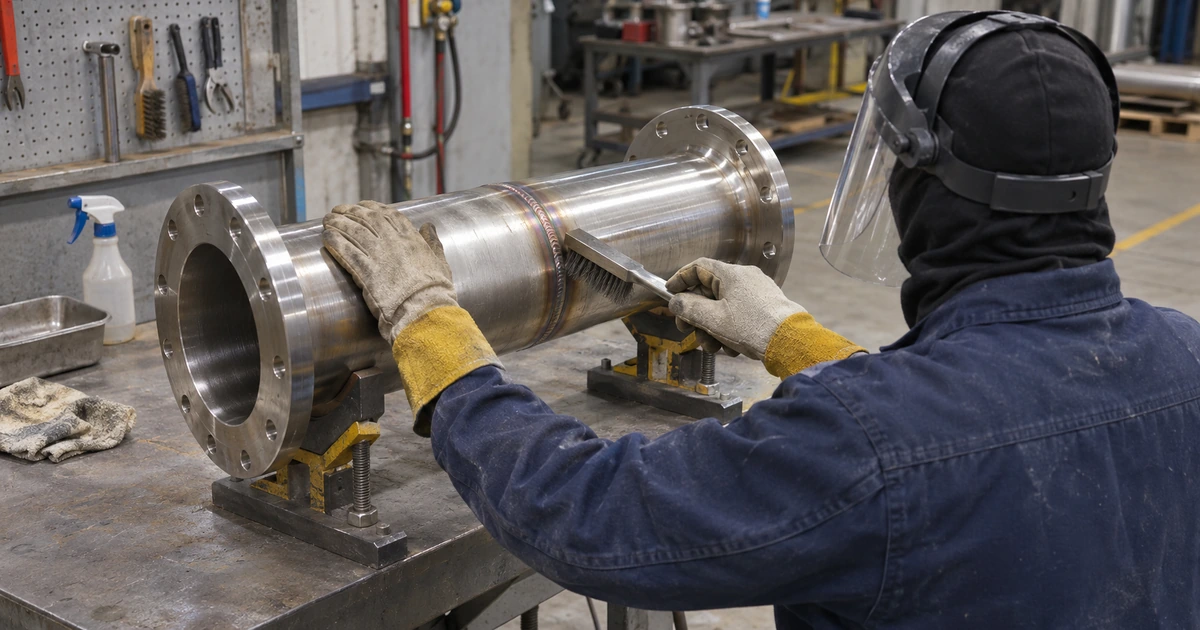
From My Experience
On marine work, I always check the material certificate before welding stainless. 304 and 316 look identical on the rack, and a mix-up only shows itself months later as rust stains in seawater service. Matching the filler to the grade, and keeping the tools separate from carbon steel, avoids most of the problems clients later blame on the welding.
Conclusion
For general work, 304L is the economical choice. Near the sea or with chlorides, 316L is worth the extra cost, and for the harshest conditions duplex is the next step. See my article on duplex and super duplex stainless steel.
If you found this article useful, feel free to share it with colleagues who work with stainless steel. — Zisis
Need Help on a Project?
For precision TIG welding on marine and industrial work, see TIG Welding or request a quote.