

What Makes Cellulosic Electrodes Different
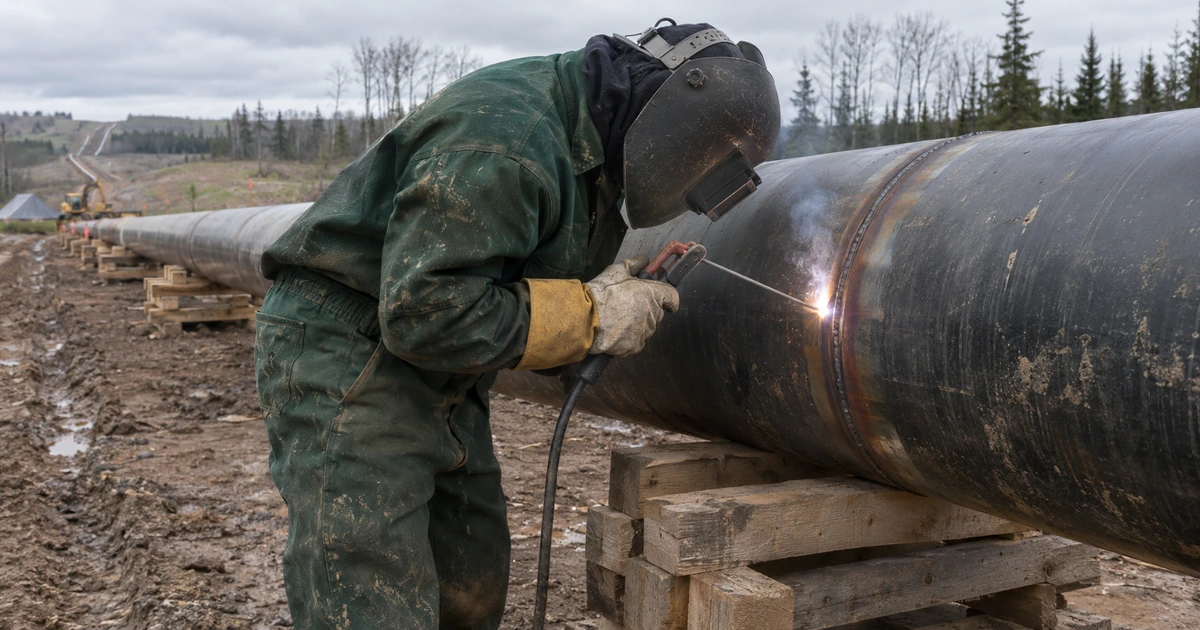
Cellulosic electrodes have a coating rich in organic cellulose. In the arc, the cellulose burns to produce a gas shield of hydrogen and carbon oxides. Hydrogen gives the arc a very high voltage and a forceful, digging action. The result is deep penetration, a thin, fast-freezing slag and the ability to weld in every position, including vertical down.
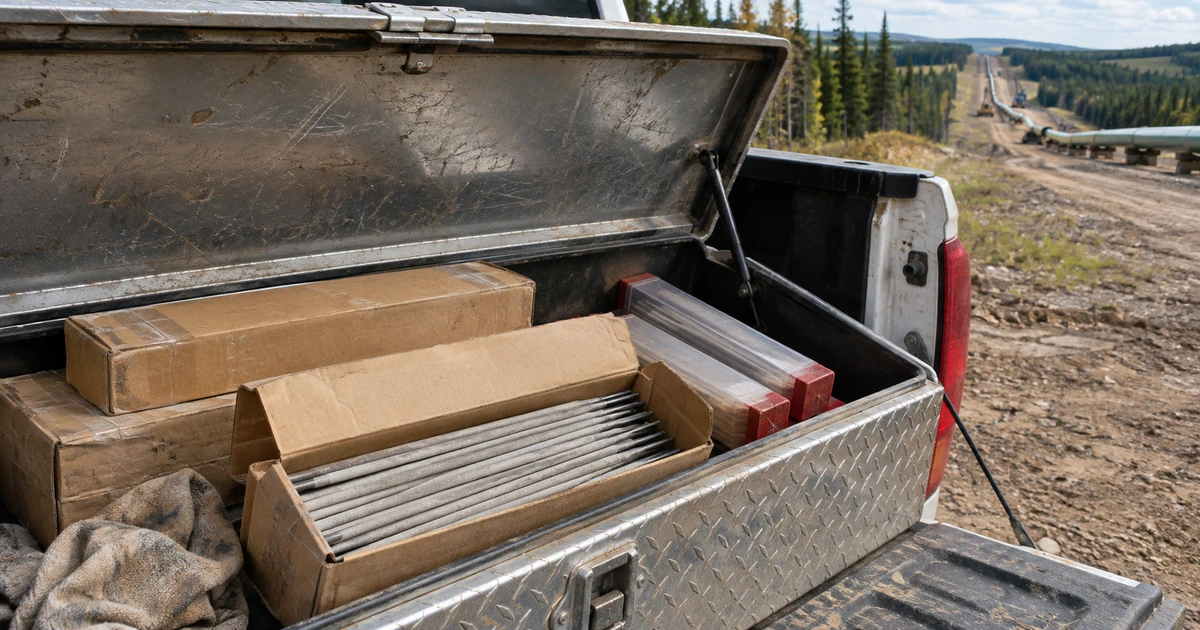
These properties made cellulosic electrodes the classic choice for cross-country pipelines, where crews run root and hot passes downhill at high speed. The typical classes under AWS A5.1 and A5.5 are E6010, E6011 (for AC), E7010 and E8010 for higher-strength pipe steels.
Vertical-Down Pipe Welding
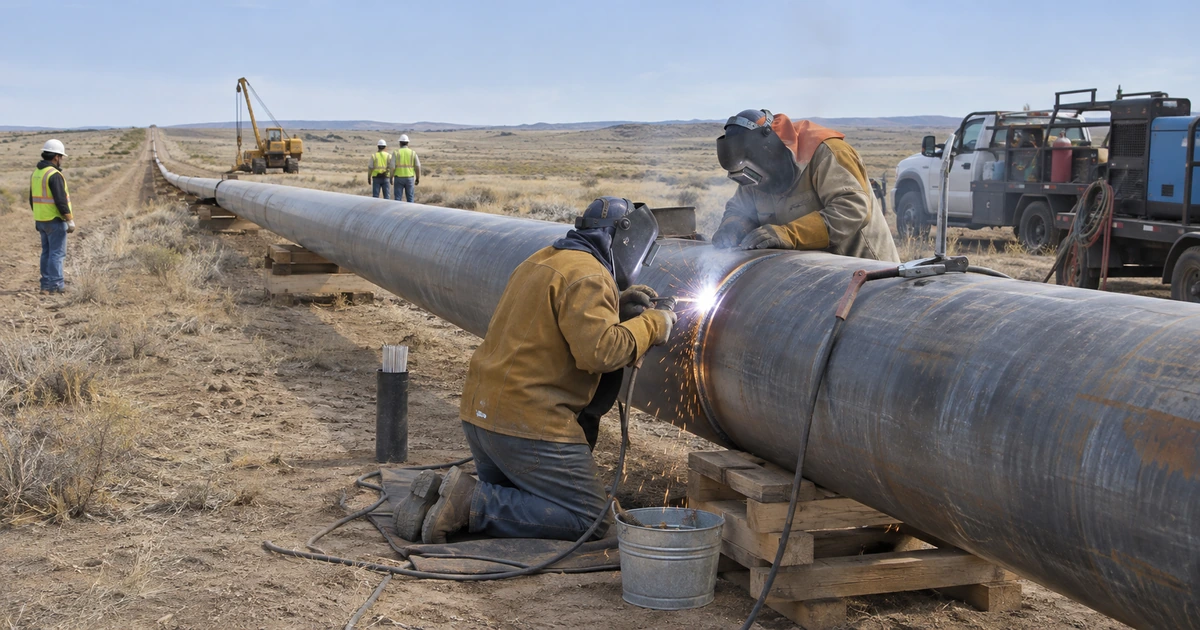
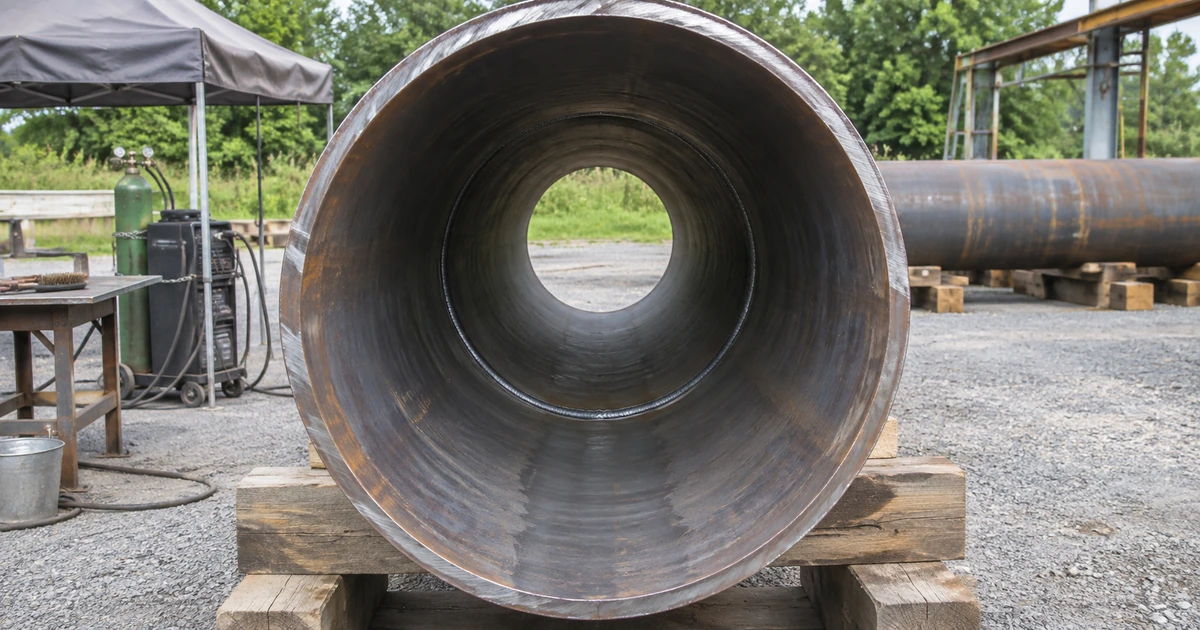
In the stovepipe technique, the root is welded from the top of the pipe to the bottom, often by two welders working on opposite sides. The strong arc pushes through the root gap and forms a consistent bead on the inside, while the fast-freezing slag holds the pool in place.
- Root pass: small diameter, typically 3.2 or 4.0 mm, run quickly with a tight arc
- Hot pass: follows immediately, burning out slag lines left in the root
- Fill and cap: cellulosic or low-hydrogen electrodes, depending on the procedure
- Polarity: usually DC electrode positive, but some root procedures use negative
Rutile-Cellulose Electrodes
Between pure rutile and pure cellulosic types sit the rutile-cellulose electrodes, classified as RC under EN ISO 2560 and often meeting E6013 or E6012. They have a softer arc than pure cellulosic rods but still run well vertical down. They are used on thin sheet, containers, boiler work and shipbuilding steels, especially where fit-up is poor and the welder needs a forgiving arc.
Typical examples from older Greek and European catalogues include E-549 and Rex, both medium-coated rutile-cellulose electrodes for general structural and ship steels. Zelcord Fe and Zelcord Mo are pure cellulosic types for downhill pipe welding, the Mo version with about 0.5% molybdenum for higher-strength pipe grades such as API X52 and X60. Always check the current manufacturer data sheet before use, as designations change.
Hydrogen and Its Limits
The same hydrogen that makes cellulosic electrodes dig deep also enters the weld metal. Diffusible hydrogen is high, which raises the risk of hydrogen cracking in thick sections and high-strength steels. Procedures control this with preheat, a minimum time between root and hot pass, and interpass temperatures. For high-strength pipe or restrained joints, low-hydrogen electrodes are used for filling and capping.
Cellulosic electrodes are also stored differently. They need some moisture in the coating to work and must not be oven-dried like basic electrodes, which would ruin their arc.
From My Experience
On pipeline work, the root and hot pass set the pace for the whole crew. A cellulosic root that is run too slowly or with too long an arc leaves wagon tracks of slag that the hot pass cannot clear. I would rather slow down on fit-up and keep the gap and land even, because then the electrode does the work.
Conclusion
Cellulosic electrodes are a specialist tool: unbeatable for fast, deep, all-position pipe roots, but high in hydrogen and demanding in technique. For the wider picture, see steel welding electrodes and general-purpose rutile electrodes.
If you found this article useful, feel free to share it with colleagues who work with pipeline welding. — Zisis
Need Help on a Project?
For MMA/SMAW welding on marine and industrial work, see MMA/SMAW Welding or request a quote.