

Why Copper-Nickel Is Used at Sea
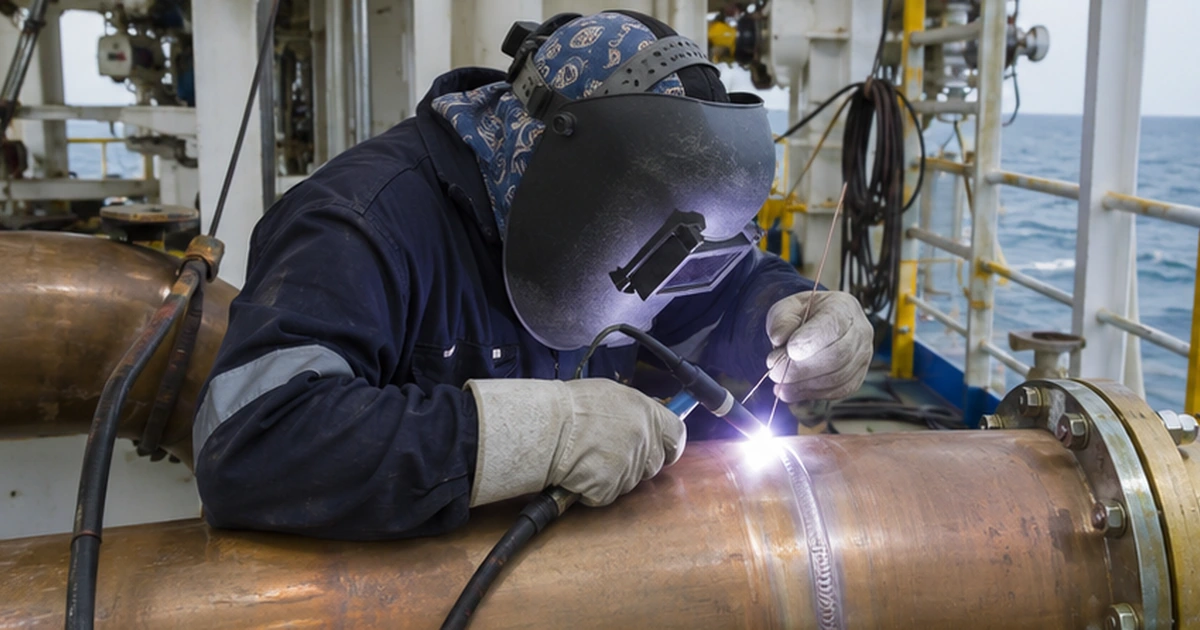
Copper-nickel alloys are the standard choice for seawater systems on ships and offshore: cooling water, fire mains, ballast lines and desalination plants. They resist seawater corrosion well and naturally discourage marine growth inside the pipe. The two common grades are 90/10 (about 10% nickel, with small additions of iron and manganese) and 70/30, which is stronger and more resistant to high flow velocities.
Both grades weld well, but they do not forgive poor preparation. Most problems in copper-nickel welding come from contamination, wrong filler metal or poor gas shielding, not from the alloy itself.
Preparing for Copper-Nickel Welding
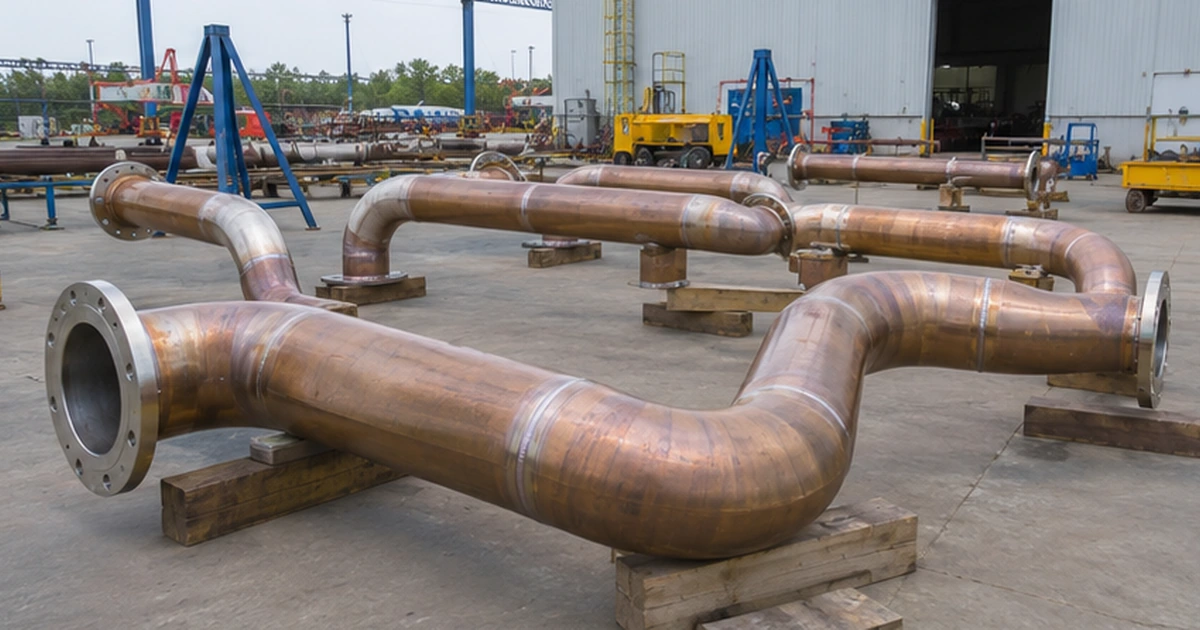
Copper-nickel is sensitive to sulphur, lead and phosphorus. Oil, grease, marker pen, paint and cutting fluids must be removed completely before welding, or the weld can crack. Edges are cleaned with a solvent and a dedicated stainless steel brush that is never used on carbon steel.
- Thin wall up to about 3 mm: square butt joint with a small root gap, around 1.5 mm
- Thicker wall: a V-preparation with a wider included angle than for steel, as the weld pool is less fluid
- Tack welds every 50 to 100 mm, because the material moves with heat
- Never weld autogenously (without filler): the filler supplies the deoxidisers that prevent porosity
TIG Settings for Copper-Nickel Pipe
TIG (GTAW) is the preferred process for root runs and thin wall, since it gives the best control. MIG and MMA are used for filling thicker sections in the workshop. As a starting point on 2 to 3 mm wall:
- Current: about 80 to 150 A, DC electrode negative
- Filler rod: 1.6 to 2.4 mm, ERCuNi (70/30 type)
- Tungsten: 1.6 or 2.4 mm, ground to a point
- Shielding gas: pure argon, about 8 to 12 L/min
Arc length is kept short and the weld pool is kept moving. Copper-nickel does not flow like steel, so the filler has to be added steadily and the pool steered into the sidewalls.
Filler Metal Choice
A 70/30 type filler is normally used for both 90/10 and 70/30 base metal. The weld metal then has slightly higher nickel than the pipe, which keeps it at least as corrosion resistant as the surrounding material. Matching 90/10 fillers exist but are less common. When copper-nickel is joined to steel, a nickel-copper or nickel-based filler is used and the procedure must be qualified for that combination.
Back Purging the Root
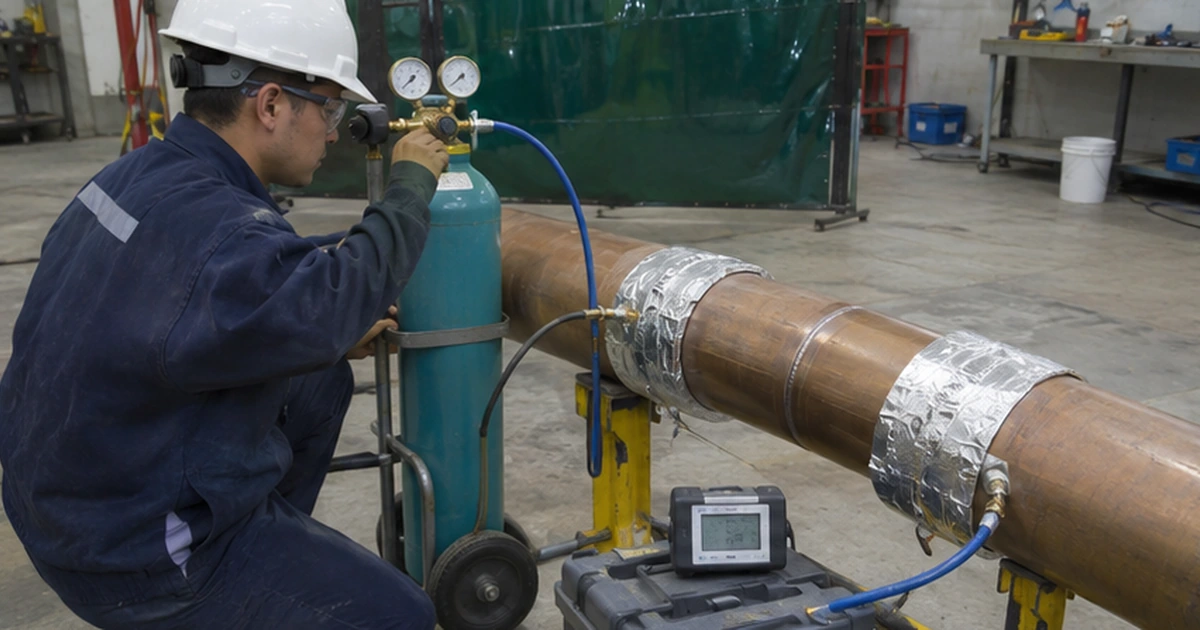
Back purging is the most critical step in copper-nickel pipe welding. Without argon on the inside, the root oxidises and the inner surface loses its corrosion resistance exactly where the seawater flows. The pipe is closed with purge dams or caps, filled with argon, and the oxygen level is checked before the root is started. The purge stays on until the second pass is complete.
From My Experience
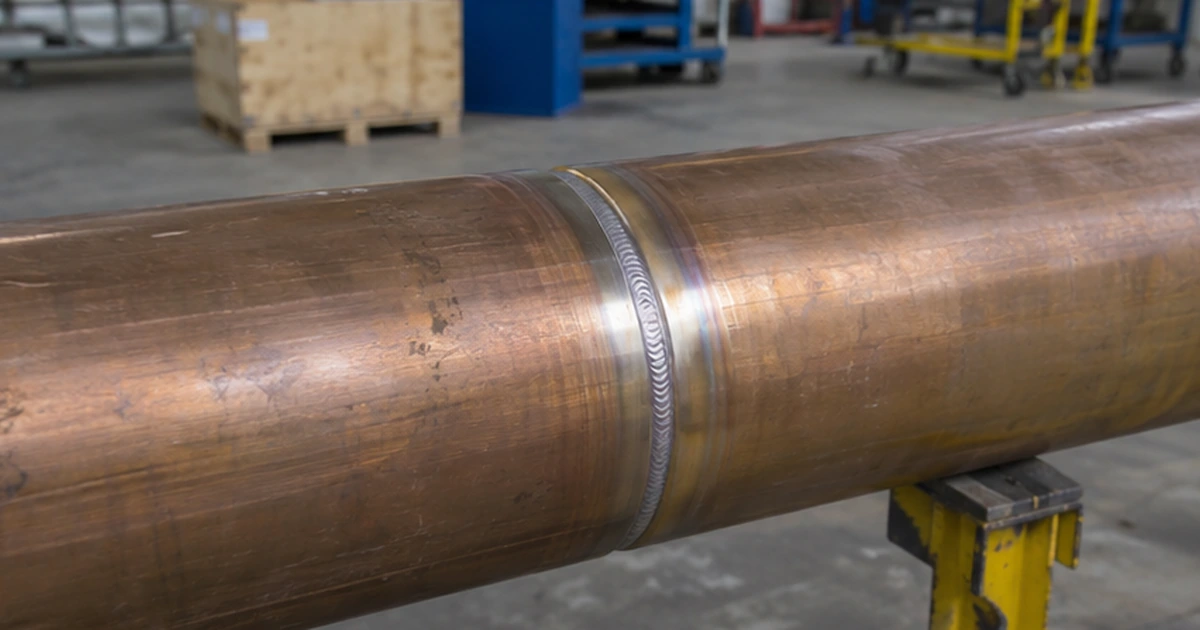
On seawater lines, the welds that fail early are almost always the ones where someone rushed the cleaning or skipped the purge to save time. I prepare copper-nickel the same way I prepare stainless pipe for hygienic service: clean tools, clean gloves, measured purge. It takes longer at the start and saves a repair later.
Conclusion
Copper-nickel welding is straightforward when the basics are respected: clean edges, a 70/30 filler, a short TIG arc and a proper argon purge. For more on gas choice, see shielding gases for MIG and TIG.
If you found this article useful, feel free to share it with colleagues who work with seawater piping. — Zisis
Need Help on a Project?
For precision TIG welding on marine and industrial work, see TIG Welding or request a quote.