

Welded Pipe and Seamless Pipe
Steel pipe is made in two basic ways. Seamless pipe is pierced from a solid billet and rolled into a tube with no weld. Welded pipe is made from flat plate or strip that is formed into a circle and joined along its edges. Welded pipe is cheaper, available in much larger diameters and with more uniform wall thickness, which is why it carries most of the world’s water, gas and oil.
ERW Pipe
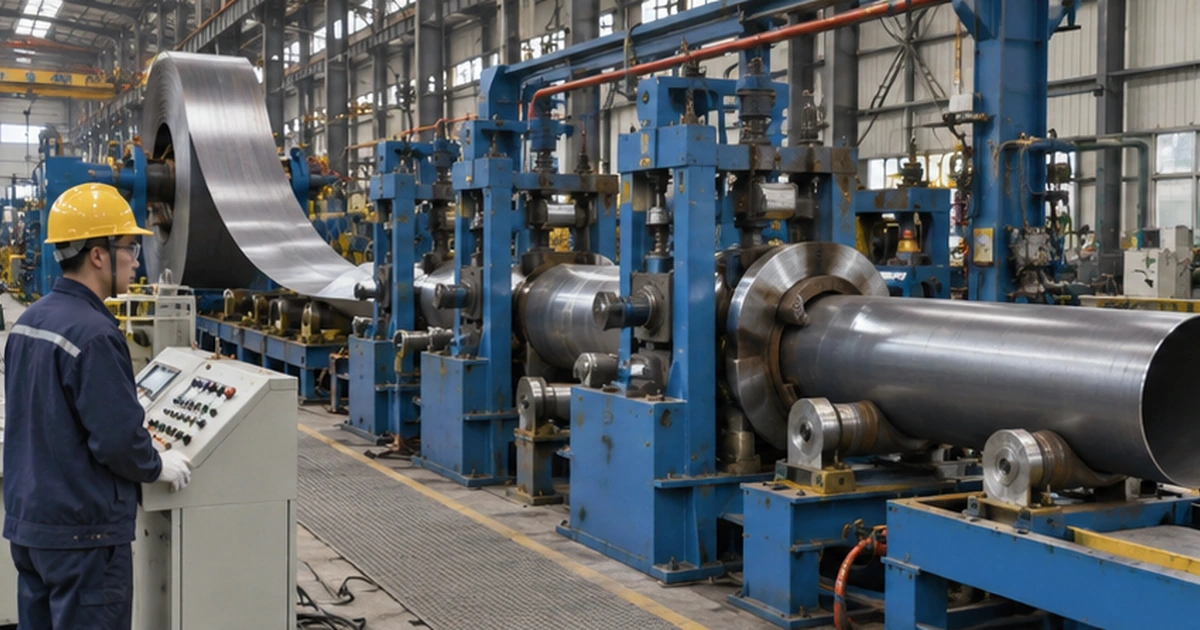
Electric resistance welded (ERW) pipe is made from steel coil. The strip is passed through a series of rolls that gradually form it into a tube. At the open seam, high-frequency current heats the edges, and squeeze rolls press them together to form the weld, without filler metal. The excess metal pushed out on the inside and outside is trimmed off. The seam is then heat treated, sized and cut to length.
ERW pipe is used for line pipe, structural tubes, water pipes and casing, typically up to about 24 inches (610 mm) in diameter.
Submerged Arc Welded Pipe
Large-diameter pipe is welded with the submerged arc process, which deposits filler metal under a layer of granular flux. There are two main types:
- LSAW: plate is pressed into a cylinder and welded along one straight seam, inside and outside. Used for high-pressure pipelines and offshore lines.
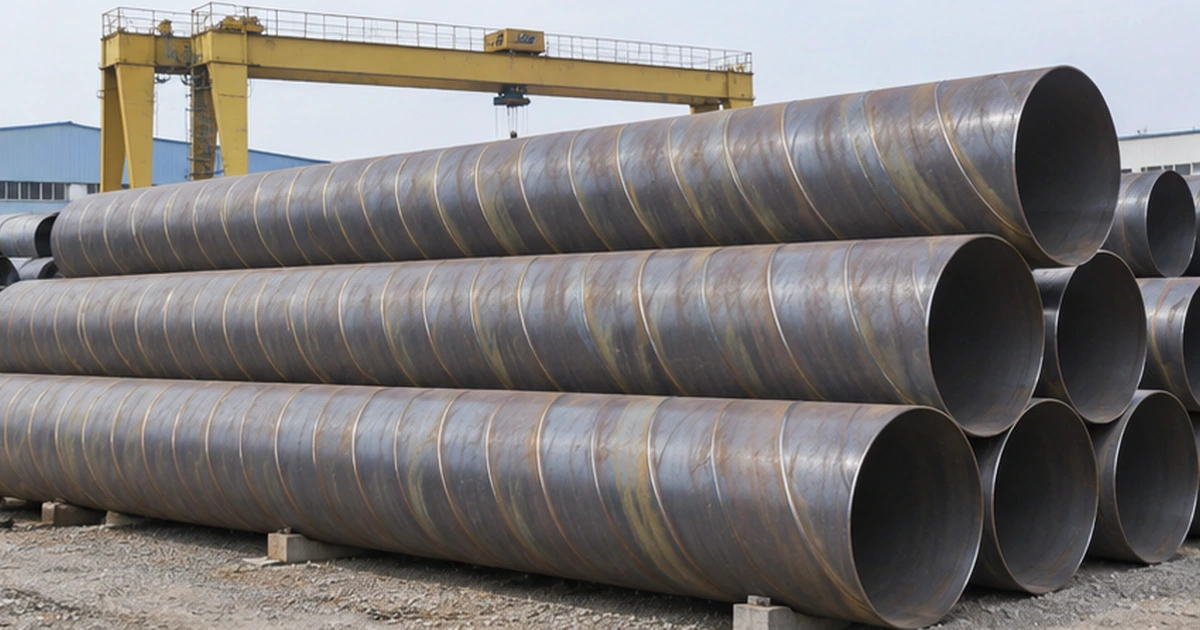
- SSAW or HSAW: strip is wound in a spiral and welded along the spiral seam. Economical for large diameters, used for water mains, piling and lower-pressure lines.
Testing Welded Pipe
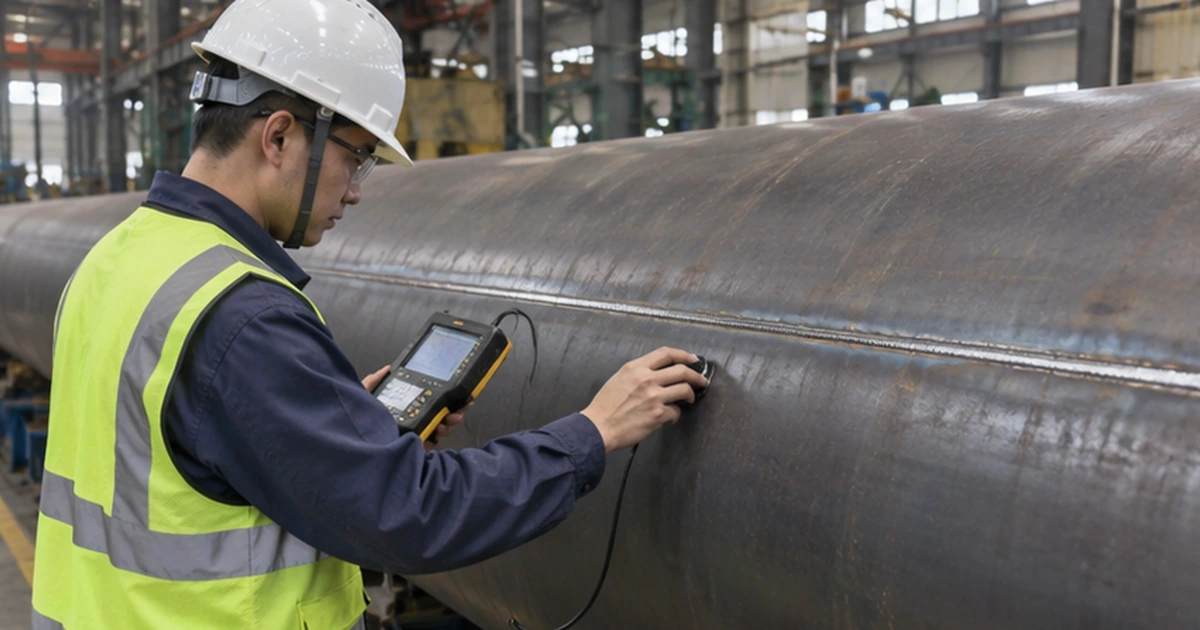
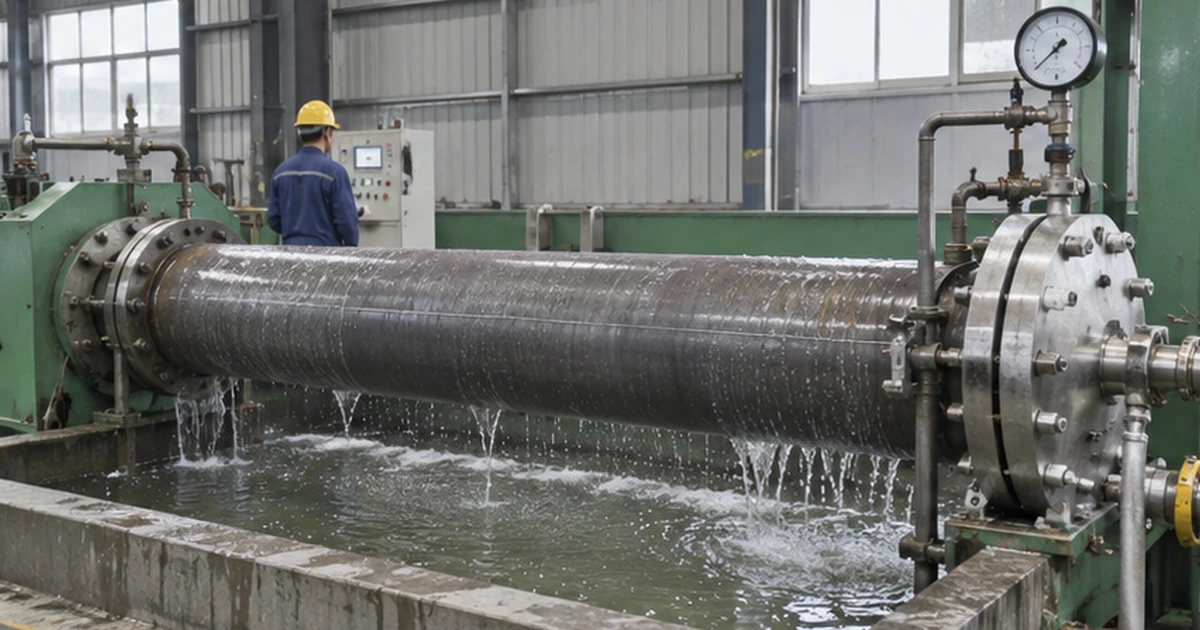
Every length of line pipe is tested before it leaves the mill. Typical checks include hydrostatic testing, ultrasonic testing of the full weld seam, radiography of the pipe ends, dimensional checks and mechanical tests on samples. Standards such as API 5L and EN 10208 or EN ISO 3183 define the grades, such as X52 and X65, and the tests for each product level.
Welded Pipe vs Seamless
- Diameter: welded pipe goes far larger
- Wall thickness: welded is more uniform; seamless can be thicker
- Cost: welded is generally cheaper
- Pressure and temperature: seamless is often preferred for high-pressure, high-temperature and sour service in smaller sizes
- Quality: modern welded pipe with full inspection performs equally well in most pipeline service
From My Experience
On pipeline jobs, the seam position matters during fit-up. Seams of adjacent pipes are staggered rather than lined up, and kept away from the bottom of the pipe and from branch connections where possible. I check the pipe certificate and the seam type before welding, because it tells you what the material has already been through.
Conclusion
Welded pipe is formed from plate or strip and joined by resistance or submerged arc welding, then fully tested. It carries most of the world’s fluids. For more on the SAW process, see submerged arc welding, and for pipeline work, see the TAP gas pipeline welding project.
If you found this article useful, feel free to share it with colleagues who work with pipeline and piping work. — Zisis
Need Help on a Project?
For specialized welding on demanding materials on marine and industrial work, see Specialized Welding or request a quote.