

How Resistance Welding Works
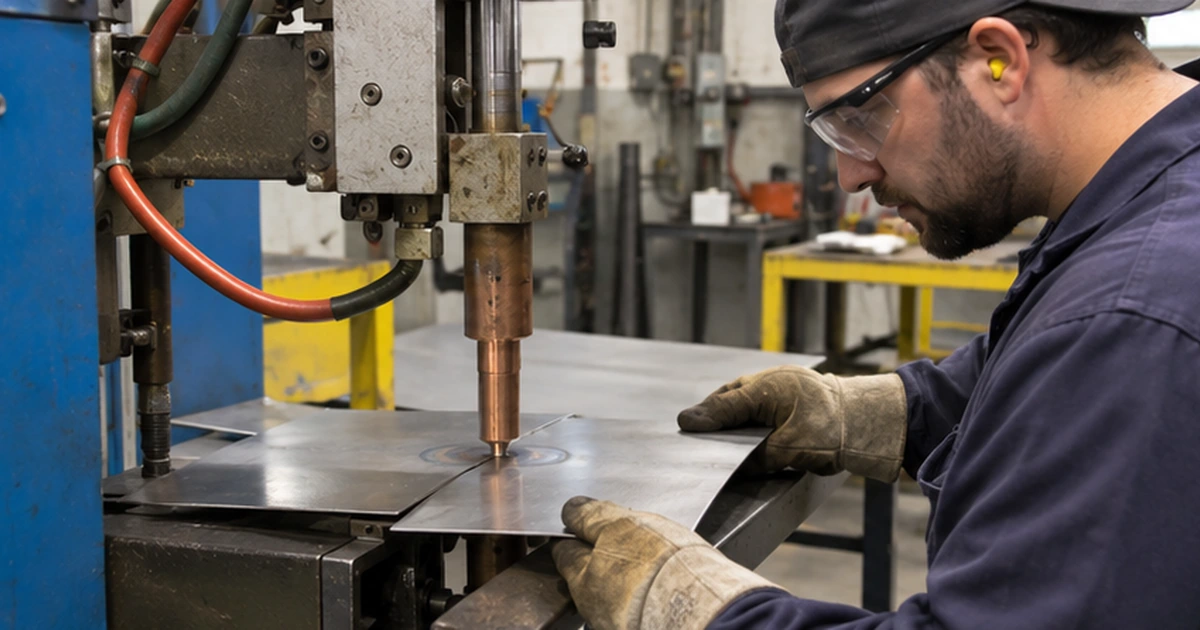
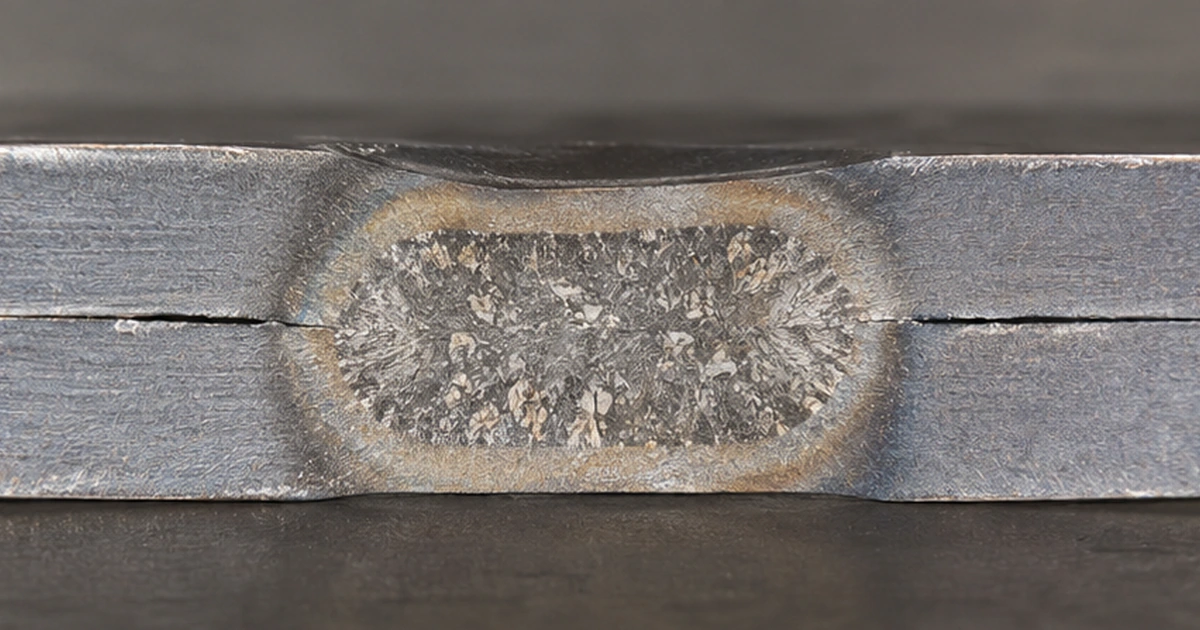
Resistance welding passes a high electric current through the parts to be joined, while electrodes press them together. Heat is generated by the electrical resistance of the metal, highest at the contact surface between the sheets. In a fraction of a second, a small pool of molten metal, called the nugget, forms at the interface and solidifies under pressure.
Three factors control the weld: current, time and electrode force. The heat follows the relationship heat = current² × resistance × time, so current has the greatest effect. No filler metal, flux or shielding gas is needed.
Spot Welding
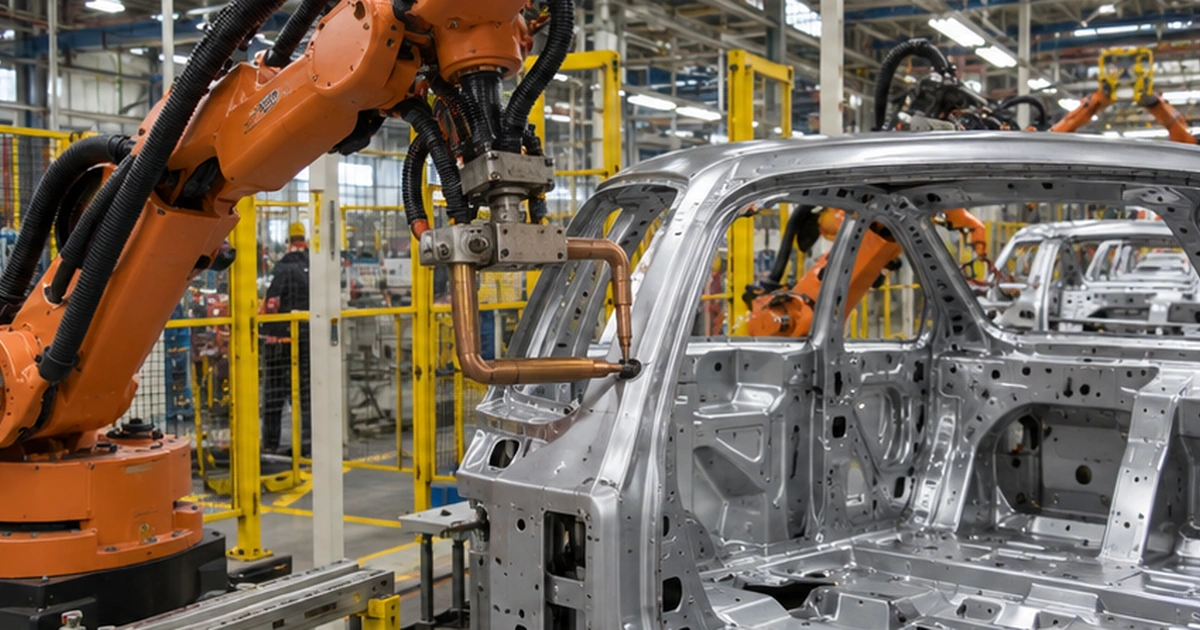
Spot welding is the most common form of resistance welding. Two copper alloy electrodes clamp overlapping sheets and make one weld spot at a time. A typical car body contains several thousand spot welds, most made by robots. It is also used for appliances, cabinets, enclosures and sheet metal products.
Other Resistance Welding Processes
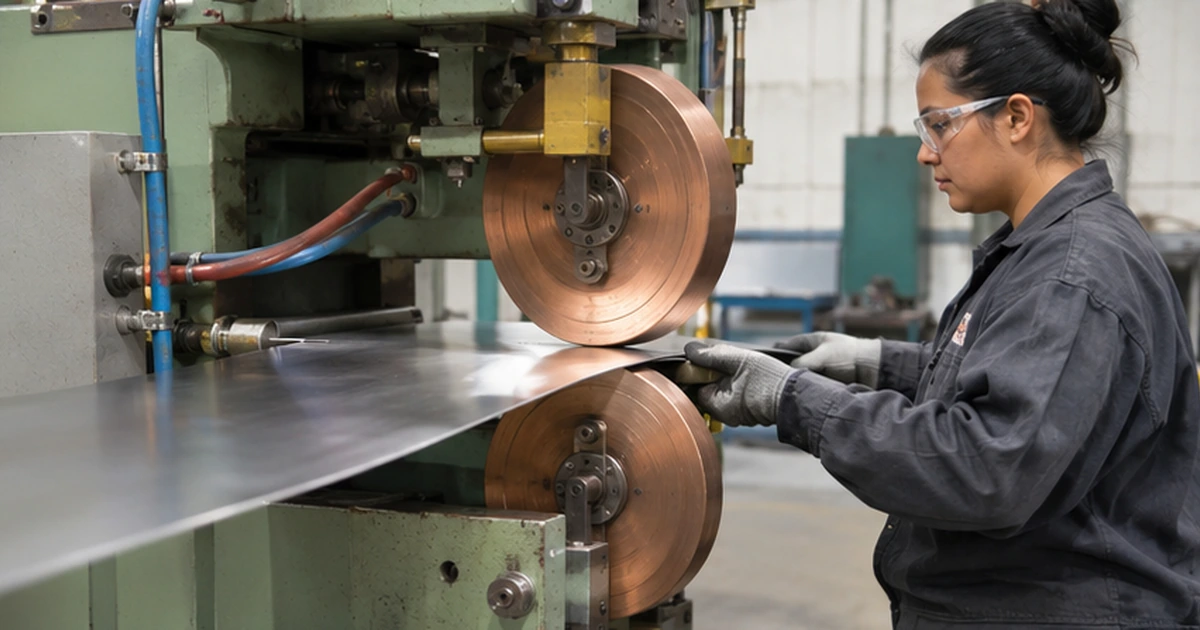
- Seam welding: rotating wheel electrodes make a continuous series of overlapping spots, producing leak-tight seams in fuel tanks, drums and radiators
- Projection welding: small embossed projections concentrate the current, allowing several welds at once or welding nuts and studs to sheet
- Flash welding: two parts are brought together under current, flashing burns off the ends, then they are forged together; used for rails, chain and rings
- Resistance butt welding: wires and bars joined end to end under pressure and current
Materials and Thickness
Low-carbon steel is the easiest material to resistance weld. Coated steels, such as galvanised sheet, need higher currents and more electrode maintenance, as zinc alloys with the copper tips. Stainless steel welds well due to its higher resistance. Aluminium is more difficult: its low resistance and high conductivity require very high currents and clean surfaces. Most resistance welding is done on sheet up to a few millimetres thick.
Advantages and Limits
- Very fast, with welds made in tenths of a second
- Easy to automate and very repeatable
- No consumables, fume is low, and distortion is minimal
- Limits: lap joints only for spot and seam welding, which add weight and can trap moisture
- Expensive equipment and high electrical demand
- Weld quality is hidden inside the joint and must be checked by testing samples
Testing Spot Welds
Spot welds are checked by peel or chisel tests on sample pieces, by measuring the nugget diameter, and in production by ultrasonic testing. Electrode tips wear and mushroom over time, increasing their contact area and lowering current density, so they are dressed or replaced on a schedule.
From My Experience
Resistance welding belongs on the production line rather than on site, so where I meet it is in repair: a spot-welded panel or enclosure that needs a patch or reinforcement. Then the job becomes MIG or TIG work on thin, coated sheet, with all the care for distortion and zinc fume that goes with it.
Conclusion
Resistance welding joins sheet metal quickly and cleanly with current and pressure, and it underpins mass production. For thin sheet repairs by arc, see MIG/MAG welding.
If you found this article useful, feel free to share it with colleagues who work with sheet metal work. — Zisis