

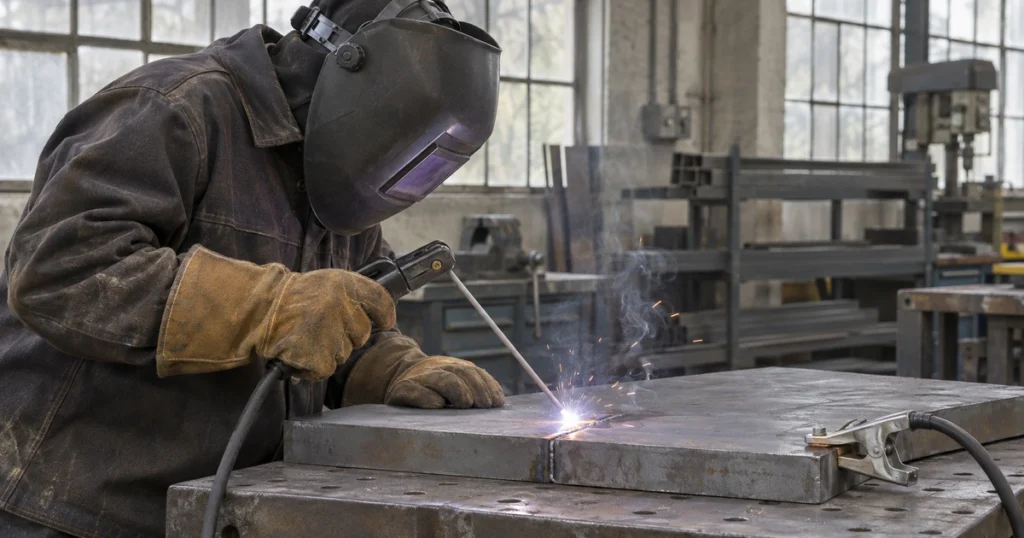
What Hydrogen Cracking Is
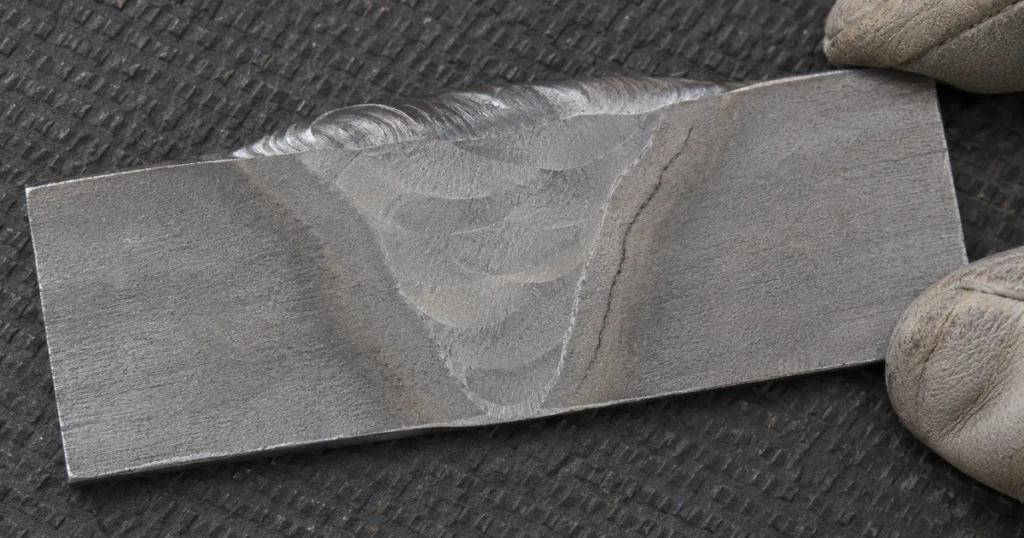
Hydrogen cracking, also called cold cracking or delayed cracking, forms in the weld or heat-affected zone after the weld has cooled, often hours or even a day later. It is one of the most serious weld defects because it can be invisible at first inspection and can lead to sudden failure in service.
The Three Conditions
Hydrogen cracking needs three conditions at the same time:
- Hydrogen in the weld, from moisture in electrodes or flux, damp surfaces, oil, rust or the shielding gas
- A susceptible microstructure, typically hard martensite in the heat-affected zone of higher-carbon or alloy steels, or in high-strength weld metal
- Tensile stress, from shrinkage, restraint or external loading
Remove or reduce any one of them and the risk falls sharply. Good practice controls all three.
Controlling Hydrogen
- Use low-hydrogen processes and consumables: basic electrodes (H5 or H4 grades), solid wire MIG/MAG, TIG
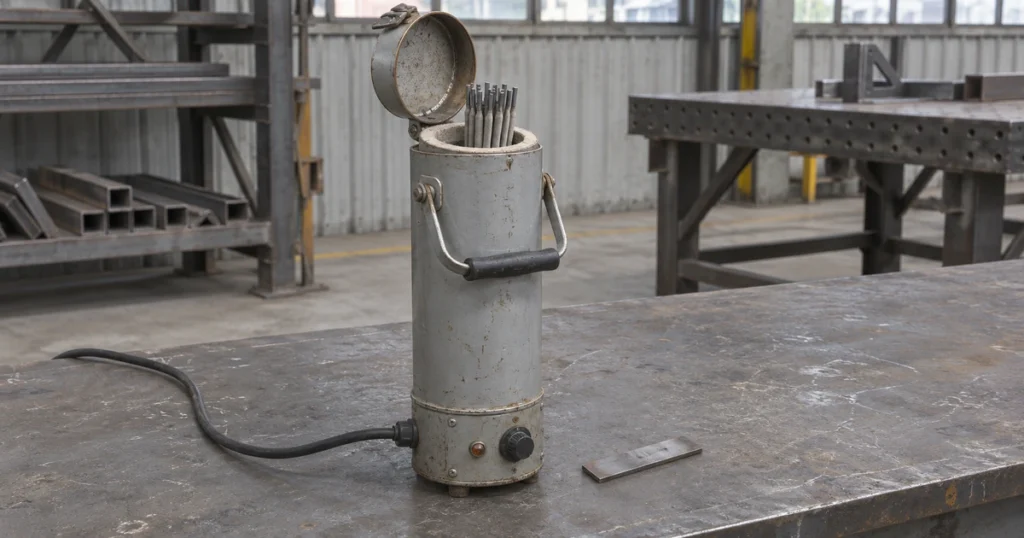
- Store basic electrodes as the manufacturer specifies: baking ovens, holding ovens and heated quivers on site
- Keep flux-cored wire and submerged arc flux dry
- Clean joints of moisture, oil, paint and rust
- Avoid welding on cold, wet steel; warm it to drive off moisture
Controlling Hardness and Stress
Preheat and controlled interpass temperature slow cooling and reduce hardness. Higher heat input, within the limits of the WPS, also helps. Good fit-up and welding sequence reduce restraint and residual stress. On critical work, a post-heat or hydrogen release treatment, holding the joint at around 200 to 300 °C for some hours after welding, lets hydrogen diffuse out before the weld cools.
Detecting Hydrogen Cracks
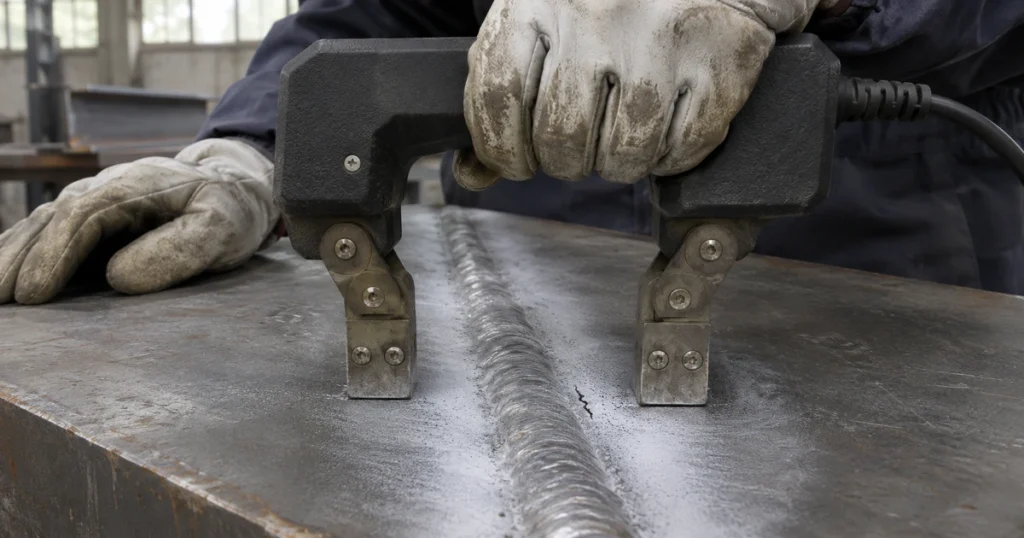
Because the cracks are delayed, codes often specify a waiting time before final NDT, commonly 16 to 48 hours depending on steel strength and thickness. Magnetic particle testing and ultrasonic testing are the usual methods. Testing too early can give a clean result on a weld that cracks later.
From My Experience
On thick and high-strength steel, I treat electrode storage as part of the procedure, not a detail. Basic rods go from the oven to a heated quiver and are never left lying in damp air. Combined with correct preheat, that has kept hydrogen cracks off my welds.
Conclusion
Hydrogen cracking is prevented by keeping hydrogen low, hardness controlled and stress reduced. Dry consumables and correct preheat do most of the work. See also preheat and interpass temperature and steel welding electrodes.
If you found this article useful, feel free to share it with colleagues who work with welders and engineers. — Zisis
Need Help on a Project?
For welding supervision and quality control on marine and industrial work, see Welding Supervision or request a quote.