

The Principle
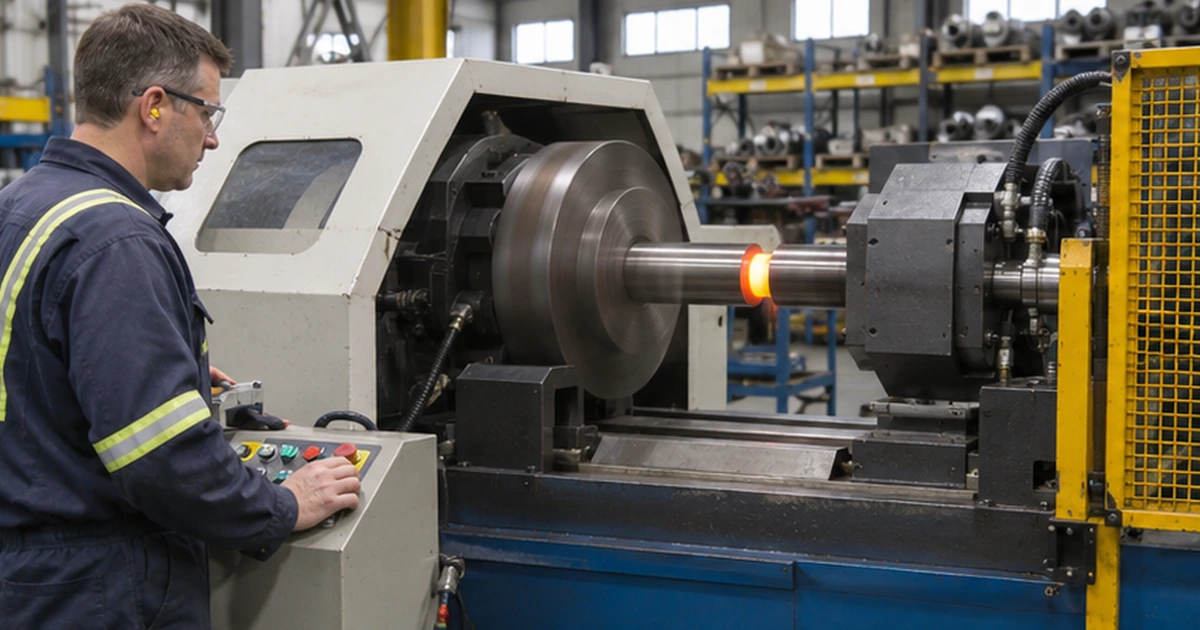
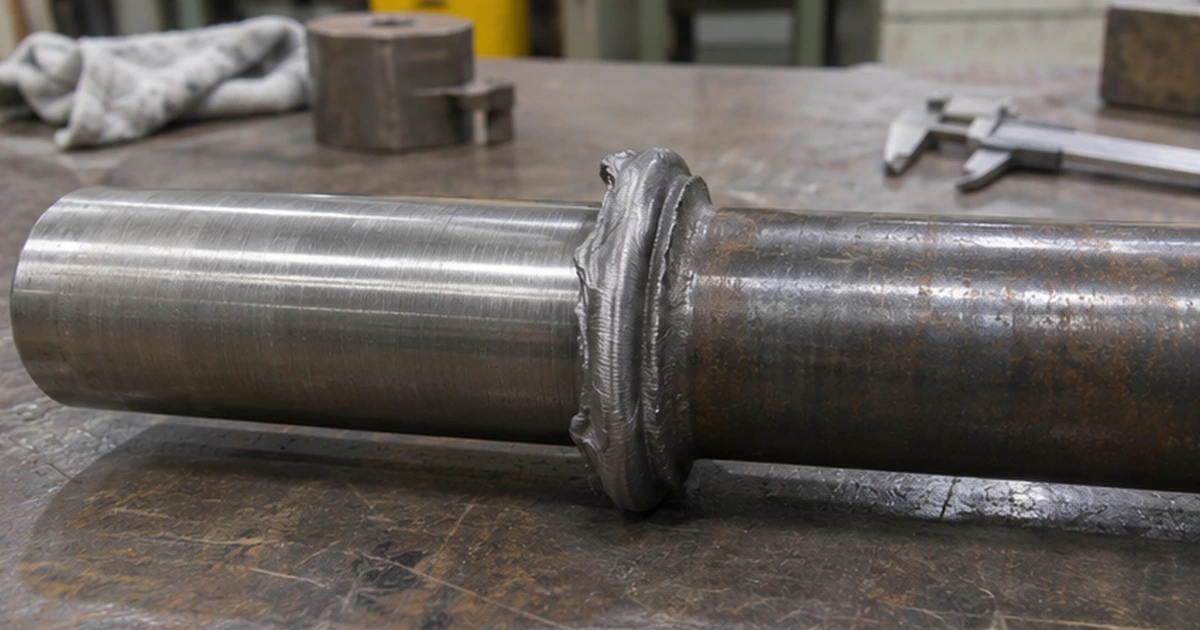
Friction welding is a solid-state process: the metals never melt. One part rubs against the other under pressure, and friction heats the interface until the metal becomes plastic. Then the motion stops and a higher forging force pushes the parts together. Oxides and impurities are squeezed out in a ring of expelled metal, called flash, and clean metal bonds to clean metal.
Because there is no melting, there is no porosity, no solidification cracking and no need for filler metal or shielding gas.
Rotary Friction Welding
In rotary friction welding, one part spins while the other is held still and pressed against it. It is used for round parts: shafts, axles, valves, drill pipe, hydraulic cylinders and pump components. There are two main variants. In direct-drive welding a motor keeps the part spinning at constant speed. In inertia welding a flywheel is spun up, released, and its stored energy makes the weld.
Linear and Friction Stir Welding
Linear friction welding moves one part back and forth instead of rotating it, which allows non-round parts to be joined. It is used in aerospace, for example to attach turbine blades to discs.
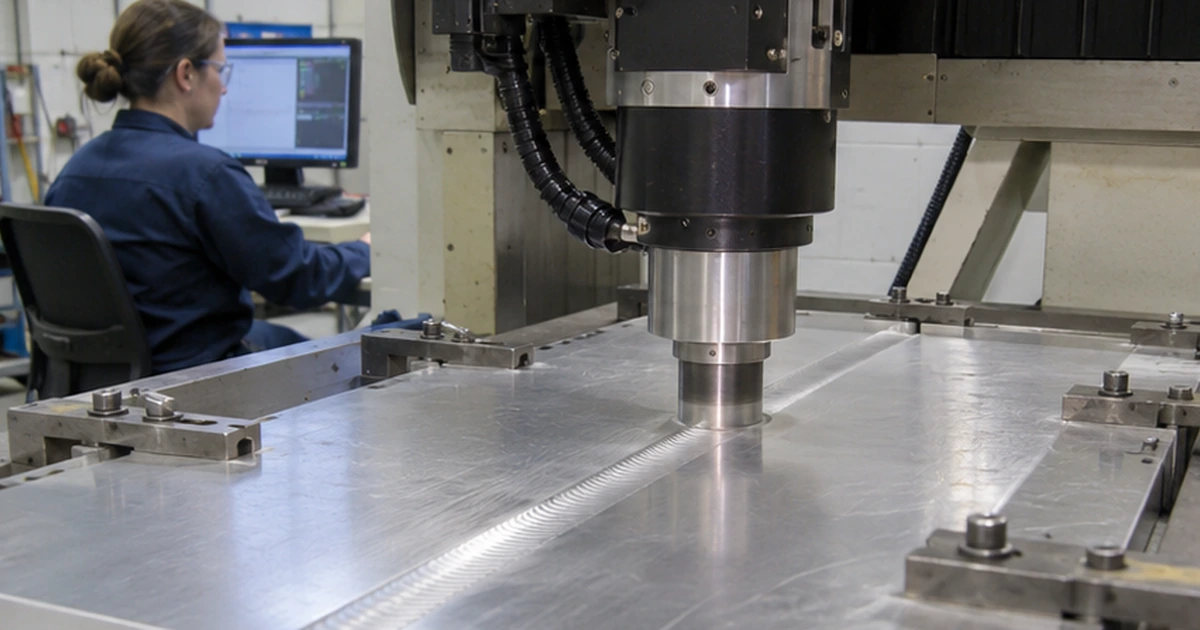
Friction stir welding (FSW) works differently. A rotating tool with a shoulder and a probe is plunged into the joint line and travels along it, stirring the softened metal of both plates together. It is widely used for aluminium: ship decks and panels, railway carriages, aircraft structures and battery trays. It gives low distortion and strong welds in alloys that are difficult to fusion weld, such as 2xxx and 7xxx aluminium.
Advantages and Limits of Friction Welding
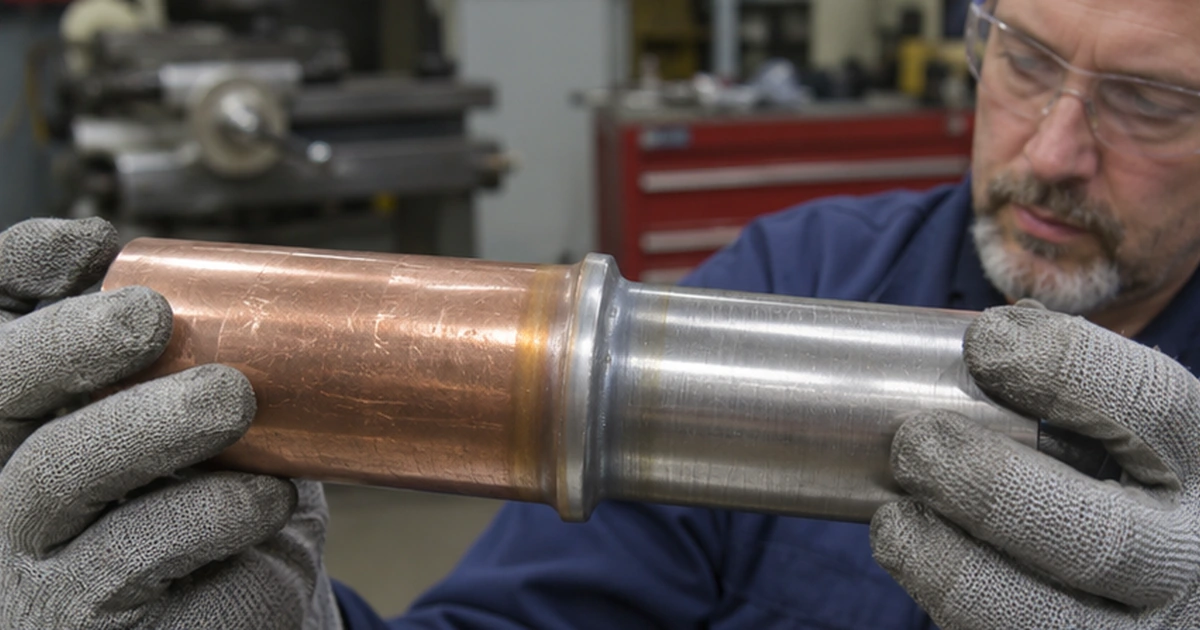
- Joins dissimilar metals, such as aluminium to steel or copper to aluminium, that cannot be fusion welded
- Short cycle times and very repeatable quality in production
- No fume, arc light or spatter, and no consumables
- Narrow heat-affected zone and good mechanical properties
- Limits: expensive machines, parts must fit the machine, and joint shapes are restricted
- Mainly a factory process; it is not used for site repair
Quality and Inspection
Friction weld quality depends on speed, friction pressure, forging pressure and burn-off length. These are set and monitored by the machine, which makes the process very consistent. Welds are checked by inspecting the flash, by destructive testing of samples and, on critical parts, by ultrasonic testing.
From My Experience
Friction welding is a factory process, so on site I meet it in the finished part: a bimetal transition joint, a friction-welded shaft or a friction stir welded aluminium panel. When such a part needs repair by arc welding, the first question is what each side is made of, because the friction weld may have joined two metals that an arc cannot.
Conclusion
Friction welding uses heat from motion and forging pressure to make strong, clean joints without melting, including between metals that cannot be fusion welded. For the arc processes used on site, see how arc welding produces heat.
If you found this article useful, feel free to share it with colleagues who work with manufacturing. — Zisis
Need Help on a Project?
For specialized welding on demanding materials on marine and industrial work, see Specialized Welding or request a quote.