

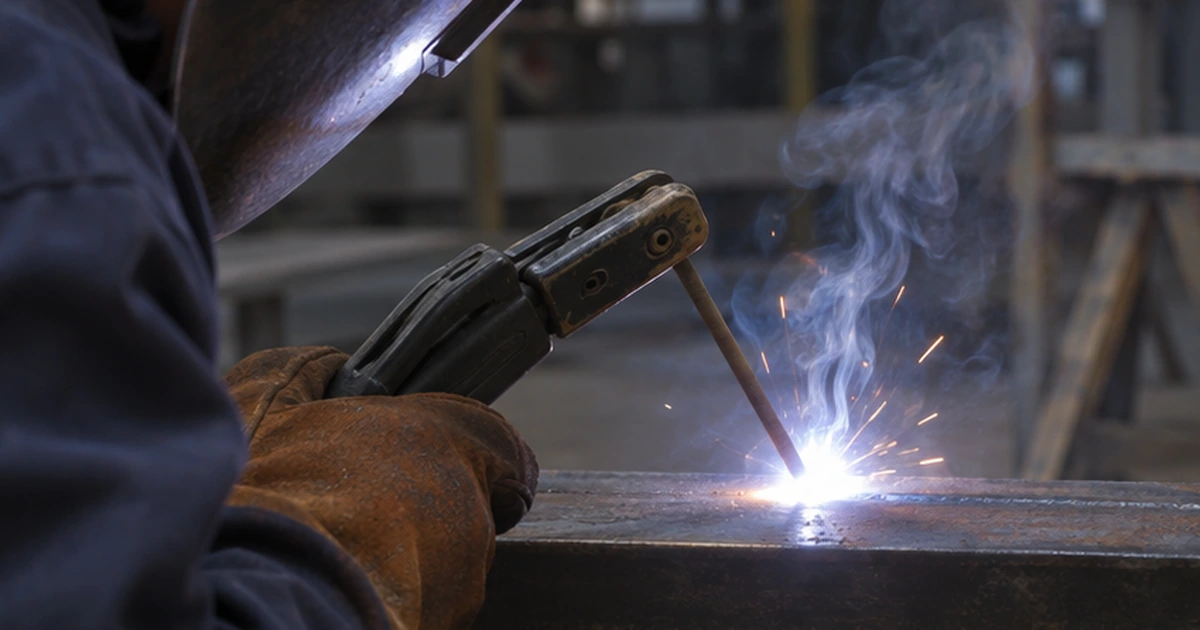
What Is Arc Welding
Arc welding is a fusion welding process. The heat comes from an electric arc between an electrode and the workpiece. It is used to join two metal parts permanently, or to fill a cavity with weld metal. TWI gives a clear overview of arc welding process types.
What the Power Source Does
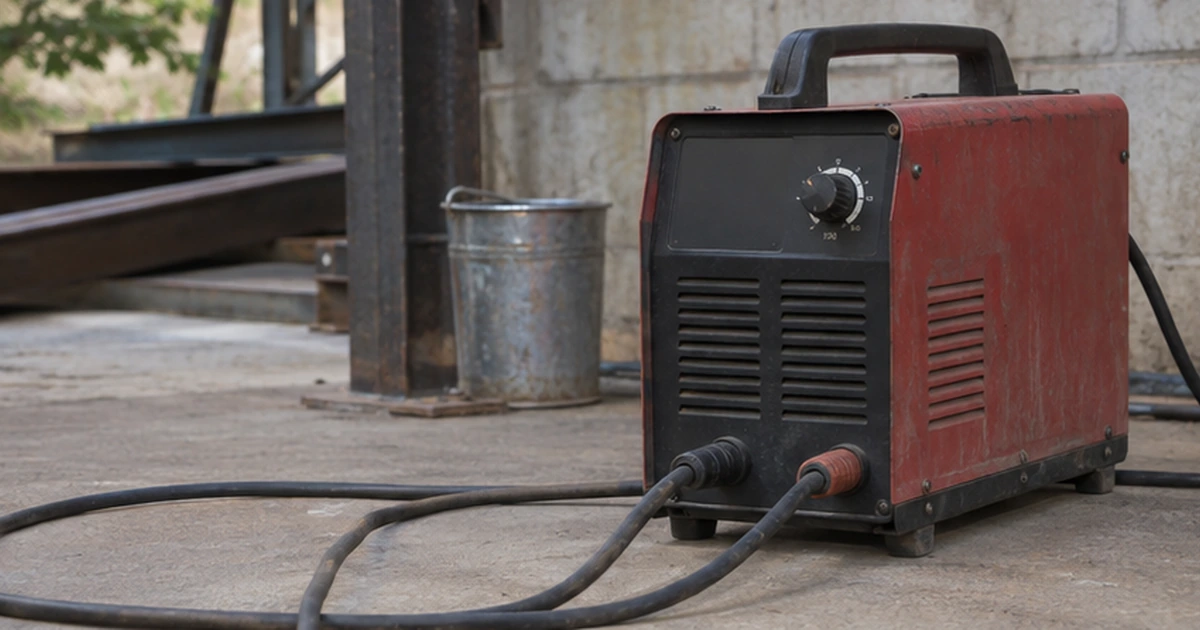
Mains supply has high voltage and low current. A welding power source does the opposite: it lowers the voltage and raises the current. Older machines do this with a transformer, primary and secondary coils; modern inverters do it electronically.
The current through the electrode is high, for example around 80–110 A for a 2.5 mm electrode, depending on type and position. That current produces the heat that melts the electrode.
Fusion of Electrode and Parent Metal
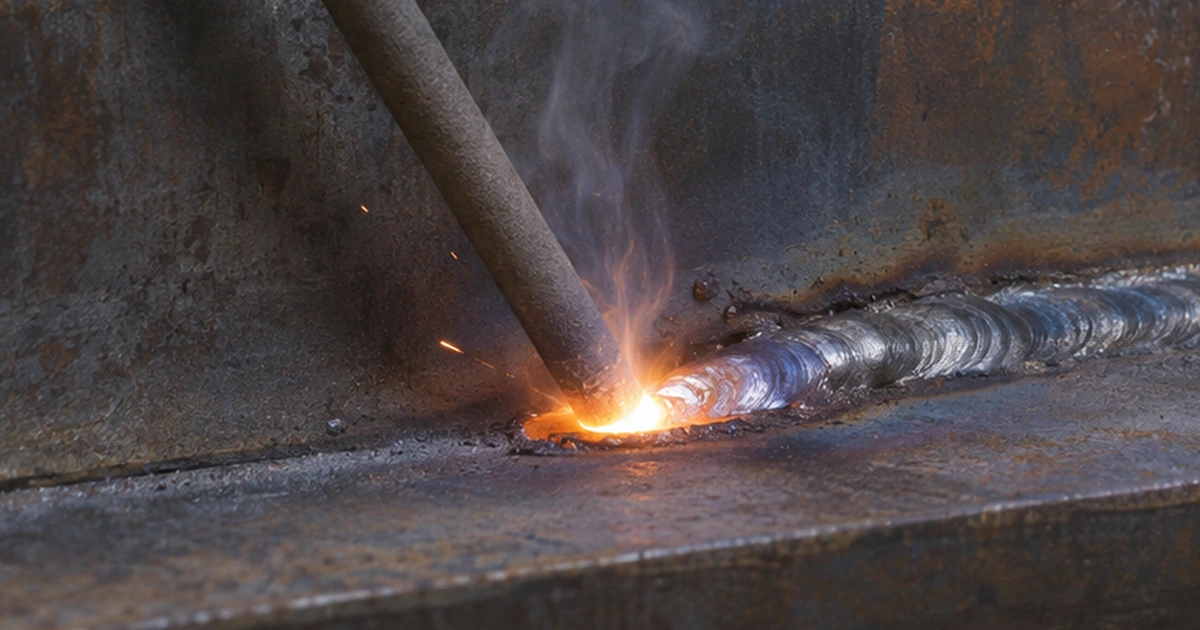
The same heat melts the surface of the parts at the joint. The molten parent metal mixes with the molten electrode to form one weld pool. In MMA welding, the metal core of the electrode is the filler metal: it melts and fills the gap between the two parts.
What the Electrode Coating Does
Most MMA electrodes are coated. As it burns, the coating produces a gas shield that keeps oxygen and nitrogen in the air away from the molten metal, and a slag that covers the bead as it cools. Without it, the weld would oxidise and fill with porosity. More detail is in TWI’s guide to manual metal arc welding.
This is why coated electrodes give sound welds with good mechanical strength, even outdoors on site.
Heat Input
The heat put into a weld depends on voltage, current and travel speed. In simple terms, heat input in kJ/mm equals volts times amps times 60, divided by 1,000 times the travel speed in mm/min, multiplied by a thermal efficiency factor for the process. Codes and WPSs often set limits on heat input to protect toughness.
Constant Current and Constant Voltage
MMA, TIG and submerged arc welding normally use a drooping or constant-current power source, so the current stays steady when the arc length changes in the welder’s hand. MIG/MAG uses a constant-voltage source, where the wire feed speed sets the current and the arc length corrects itself.
Polarity
With direct current, the choice of polarity changes how heat is shared between electrode and workpiece. Most MMA electrodes and all MIG/MAG wires run on electrode positive; TIG on steel uses electrode negative. The electrode datasheet gives the correct setting.
Arc Length
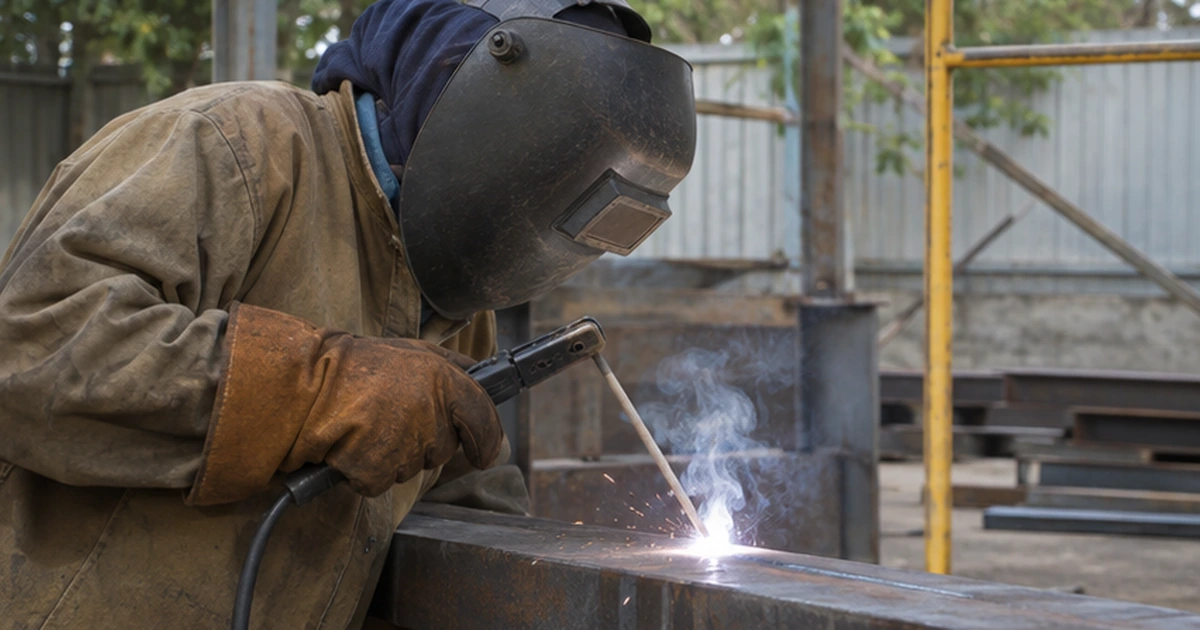
In MMA welding, the welder controls arc length by hand. A long arc raises voltage, spreads the heat and lets air reach the weld pool, giving spatter and porosity. A short arc, roughly equal to the core diameter, keeps the heat concentrated and the shield effective. This is one of the first things an experienced welder corrects in a trainee.
Conclusion
Arc welding turns electrical current into heat at a single point. The power source supplies the current, the arc melts electrode and parent metal together, and the coating protects the weld. For the main electrode types, see steel welding electrodes.
Need Help on a Project?
For MMA/SMAW welding on marine and industrial work, see MMA/SMAW Welding or request a quote.