

What Is Waterjet Cutting
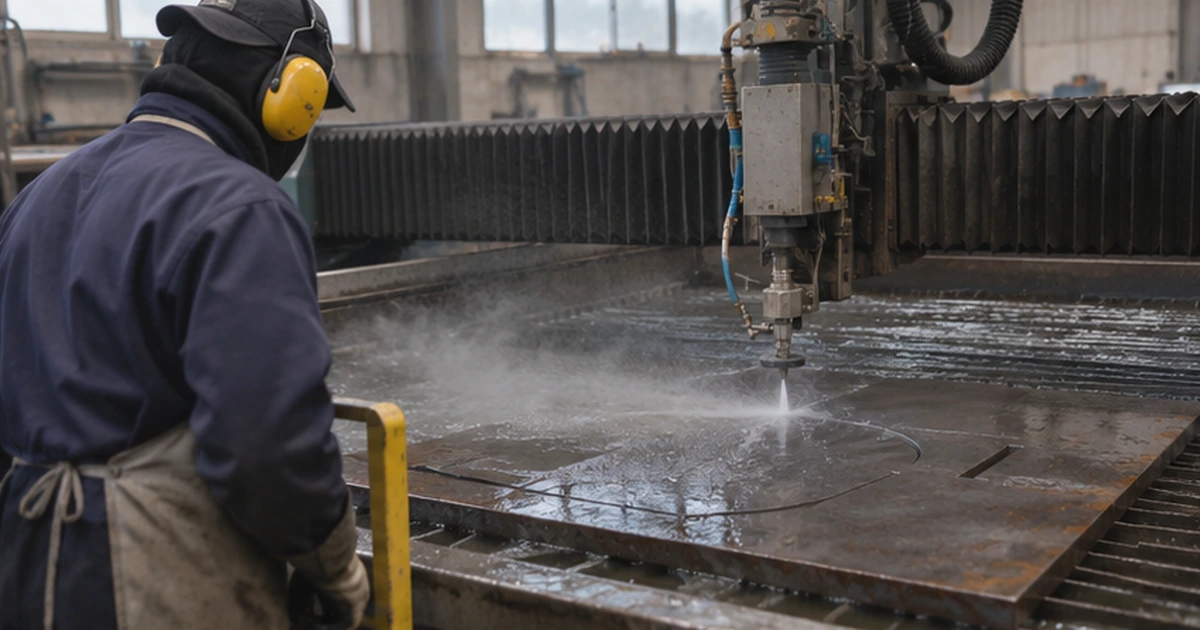
Waterjet cutting is a mechanical cutting process, not a thermal one. A very thin jet of water at extremely high speed removes material along the cutting line. It gives accurate, clean cuts on hard-to-machine materials and on very thick plate.
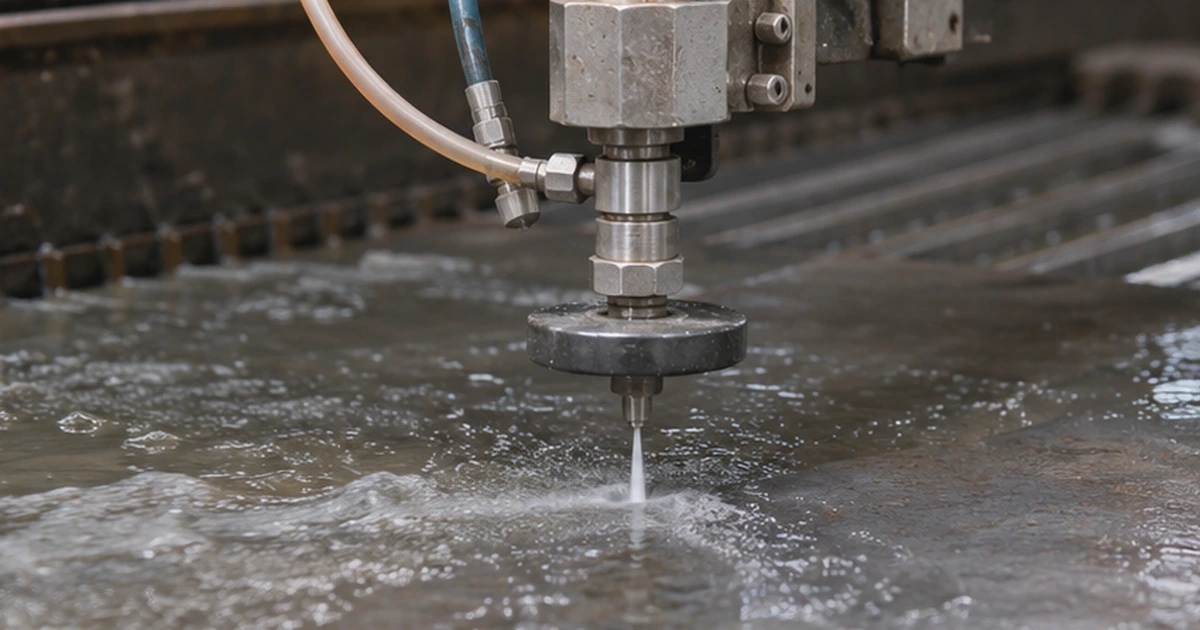
To form the jet, water is pressurised to thousands of bar and forced through a precision nozzle. The pressure gives the speed, and the nozzle shapes the jet and gives the accuracy. The machine also needs a catcher tank to absorb the energy of the jet safely after it passes through the plate.
Pumps and Abrasive
High-pressure pumps are always positive-displacement pumps, usually oil-driven intensifiers. They can reach around 4,000 bar, and water pressure is controlled through the oil pressure.
For metals and other hard materials, an abrasive powder is added to the jet. This is abrasive waterjet cutting, and it is the version used on steel, stainless steel and nickel alloys.
Machines and Capabilities
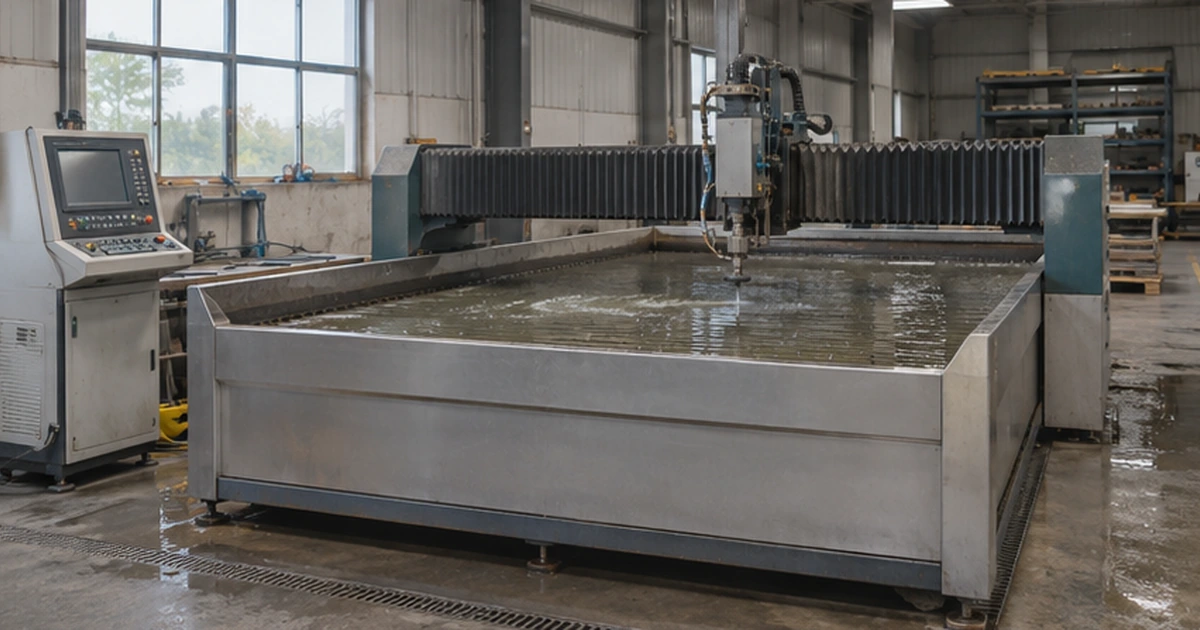
Cutting tables are built to size and guided by CNC. Typical figures for modern machines:
- Pump power: 30 hp and above
- Positioning accuracy: down to ±0.035 mm
- Traverse speed: up to 25 m/min
- Cutting thickness: up to about 300 mm
- Three-axis CNC cutting
Advantages and Limitations
The TWI comparison of cutting processes sets waterjet against oxy-fuel, plasma and laser. In practice:
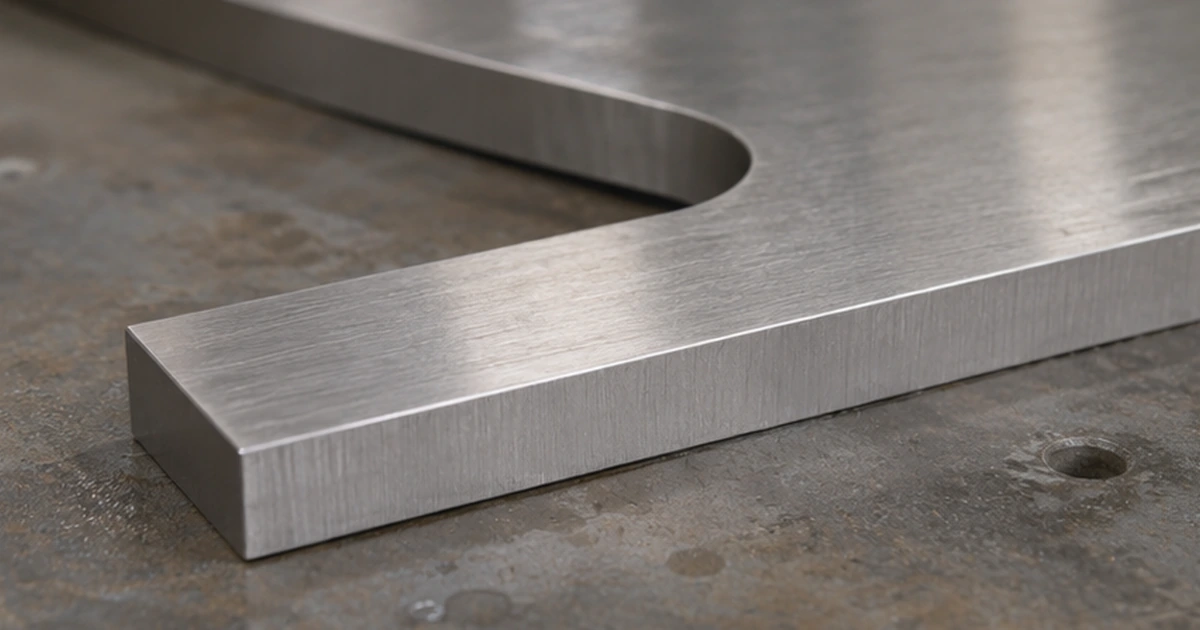
- No heat-affected zone and no thermal distortion
- No special tooling
- Cuts almost any material: steel, stainless, aluminium, stone, glass, rubber
- On very deep cuts the jet can deflect and reduce accuracy
- Slower than plasma or oxy-fuel on carbon steel, so it suits smaller batches and high-value parts
How It Compares with Thermal Cutting
- Oxy-fuel: low cost and good on thick carbon steel, but limited mainly to mild and low-alloy steels, with a wide heat-affected zone
- Plasma: cuts stainless steel and aluminium, but air plasma is typically limited to around 50 mm plate
- Laser: fast and precise on thinner plate, with a narrow heat-affected zone
- Abrasive waterjet: no heat-affected zone and any material, but slower
Practical Points
Garnet is the most common abrasive. The cut is narrow, typically around 1 mm, and on thick plate the edge can show a slight taper that the machine software compensates for. Parts come off the table without hardened edges, so they can be welded or machined straight away.
For high-value materials such as duplex, super duplex and nickel alloys, avoiding heat damage at the cut edge is often worth the slower speed.
Why It Matters for Welding
A clean, accurate cut edge with no heat-affected zone gives a better joint fit-up. Poor fit-up is a common cause of welding defects such as lack of fusion.
Typical Uses
- Flanges, gaskets and plates in stainless steel and duplex
- Thick plate parts where thermal cutting would harden the edge
- Components for offshore and process plant
- Stone, glass and composites in other industries
Conclusion
Waterjet cutting is the choice when heat must be avoided, when the material is hard to cut thermally, or when accuracy matters more than speed.
Need Help on a Project?
For specialized welding on demanding materials on marine and industrial work, see Specialized Welding or request a quote.