

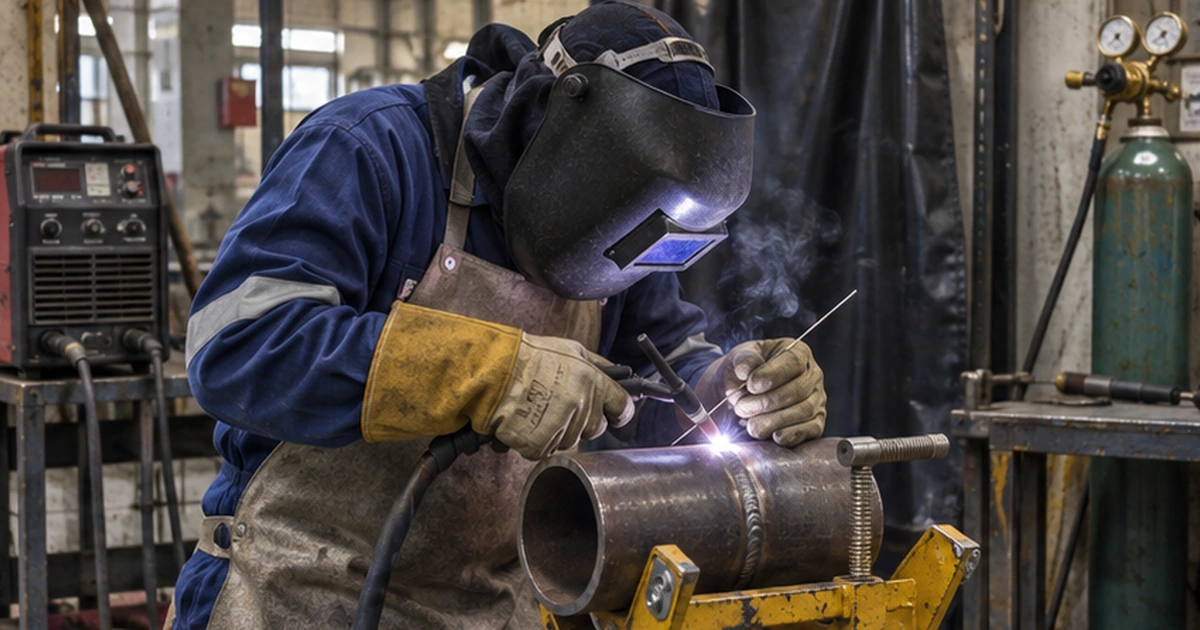
What ISO 9606-1 Is
ISO 9606-1 is the international standard for the qualification testing of welders who fusion weld steels. It replaced the older EN 287-1 and is used across Europe and in many other regions. Other parts of the series cover aluminium (ISO 9606-2), copper (ISO 9606-3), nickel (ISO 9606-4) and titanium and zirconium (ISO 9606-5).
The standard checks one thing: whether a welder can produce a sound weld with a given process, material, joint type and position. It is a test of the welder, not of the welding procedure, which is qualified separately.
The Qualification Test
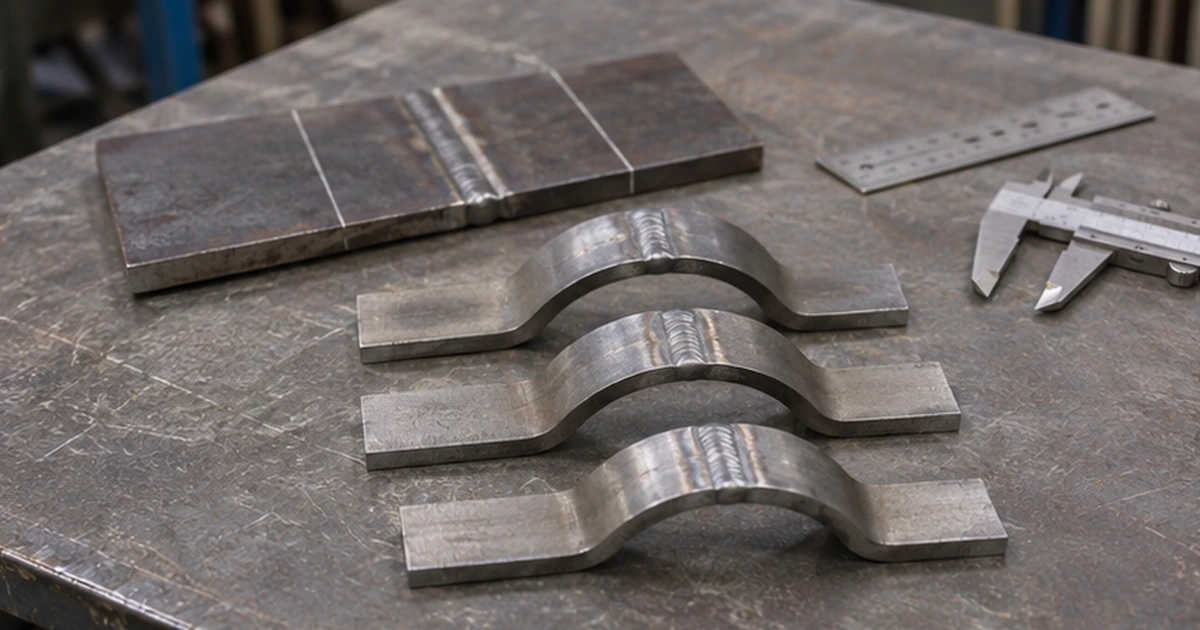
The welder makes a test coupon under the supervision of an examiner or examining body, following a welding procedure specification (WPS). The coupon may be a plate or a pipe, with a butt or fillet weld, welded in a defined position. The examiner watches the work and records the variables used.
- Process: for example 111 (MMA), 135 (MAG), 136 (flux-cored), 141 (TIG)
- Product type: plate or pipe
- Weld type: butt weld or fillet weld
- Material group: from plain carbon steels to stainless and nickel alloys
- Thickness and pipe diameter
- Welding position: such as PA (flat), PF (vertical up), H-L045 (pipe at 45°)
How the Coupon Is Tested
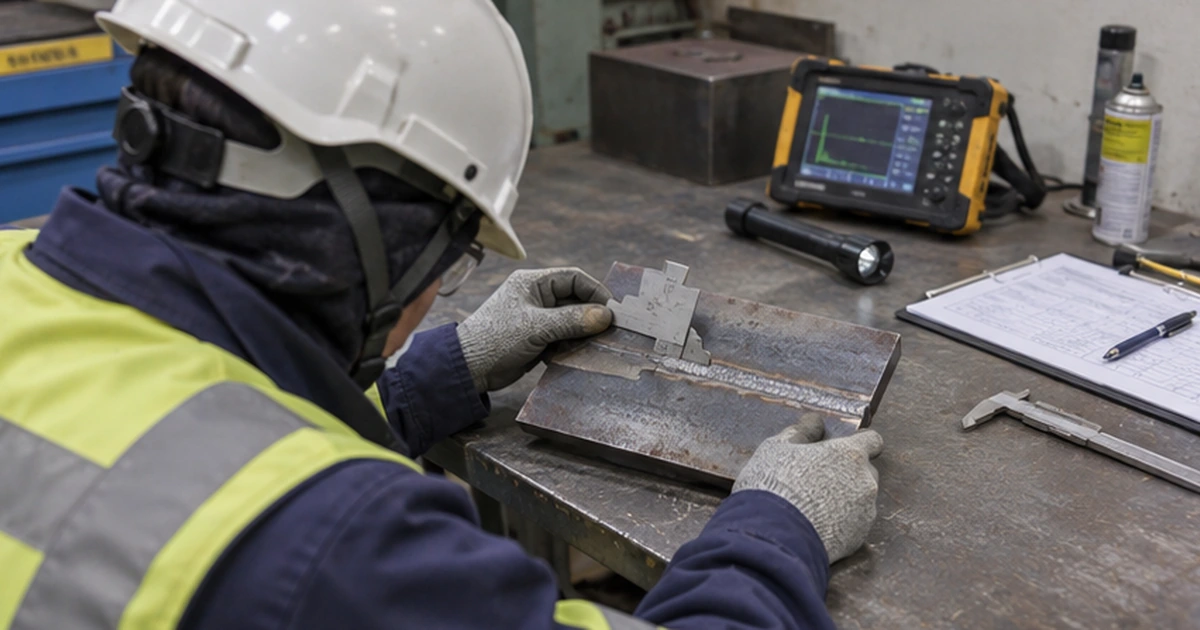
Every test coupon is first examined visually. Butt welds then go through either radiographic testing or destructive tests, such as bend tests or fracture tests. Fillet welds are usually tested by fracture or macro examination. The weld must meet the acceptance levels of ISO 5817, which set limits for porosity, lack of fusion, undercut and other imperfections.
Range of Approval
A certificate does not cover only the exact coupon welded. ISO 9606-1 defines a range of approval: a butt weld on pipe can cover plate, a harder position can cover easier ones, and a thickness tested covers a defined range of thinner and thicker material. Understanding this range matters, because welding outside it is not covered by the certificate, even if the welder could do it.
Keeping the Certificate Valid
Under ISO 9606-1, the welding coordinator or employer must confirm every six months that the welder has continued to work within the range of qualification. The certificate can then be prolonged in one of three ways: by re-testing every three years, by showing two production welds tested by radiography or ultrasound in the last six months of each two-year period, or by continuous confirmation under a quality system. Without this, the certificate lapses.
In Practice
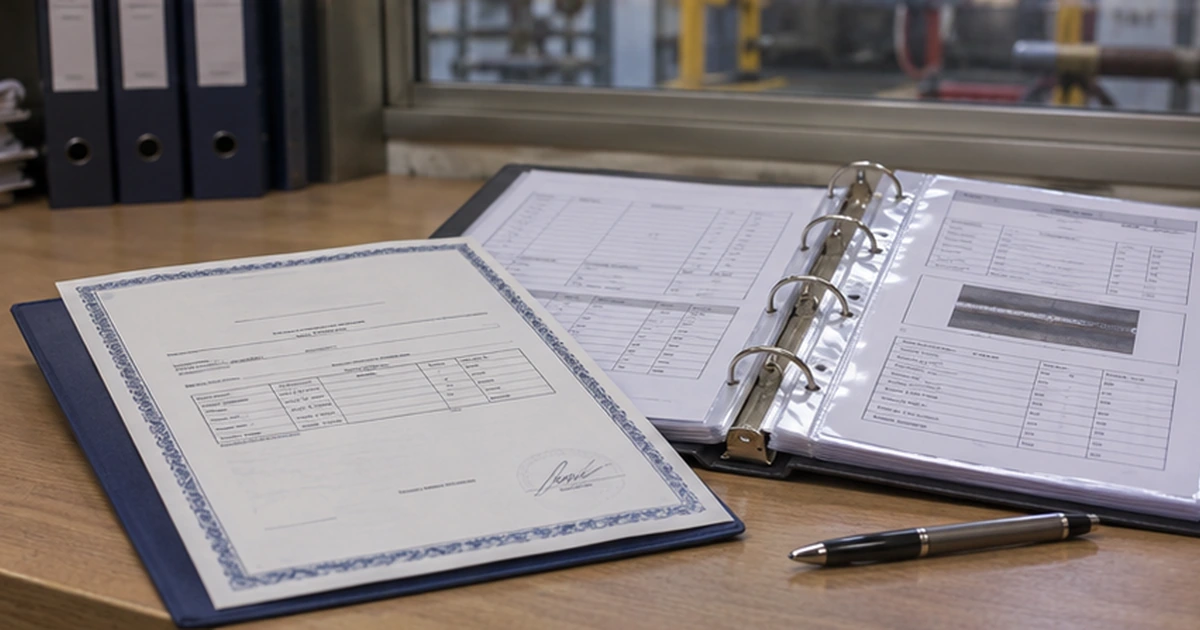
On site, the welder qualification records are among the first documents clients and inspectors ask for, together with the WPS. Keeping certificates and six-monthly confirmations organised in the job file saves time at every site entry and avoids delays when an inspector checks who is qualified for which joint.
Conclusion
ISO 9606-1 shows that a welder can make sound welds within a defined range of process, material, thickness and position. It works together with the welding procedure. See also welding procedure specification and procedure qualification record.
If you found this article useful, feel free to share it with colleagues who work with welders and inspectors. — Zisis
Need Help on a Project?
For welding supervision and quality control on marine and industrial work, see Welding Supervision or request a quote.