

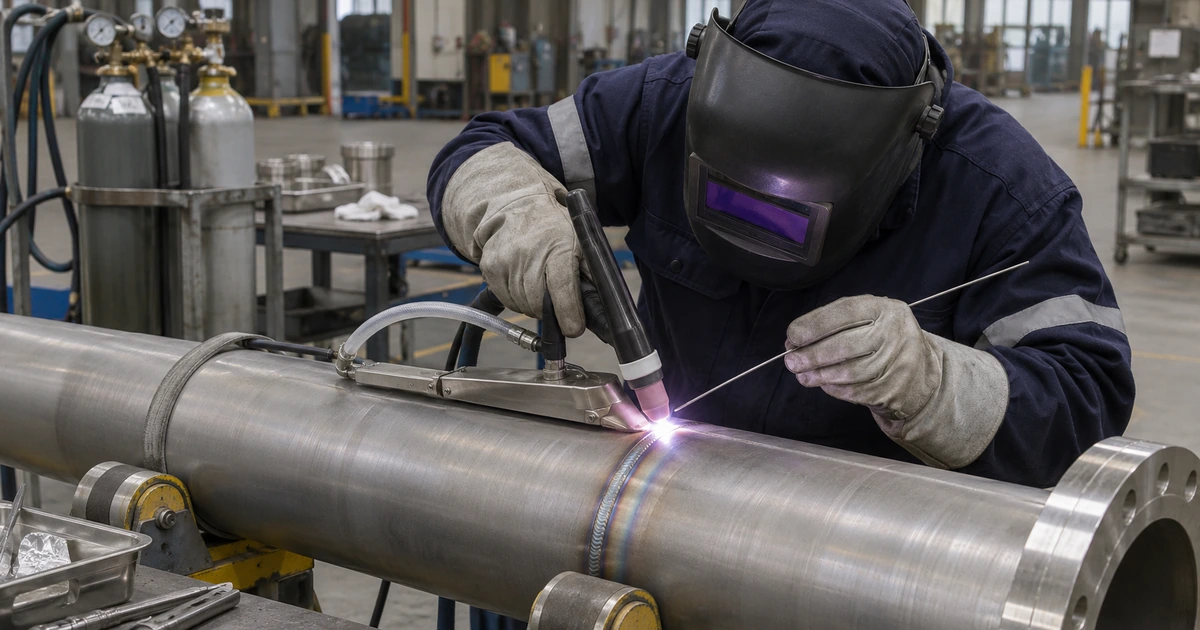
What Titanium Is
Titanium is a metal with a density of about 4.5 g/cm³, roughly 60% of steel, yet its alloys can be as strong as many steels. It forms a thin, stable oxide film that gives outstanding corrosion resistance, particularly in seawater, chlorides and many acids. It is also biocompatible, which is why it is used for medical implants.
Its main drawbacks are cost and processing. Titanium is expensive to extract and refine, and it must be handled carefully when hot.
Common Titanium Grades
- Grades 1 to 4: commercially pure titanium, from softest and most formable (Grade 1) to strongest (Grade 4). Grade 2 is the most widely used for piping, heat exchangers and chemical equipment.
- Grade 5 (Ti-6Al-4V): the most common alloy, with aluminium and vanadium. High strength, used in aerospace, motorsport and medical parts.
- Grade 7 and Grade 12: alloys with small additions of palladium or molybdenum and nickel for even better corrosion resistance in reducing acids.
Where Titanium Is Used
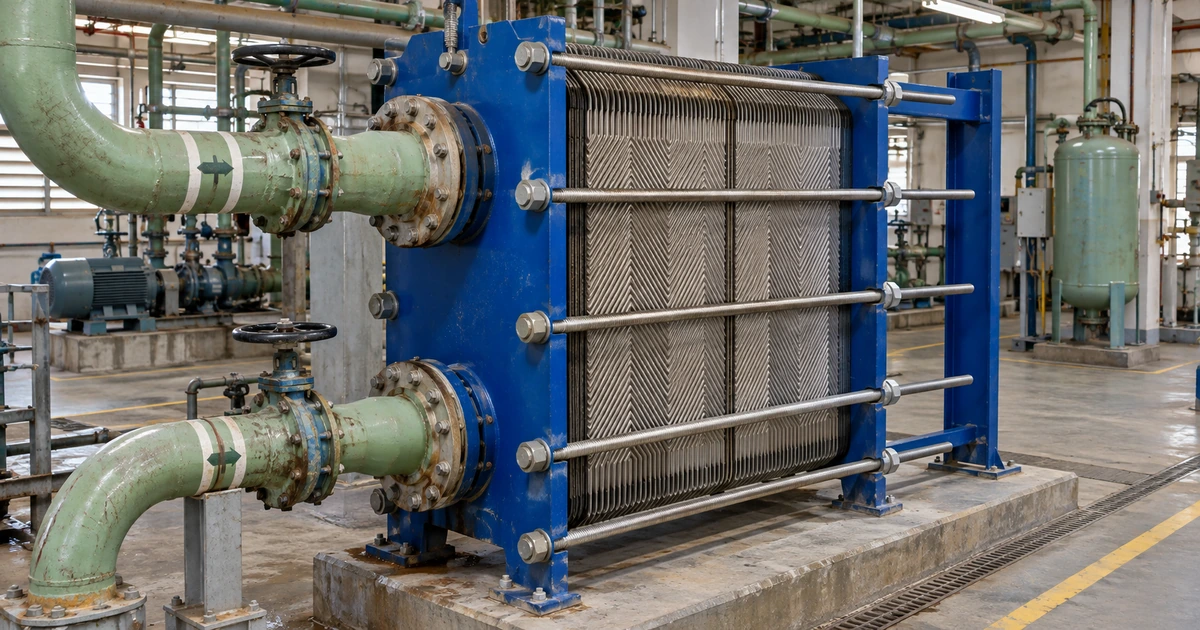
At sea and in plants, titanium is found in seawater heat exchangers and condensers, desalination plants, offshore piping and chemical equipment. Elsewhere it is used in aircraft structures and engines, medical implants, sports equipment and architecture. Wherever corrosion or weight costs more than the metal itself, titanium becomes economical.
Why Welding Titanium Is Different
Above about 400 °C, titanium absorbs oxygen, nitrogen and hydrogen from the air. Even small amounts make the weld hard and brittle. So the weld, the heat-affected zone and the root must stay under argon until they cool below that temperature, not just while the arc is on.
- Trailing shield: a gas cup behind the torch keeps argon over the cooling weld
- Back purging: the root side is fully purged, with oxygen measured before welding
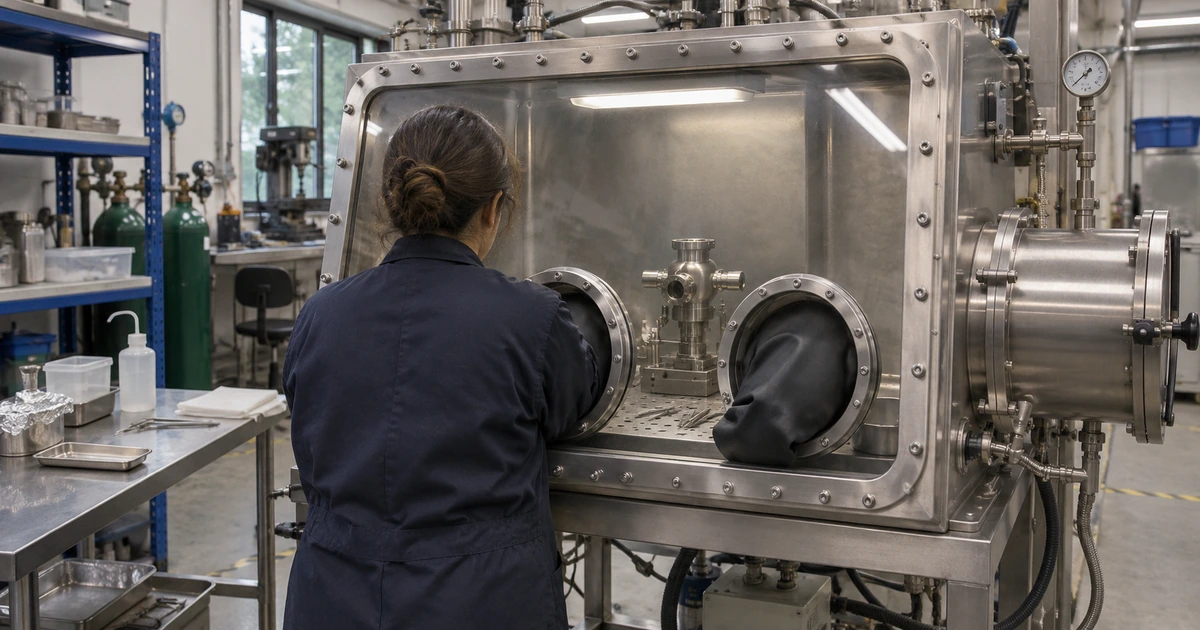
- Chambers: small parts are often welded inside an argon-filled chamber
- Cleanliness: dedicated tools, lint-free gloves, solvent-cleaned edges and filler
Reading the Weld Colour
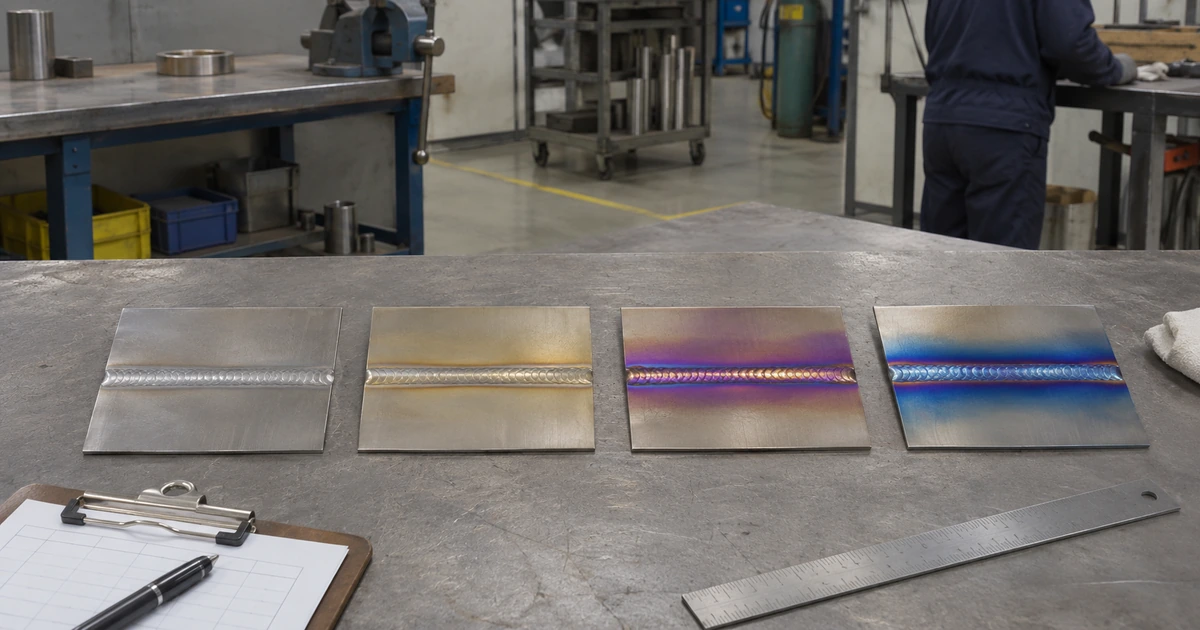
Titanium tells you how well it was shielded. A bright silver weld is acceptable. Light straw is usually acceptable. Dark straw, blue, grey or white powdery deposits show contamination, and on critical work those welds are cut out, not polished. Polishing removes the colour but not the brittleness.
From My Experience
With titanium, most of the job is setting up the gas: purge, trailing shield and flow checks. The welding itself is calm TIG work with low heat. The habits are the same ones I use on stainless and duplex pipe, only stricter: a weld that comes out blue is cut out and redone, because a brittle weld in seawater service will not stay quiet for long.
Conclusion
Titanium offers light weight and exceptional corrosion resistance, at a price. Welding it is straightforward TIG work, provided the hot metal never meets air. For more on the process, see TIG welding: advantages and limits.
If you found this article useful, feel free to share it with colleagues who work with titanium and special alloys. — Zisis
Need Help on a Project?
For precision TIG welding on marine and industrial work, see TIG Welding or request a quote.