

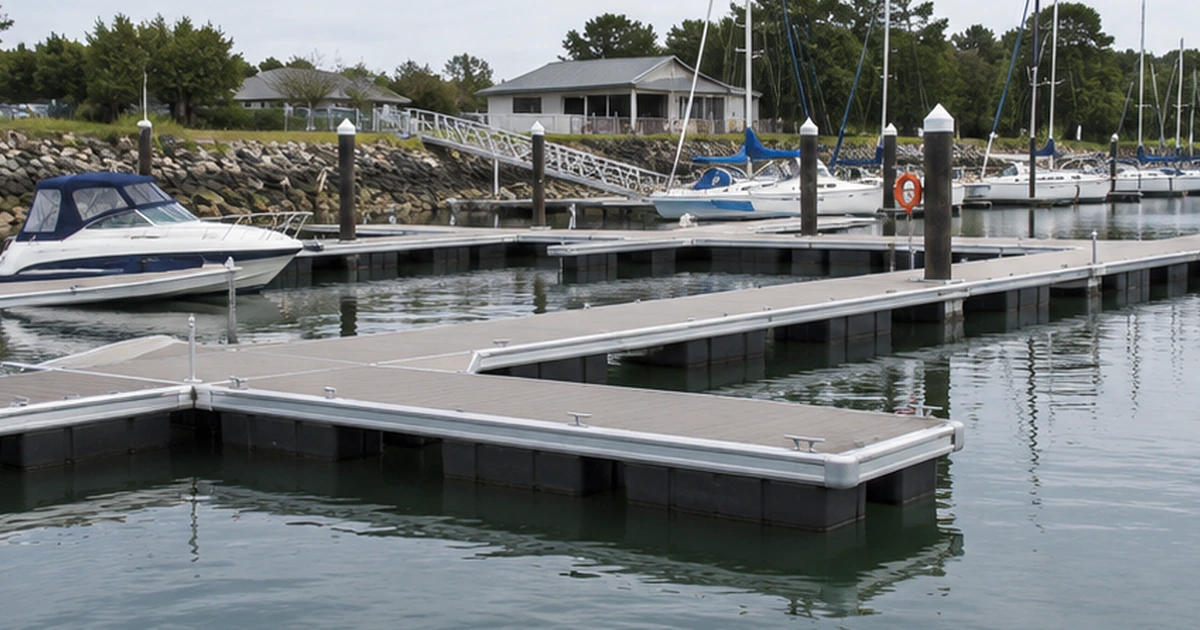
Planning a Floating Pontoon
A floating pontoon rises and falls with the water level, giving a stable platform for boats, swimmers or work access. Before choosing materials, decide what it must carry: foot traffic only, small boats, or vehicles and equipment. The load, the wave exposure and the expected life decide the size of the frame, the number of floats and the anchoring.
Choosing the Frame Material
- Marine aluminium: light, corrosion resistant and easy to handle; 5xxx series plate and 6xxx series extrusions such as 6061 and 6082 are the usual choices
- Hot-dip galvanised steel: strong and economical; the zinc protects the steel, but welds must be done before galvanising or repaired afterwards
- Stainless steel: excellent appearance and life, but costly; 316 is the minimum near seawater
- Timber and composites: used for smaller, lighter pontoons and for decking
Welding the Frame
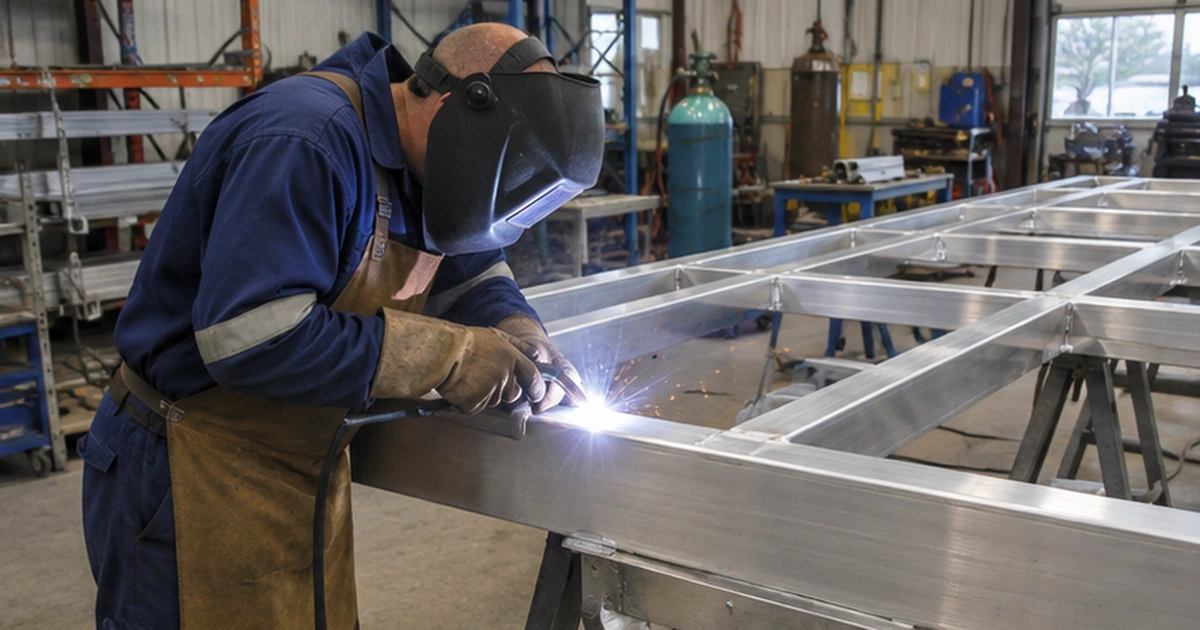
For a floating pontoon, how the frame is welded affects how long it lasts. Aluminium frames are MIG welded, with welds designed to avoid crevices where water can sit. The heat-affected zone of 6xxx alloys loses strength, so joints are placed away from the most highly stressed areas or reinforced. Steel frames are fully welded first, with seal welds rather than intermittent welds, then sent for hot-dip galvanising. Vent and drain holes are needed so the zinc can flow in and out of hollow sections.
Floats and Decking
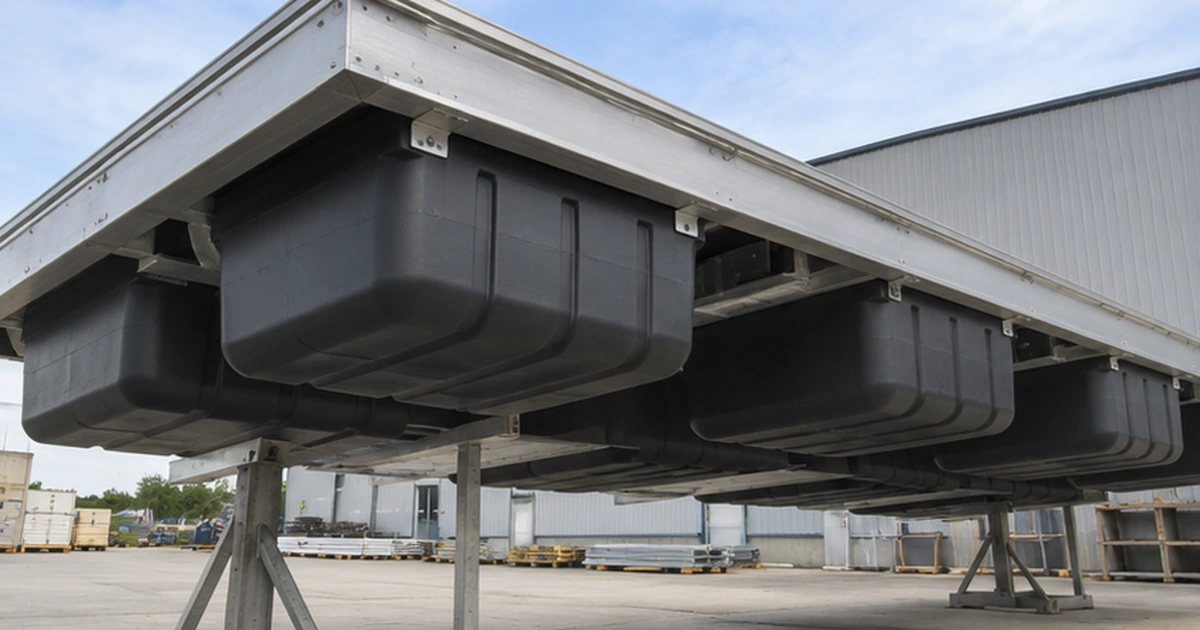
Most modern pontoons use rotomoulded polyethylene floats filled with foam, so they stay afloat even if punctured. Their size is calculated from the dead weight of the structure plus the design live load, with enough freeboard left over. Decking can be timber, composite boards, aluminium planks or concrete on heavier units. Non-slip surfaces and drainage gaps are essential.
Anchoring and Connections
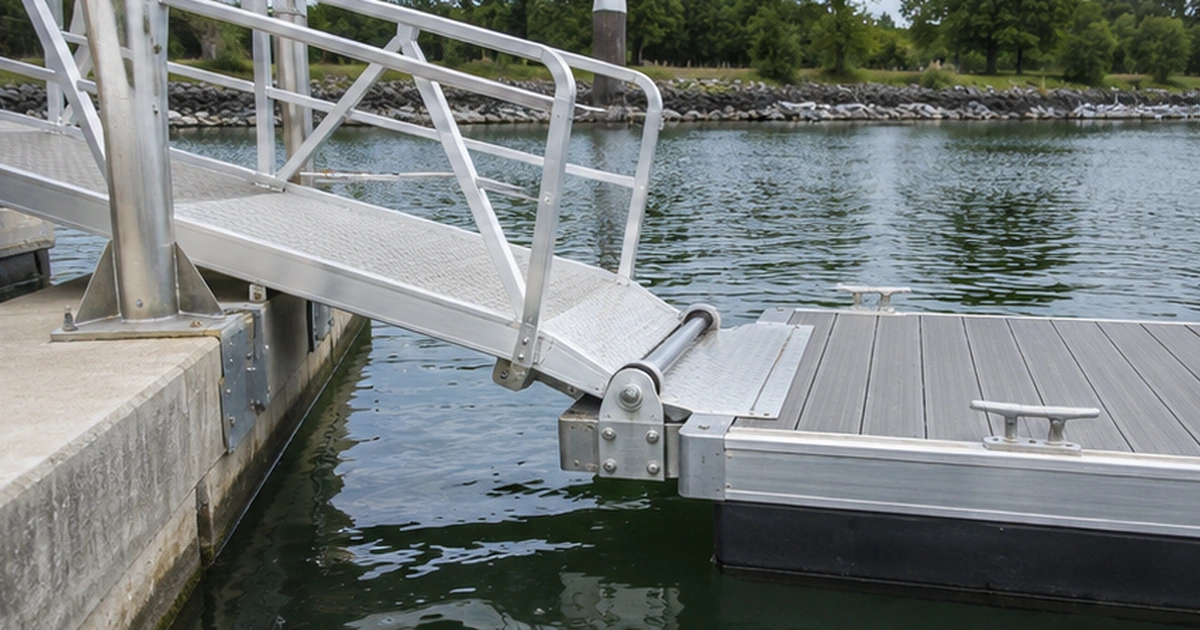
A pontoon is held in place by piles with sliding guides, by chains to anchors, or by elastic mooring systems. Connections between units and to the gangway must allow movement in waves and changing water levels. Hinges, brackets and pile guides carry repeated loads, so their welds need to be sound, well profiled and free of undercut, where fatigue cracks start.
Corrosion at Sea
Mixing metals invites galvanic corrosion. Stainless bolts in aluminium, or aluminium touching galvanised steel, need isolating washers and sleeves. Copper-based antifouling paint must never touch aluminium. Sacrificial anodes protect steel parts below the water line.
From My Experience
The welds that fail first on marine structures are usually small brackets and stitches nobody thought were important. On anything that sits in the sea, I seal weld wherever water could get in, keep profiles smooth, and check that dissimilar metals are isolated before the structure goes in the water.
Conclusion
A floating pontoon lasts when the frame material, welding and corrosion protection are chosen together. For material choices, see aluminium grades and stainless vs galvanised steel.
If you found this article useful, feel free to share it with colleagues who work with marine construction. — Zisis
Need Help on a Project?
For marine repair welding on marine and industrial work, see Marine Repairs or request a quote.