

Why Propellers Need Repair
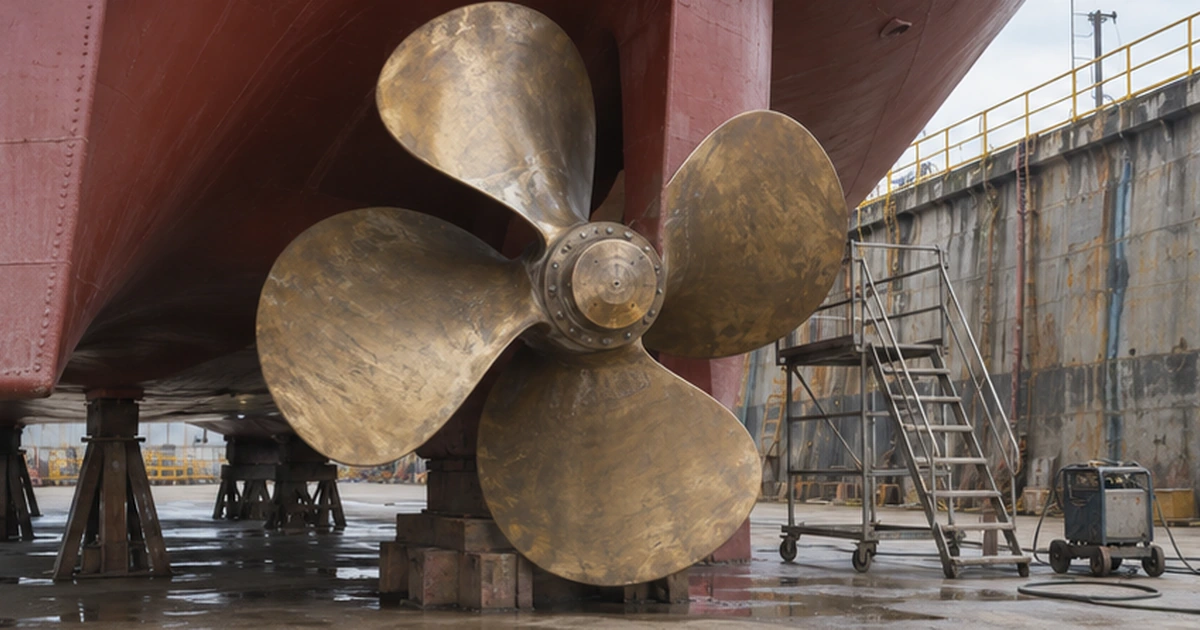
A ship’s propeller works in a harsh environment. Blades are damaged by contact with debris, ice, ropes and the seabed, eroded by cavitation, and can crack from fatigue. Bent tips, torn edges and cavitation pits reduce efficiency, cause vibration and can lead to blade failure. Many of these defects can be repaired by welding, straightening and grinding, at a fraction of the cost of a new propeller.
Propeller Materials
- Nickel aluminium bronze (NAB, often class Cu3): the most common material today, strong and corrosion resistant
- Manganese bronze, also called high-tensile brass (Cu1): older or smaller propellers; more prone to stress corrosion cracking after welding
- Stainless steel and other alloys: used on some specialised vessels
Identifying the alloy is the first step, because welding consumables, preheat and heat treatment depend on it.
Class Repair Zones
Classification societies divide propeller blades into zones by stress level. Zone A, near the root and in the most highly stressed areas, generally does not allow welding without special approval. Zone B allows limited repairs under approved procedures, and zone C, towards the tip and edges, is where most weld repairs are carried out. The surveyor agrees the extent of repair before work starts.
The Propeller Repair Process
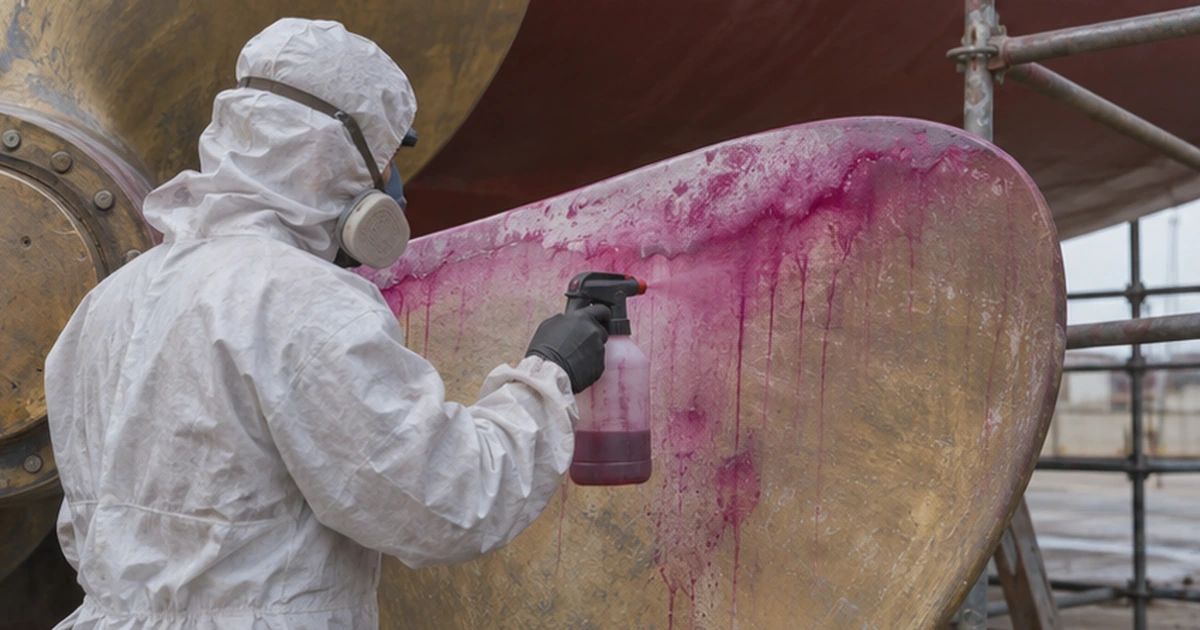
- Clean the blade and inspect it visually and with dye penetrant to map cracks and damage
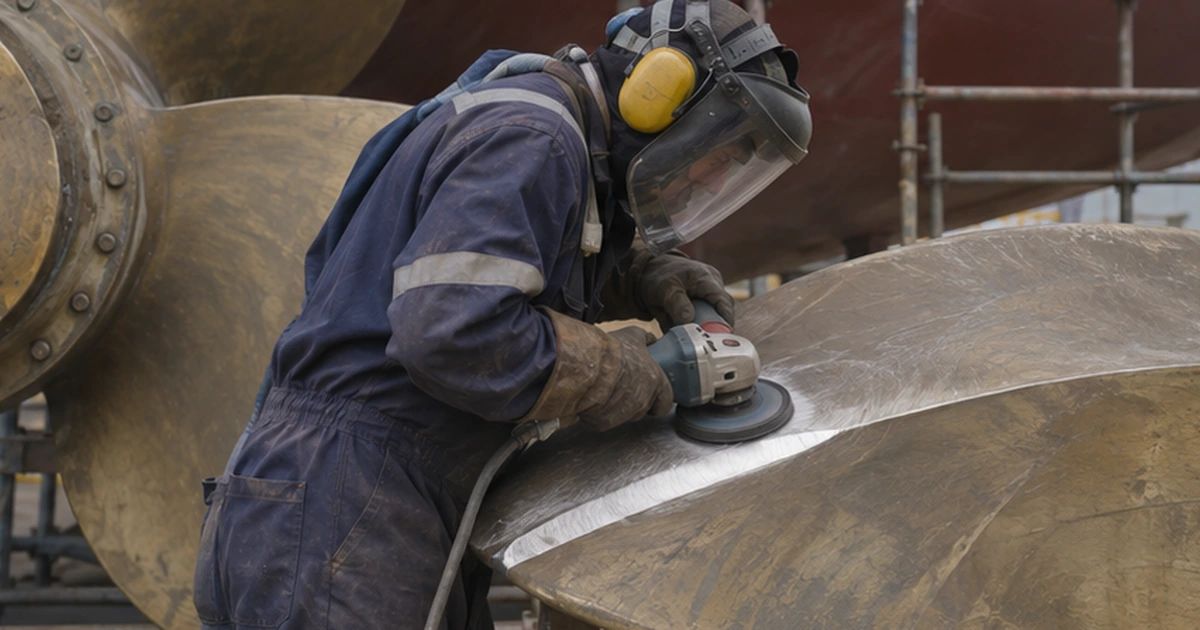
- Excavate cracks fully by grinding and confirm removal with penetrant
- Straighten bent blades, cold or with controlled local heating depending on the alloy and the extent of the bend
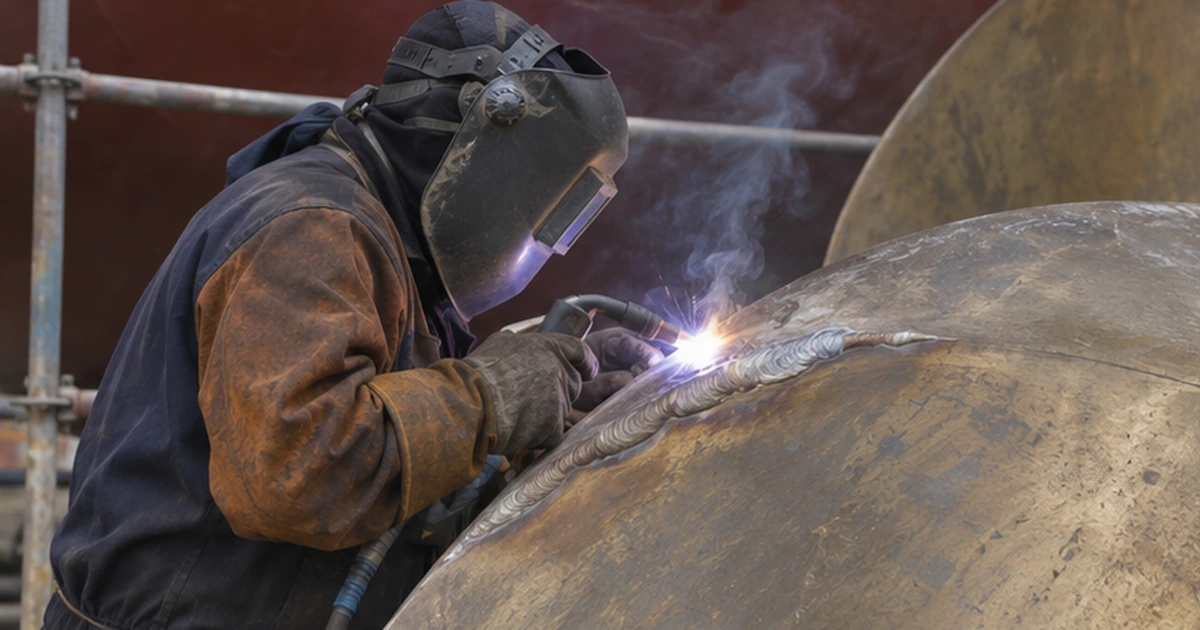
- Weld with matching bronze filler, usually by MIG or TIG, with controlled preheat and interpass temperature
- Build up eroded or torn edges and tips, then grind back to the original section and edge profile
- Carry out stress relief heat treatment where the rules require it, particularly on manganese bronze
- Final penetrant inspection, pitch and dimensional checks, and static balancing
Balancing and Accuracy
Every repair changes the mass distribution of the propeller. After welding and grinding, the propeller is statically balanced, and the blade profiles and pitch are checked against the original tolerances. Poor profile restoration or imbalance leads to vibration, noise and new cavitation damage, undoing the benefit of the repair.
In Practice
In propeller repair, the grinding and profiling take as long as the welding. Bronze welds well with the right filler and heat control, but a blade edge left thicker or blunter than designed will cavitate again. Working to templates and checking with penetrant after every excavation keeps defects from being buried under new weld metal.
Conclusion
Propeller repair by welding restores bronze blades when the alloy, class zones, heat control, profile and balance are all respected. See also class approval for ship weld repairs and the ship hull leak repair project.
If you found this article useful, feel free to share it with colleagues who work with ship repair and superintendents. — Zisis
Need Help on a Project?
For marine repair welding on marine and industrial work, see Marine Repairs or request a quote.