

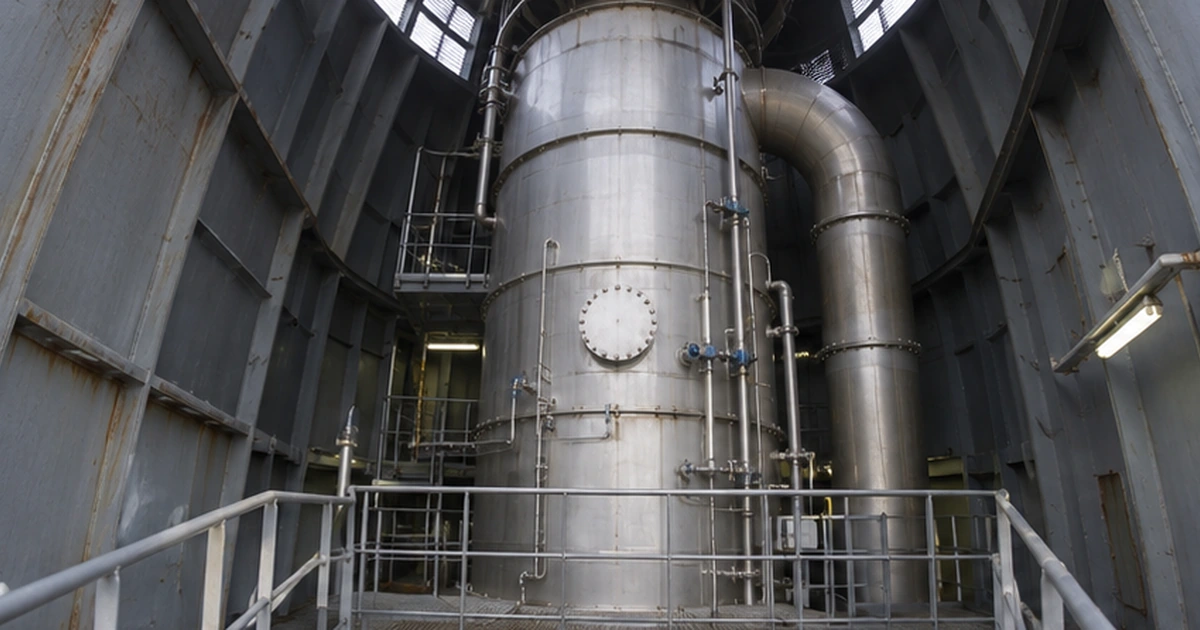
What a Ship Scrubber Does
An exhaust gas cleaning system, commonly called a scrubber, removes sulphur oxides from engine and boiler exhaust by spraying it with water. It allows ships to burn higher-sulphur fuel while meeting the IMO sulphur limits. Open-loop systems use seawater and discharge it overboard after treatment; closed-loop systems recirculate fresh water with an alkali such as caustic soda; hybrid systems can run either way.
Why Scrubbers Are Hard on Materials
Inside a scrubber, hot exhaust meets water and forms an acidic, chloride-rich environment, among the most corrosive found on a ship. The inlet and quench zones see high temperatures and acid condensate, and the washwater carries low pH and chlorides through pumps, piping and the overboard discharge. Carbon steel and even 316 stainless steel corrode rapidly in these areas.
Materials Used in Scrubbers
- Super duplex stainless steel (such as UNS S32750): towers, internals, washwater piping and overboard pipes
- Super austenitic 6Mo stainless (such as 254 SMO): towers and piping in aggressive zones
- Nickel and high-alloy grades (such as alloy C-276, alloy 59, alloy 31 or 654 SMO): inlet, quench and hot acid areas
- GRP and lined pipe: washwater lines in some designs
- Carbon steel with special coatings: exhaust ducting outside the wet zones
Scrubber Welding Requirements
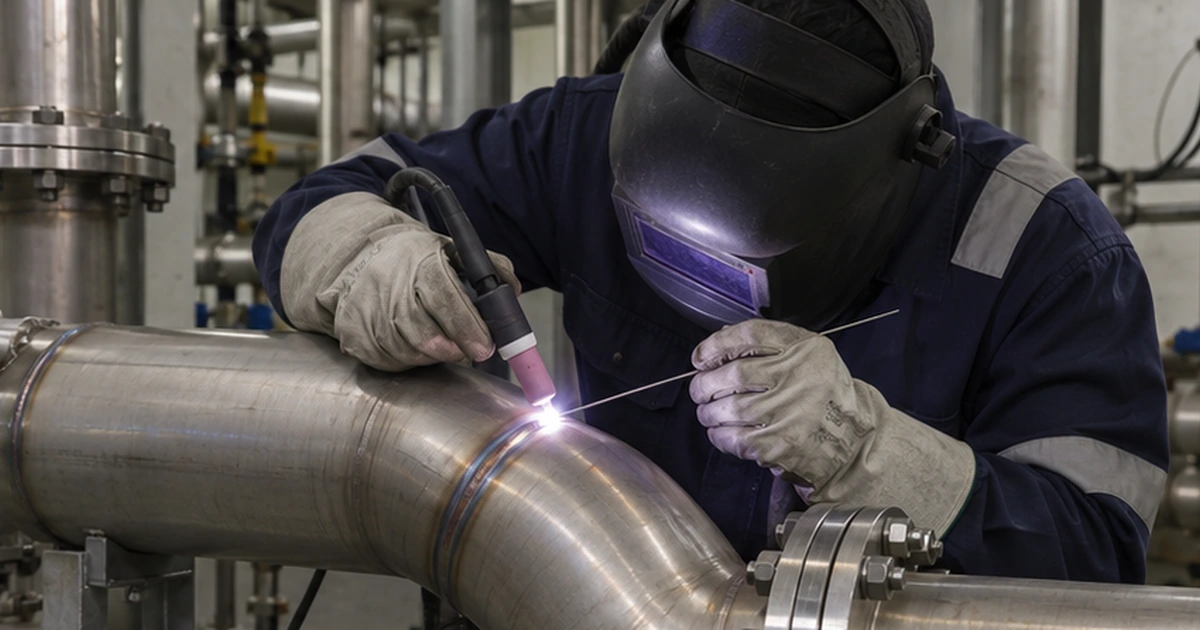
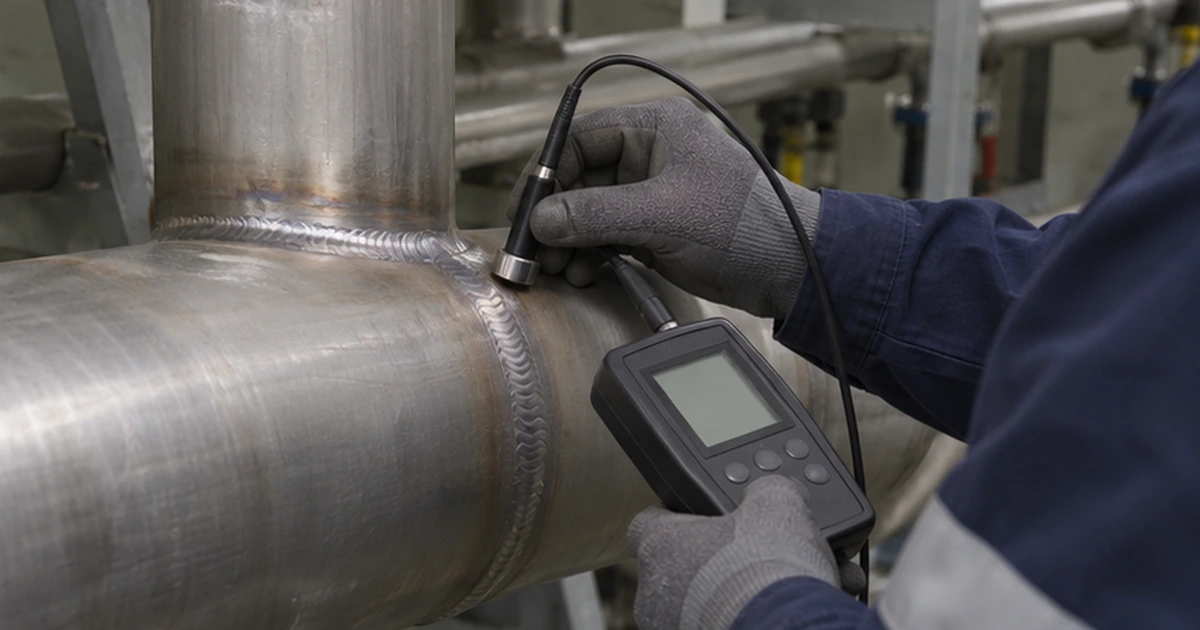
Scrubber welding relies on the same disciplines as other high-alloy work. Super duplex needs controlled heat input, typically up to about 1.5 to 2.0 kJ/mm, and a low interpass temperature, usually a maximum of 100 to 150 °C depending on the procedure, to keep a balanced ferrite-austenite structure and avoid harmful intermetallic phases. Over-alloyed fillers such as 2594 are used. 6Mo stainless and nickel alloys are welded with nickel-based fillers such as ERNiCrMo-3 or ERNiCrMo-4. Roots are back purged, heat tint is removed by pickling, and ferrite content is often measured on duplex welds.
Common Repairs
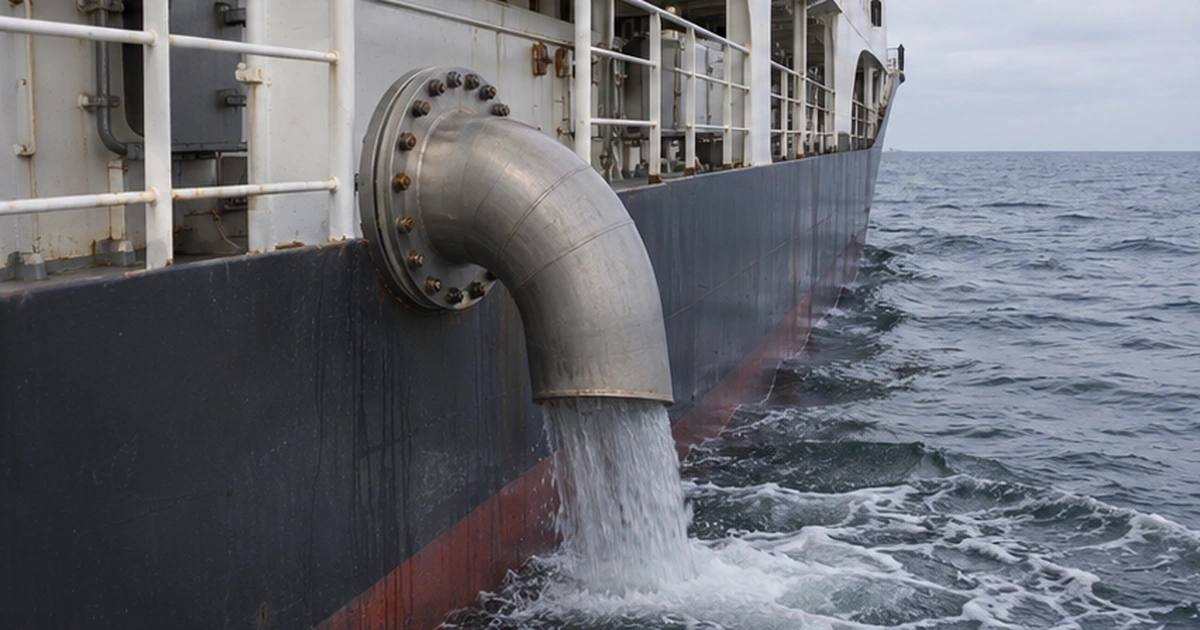
Typical scrubber repairs include corroded washwater pipes and spools, cracked or corroded welds in the tower, leaking pump and valve connections, and corrosion of overboard discharge pipes and the hull plating around them. Overboard repairs often involve renewing the pipe section with super duplex or a lined design, plus a doubler or insert in the hull approved by class. Dissimilar joints between high alloys and carbon steel are made with nickel-based fillers to avoid cracking and galvanic problems.
In Practice
Scrubber repairs bring together the same disciplines used on duplex, super duplex and 254 SMO piping: clean preparation, a measured purge, strict interpass control and the right over-alloyed filler. In the funnel casing, access is tight and the space is hot, so planning the sequence and ventilation is as important as the welding itself.
Conclusion
Scrubber welding demands high-alloy materials and strict procedures to survive hot, acidic washwater. See also duplex stainless steel welding, 254 SMO stainless steel welding and Inconel and Hastelloy welding.
If you found this article useful, feel free to share it with colleagues who work with marine engineers and superintendents. — Zisis
Need Help on a Project?
For marine repair welding on marine and industrial work, see Marine Repairs or request a quote.